
By Biswajit Mondal, Shyamnagar, Satkhira
Bhaswati Gain, 38, is a rural homemaker from Purba Dhankhali village in Munshiganj Union of Shyamnagar Upazila, Satkhira. She lives with her husband, Amiya Gain, and their two children on their 33-decimal homestead. For Bhaswati, cooking used to mean more than preparing meals for her family. It meant collecting or buying more firewood, spending more time in the kitchen, and breathing in smoke from a traditional open stove.
Today, things are different. Like many families in coastal Shyamnagar, Bhaswati’s household faces the growing impacts of climate change. Natural disasters, increasing salinity, shrinking agricultural land, and declining vegetation are making access to fuel increasingly difficult for rural families
.Before June 2026, Bhaswati used a traditional two-mouth open stove for cooking. The stove consumed a large amount of firewood and produced considerable smoke and soot. The kitchen often became hot and smoky. Bhaswati experienced eye irritation, headaches, and coughing, making her daily cooking work uncomfortable.
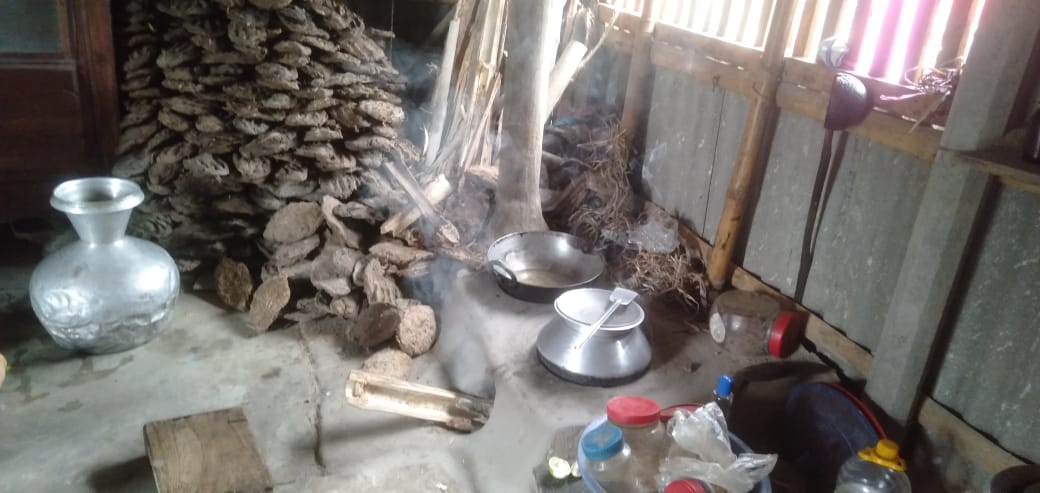
A simple local solution changed the situation. In June 2026, Bhaswati received training and the necessary materials to make and use an improved, environmentally friendly, locally innovated clay stove under the Empowerment of Women through Climate-Resilient, Low-Carbon Livelihoods in Coastal Areas project, funded by Standard Chartered Bank and implemented by BARCIK.
After completing the training, Bhaswati made the stove herself and began using it for her family’s daily cooking. The difference was immediate. The new stove requires less firewood and uses fuel more efficiently. As a result, Bhaswati spends less time and effort collecting firewood, and her household’s fuel expenses have also decreased.
The stove also produces less smoke. The kitchen is now cleaner and more comfortable, while pots and cooking utensils collect less soot. This means less time and effort is needed for cleaning. For Bhaswati, these small changes have made a real difference.
“Before, I used a traditional two-mouth open stove. It required more firewood and filled the kitchen with smoke and soot. My eyes would burn, and I often suffered from headaches and coughing. Now I feel much better. The new stove needs less firewood, produces less smoke, and leaves less soot on the utensils. Since I use less fuel, my cooking costs have also gone down.” Bhaswati’s experience is not limited to her own household. She is also helping other women in her community learn about the stove.
“We are 25 women from the village who received training together. We learned how to make the stove, how to use it, and about its benefits. Some families were already using it. Now, others are also making the stove themselves and using it at home. People are becoming more interested because it is healthier and saves money.”
Her experience demonstrates the value of locally developed solutions. The technology is simple, affordable, and based on locally available materials. More importantly, women themselves are learning to make, use, and promote it within their communities.
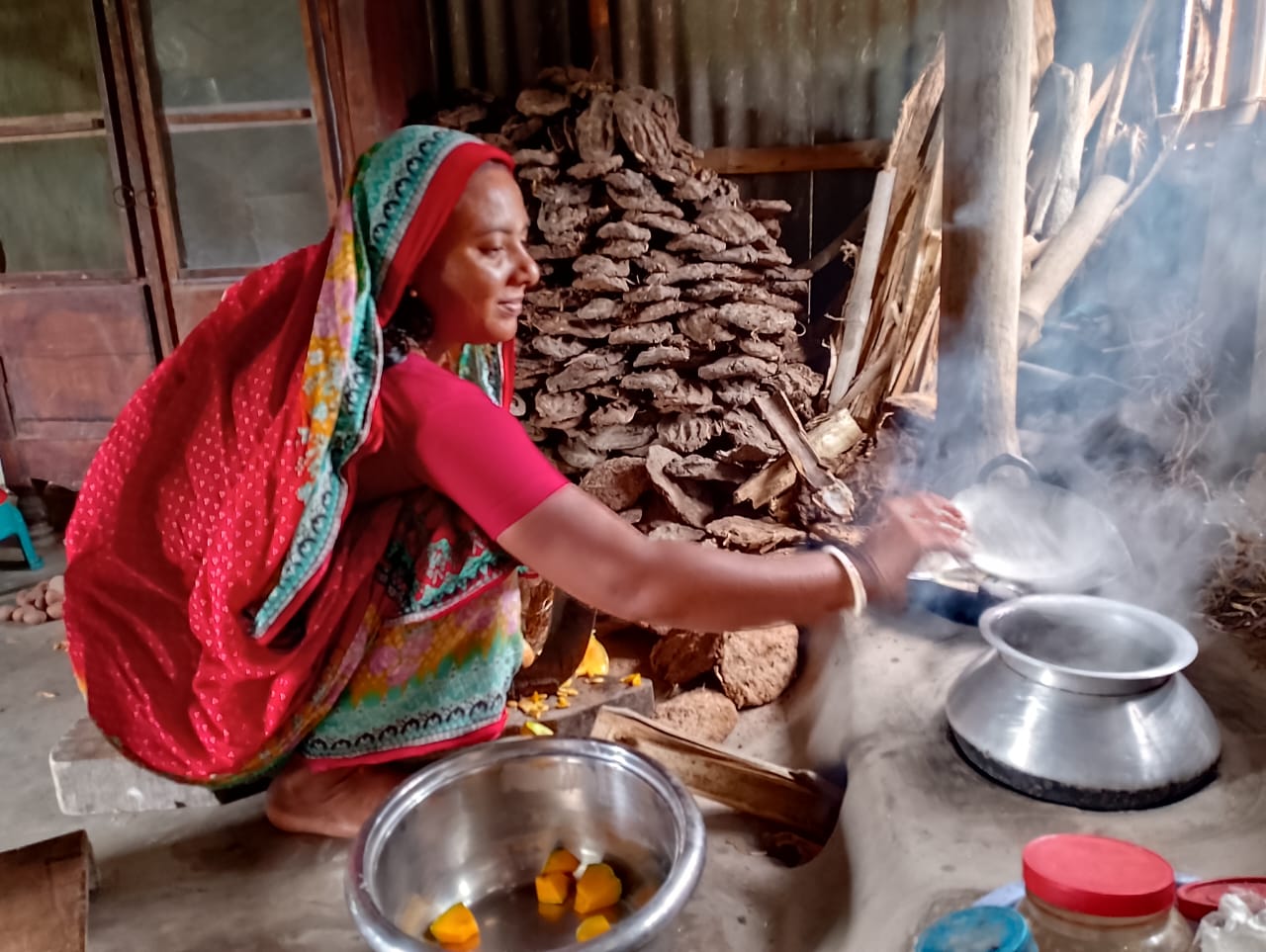
Bhaswati’s story shows that climate adaptation does not always require expensive or complicated technologies. A simple local innovation can improve health, reduce household expenses, lower women’s workload, and conserve fuel. For women in climate-vulnerable coastal communities, the improved clay stove offers more than a better way to cook. It provides a practical solution that connects health, household savings, women’s time and labour, efficient use of resources, and environmental protection.
When women like Bhaswati become users as well as makers and promoters of such solutions, change can move beyond individual households and spread across the community. Expanding the use of improved clay stoves could help coastal families reduce their dependence on firewood, lower household fuel costs, improve indoor cooking conditions, and reduce pressure on local natural resources.
Bhaswati’s journey is therefore more than a story about a cooking stove. It is a story of women’s local leadership, practical climate adaptation, resource conservation, and a step towards a healthier and more climate-resilient life in coastal Bangladesh.