
By Biswajit Mondal from Shyamnagar, Satkhira
Dipti Rani and her husband Dhananjay Mondal of Uttar Kadamtala village in Munshiganj Union, Shyamnagar, Satkhira, are making the best use of their limited land through diversified farming. They own three bighas, including about 43 decimals of homestead land. To meet household food needs, generate additional income and maintain year-round production, they continuously experiment with different crops and farming practices.
Their homestead has become a diverse farm, producing seasonal vegetables such as bottle gourd, pumpkin, cucumber, okra, eggplant, leafy vegetables, taro, potatoes, beans, banana and papaya, along with spices including chilli, onion, ginger, garlic, turmeric, coriander and fennel. Various uncultivated plants and fruit trees further enrich the farm’s biodiversity.
 oppo_0
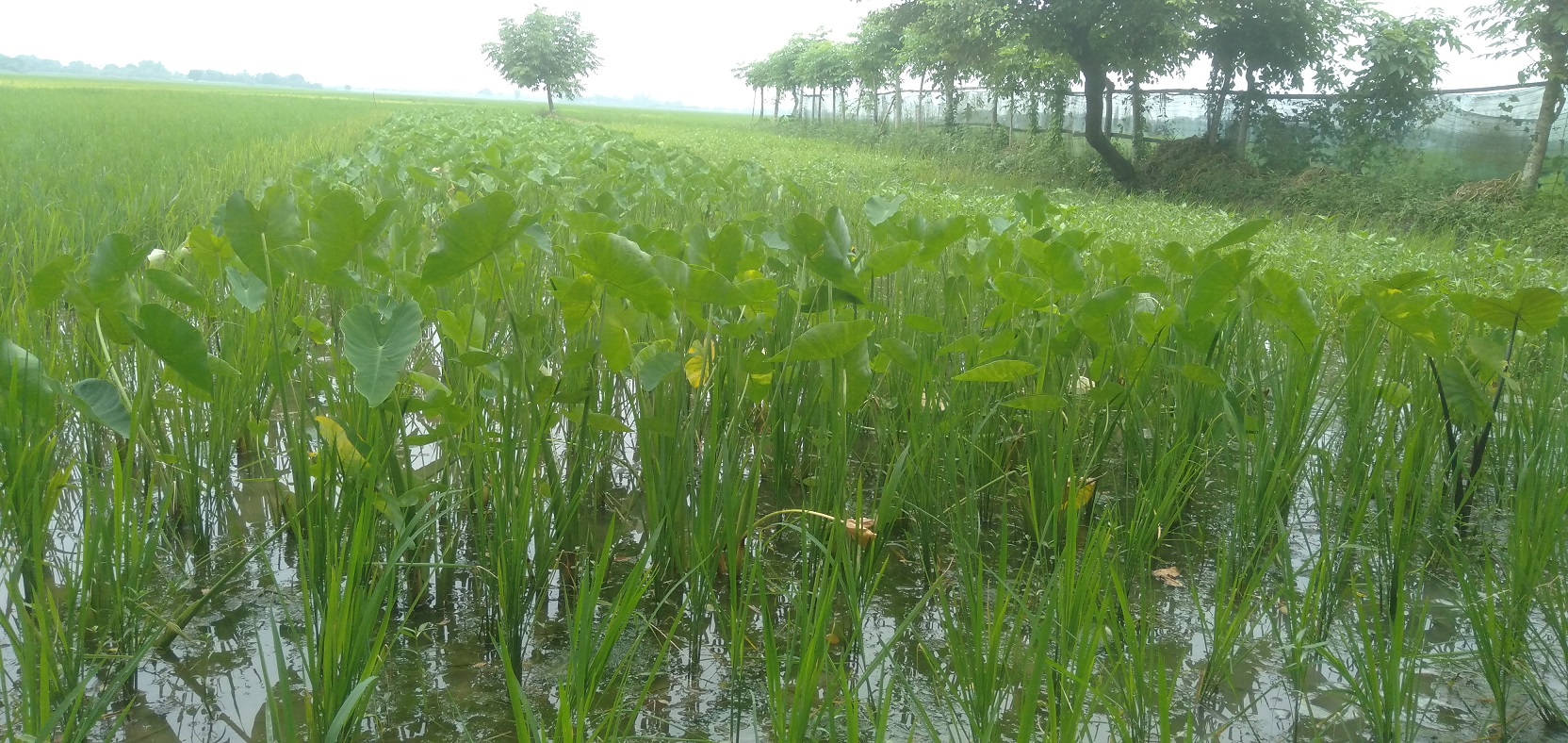
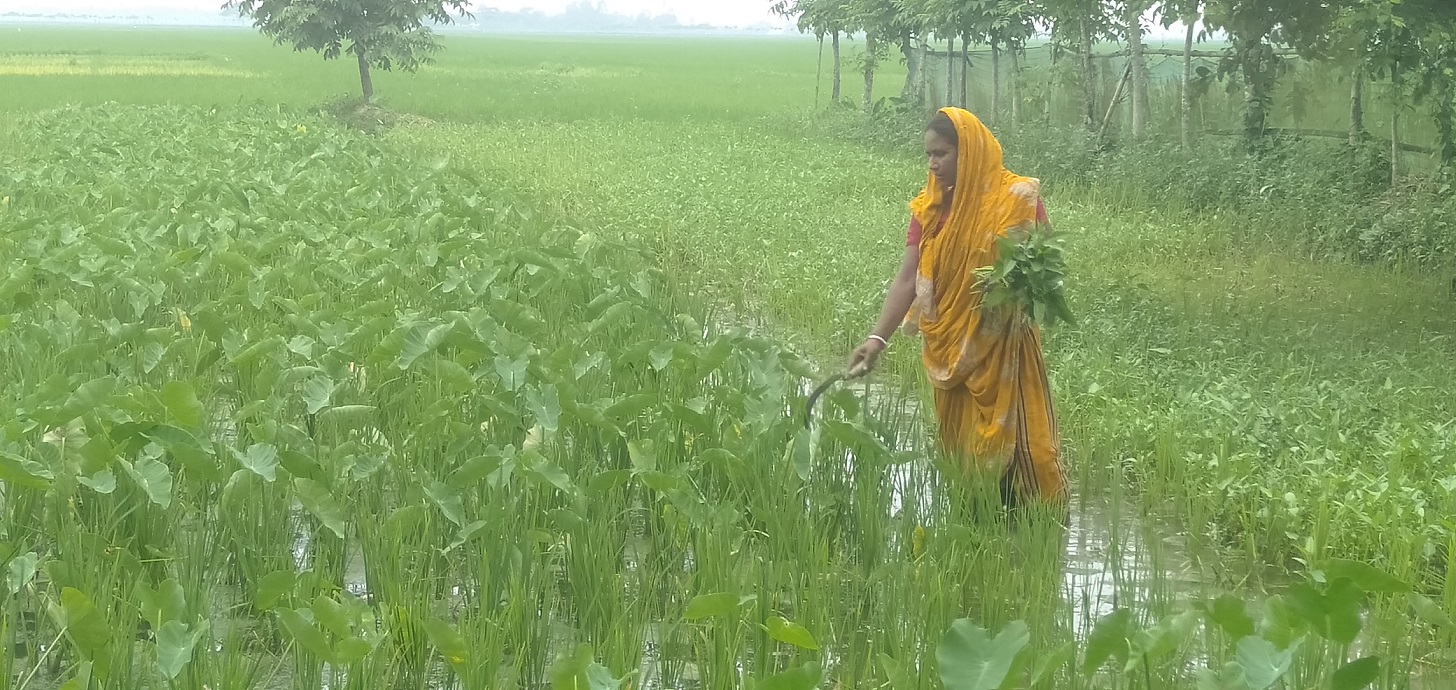
A notable innovation is the cultivation of rice and local taro on the same plot. Of their two bighas of rice land, they experimentally cultivated BR-10 rice and local taro together on three decimals. They selected a relatively moist plot where water remains for much of the season, planted taro in rows with adequate spacing and cultivated rice in the gaps. The practice, started last year, has continued this year.
Last year, the three-decimal plot produced about 72 kg of rice and 140 kg of taro, while taro stems generated approximately BDT 7,500 in additional income. Using the same fertilizer management for both crops reduced the need for additional fertilizer. They also conserved rice seed for the next season.
Despite salinity, waterlogging and irregular rainfall in coastal areas, crop diversification and integrated farming can reduce production risks while improving household food, nutrition and income opportunities.
 oppo_0
Dipti Rani said, “As I have limited land and depend on farming to support my family, I continuously look for ways to earn additional income. I plan throughout the year which crops to grow in different parts of my homestead. Growing rice and taro together is convenient and profitable.” She went on saying, “I plant taro in Baishakh and start harvesting its stems from late Jaistha, earning around BDT 500 per week until about Ashwin. I also earn from both taro and rice.”
She has been associated with BARCIK since 2024 and her homestead is part of the Shotobari Model. She is now developing it as an agroecology learning centre so that others can observe her practices and adapt suitable initiatives according to their own land and resources.
Dipti Rani and Dhananjay Mondal’s experience demonstrates that limited land can generate multiple products and income through careful planning, local knowledge, crop diversity and integrated farming. Their farm offers a practical example of improving productivity and resilience with limited resources.