
By Atikur Rahman Atik from Rajshahi
A human chain and memorandum submission were held in Rajshahi demanding an end to the encroachment and pollution of the Swarmangala, Barahi, Nabaganga and Baranai rivers and improved waste management. The programme was held near Nowhata Bridge on the bank of the Baranai River. Riverbank communities, fishers, researchers, environmental activists and representatives of social and cultural organisations participated.
The program was jointly organized by the Barind Youth Forum, Green Coalition, Nowhata Fishermen’s Cooperative Society and BARCIK.
Speakers said untreated liquid and solid waste including medical waste from Rajshahi city is discharged through drains into the Swarmangala, Barahi and Nabaganga rivers and eventually reaches the Baranai River. Polluted water is also accumulating in surrounding wetlands, including Sapmara, Bakmari, Bhugaroil, Paikar, Barabaria and Karnahar beels.
These wetlands, covering thousands of hectares, have long supported agriculture, fisheries and biodiversity. Pollution and waterlogging are now reducing fish and aquatic vegetation, degrading soil quality and increasing the risk of harmful substances, including heavy metals, entering agricultural crops. Speakers warned that this poses serious risks to safe food production, food security and public health. Riverbank communities have also reported concerns about skin and waterborne diseases and respiratory discomfort caused by foul odours, with children, women and older people considered particularly vulnerable.
River researcher Mahbub Siddiqui said the rivers, once rich in natural flow and biodiversity, have become dark and foul-smelling, while sediment and plastic waste are obstructing their flow and fish populations have declined. Fishermen are consequently losing their livelihoods.
Local community Subhadra Rani Haldar said contact with the river water causes skin problems and showed a persistent wound on her hand. Fisherman Abu Sama said residents have repeatedly raised concerns about pollution but have yet to see effective action.
Barind Youth Forum President Md. Atikur Rahman said untreated municipal, medical and industrial waste is entering the rivers and destroying aquatic ecosystems. He warned that polluted water entering agricultural land is also threatening agricultural production and food safety.
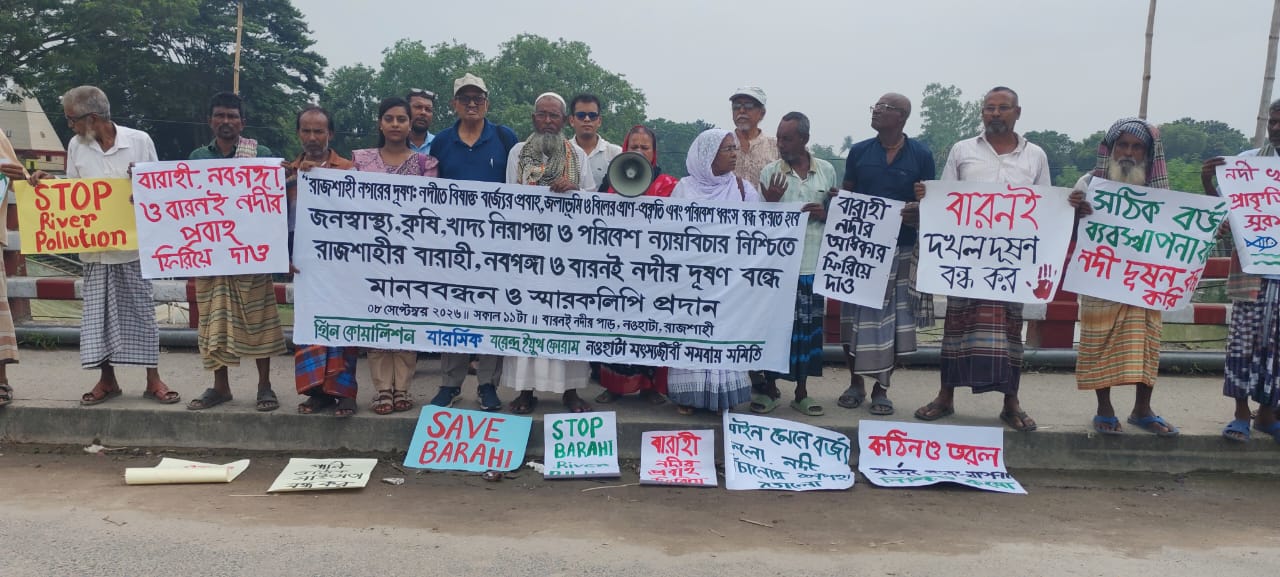
Green Coalition Paba President Rahima Khatun presented six demands, including: Immediately identify and free the Swarmangala, Barahi, Nabaganga and Baranai rivers from encroachment and pollution; Ensure effective liquid and solid waste management in Rajshahi city; Establish and operate modern Sewage Treatment Plants (STPs) and Effluent Treatment Plants (ETPs).; Make ETPs mandatory for industries, hospitals, clinics, diagnostic centres and commercial establishments and introduce strong community-based monitoring; Identify and penalize polluters and stop direct discharge of untreated waste into rivers and connected wetlands and Conduct independent investigations into the sources of pollution and publicly disclose the findings etc.
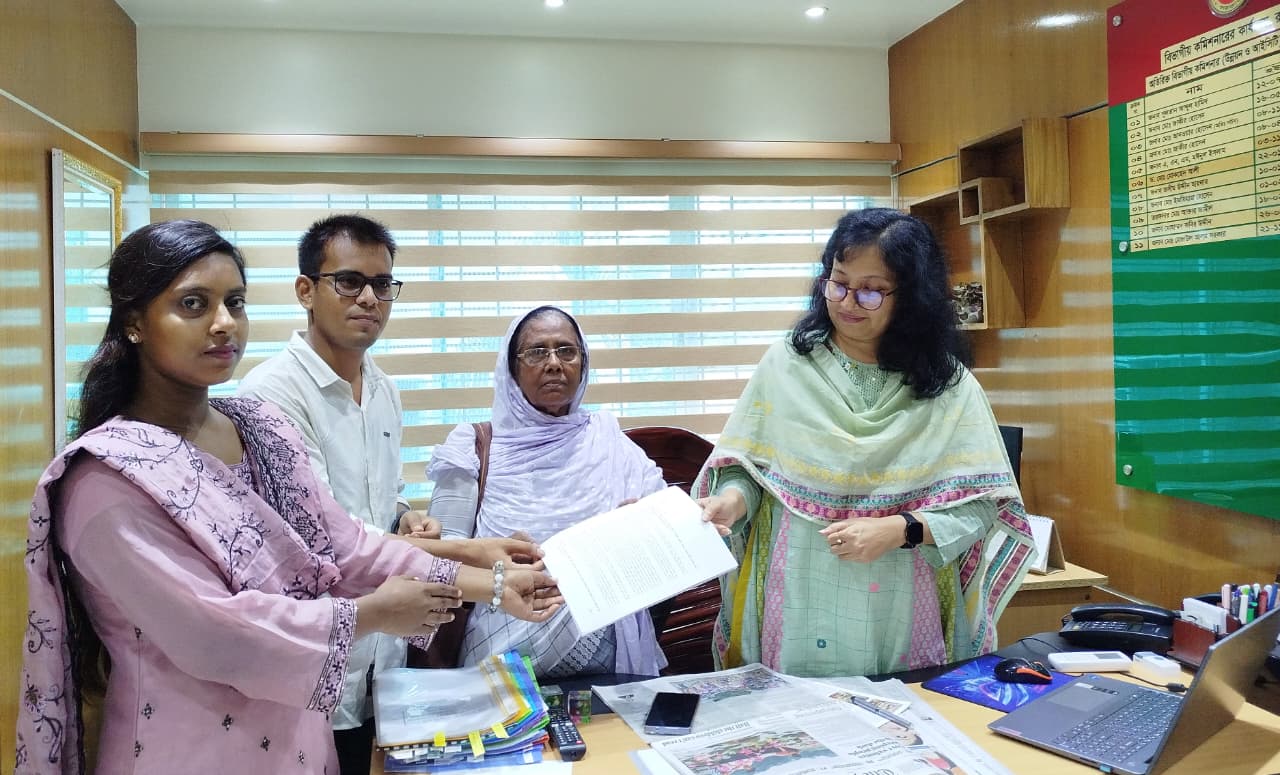
Following the human chain, a memorandum was submitted through the Deputy Commissioner to Prime Minister Tarique Rahman, with copies sent to the relevant ministries, government agencies and authorities.
Speakers urged the authorities to take immediate and effective action to protect Rajshahi’s environment, agriculture, food security and biodiversity and to address the pollution crisis as an urgent public-health and environmental-justice issue.