
By Sandra Nandini Bala from Dhaka
Amid a surge in mosquito-borne diseases across Dhaka, BARCIK organized a human chain in front of the Rayerbazar Martyred Intellectuals Memorial to raise awareness of Dengue and Chikungunya prevention among urban poor.
More than 100 urban poor participated in the demonstration. The event also attracted the attention of commuters, including rickshaw pullers, motorcyclists and passersby, who stopped to view awareness banners and listen to the speakers.
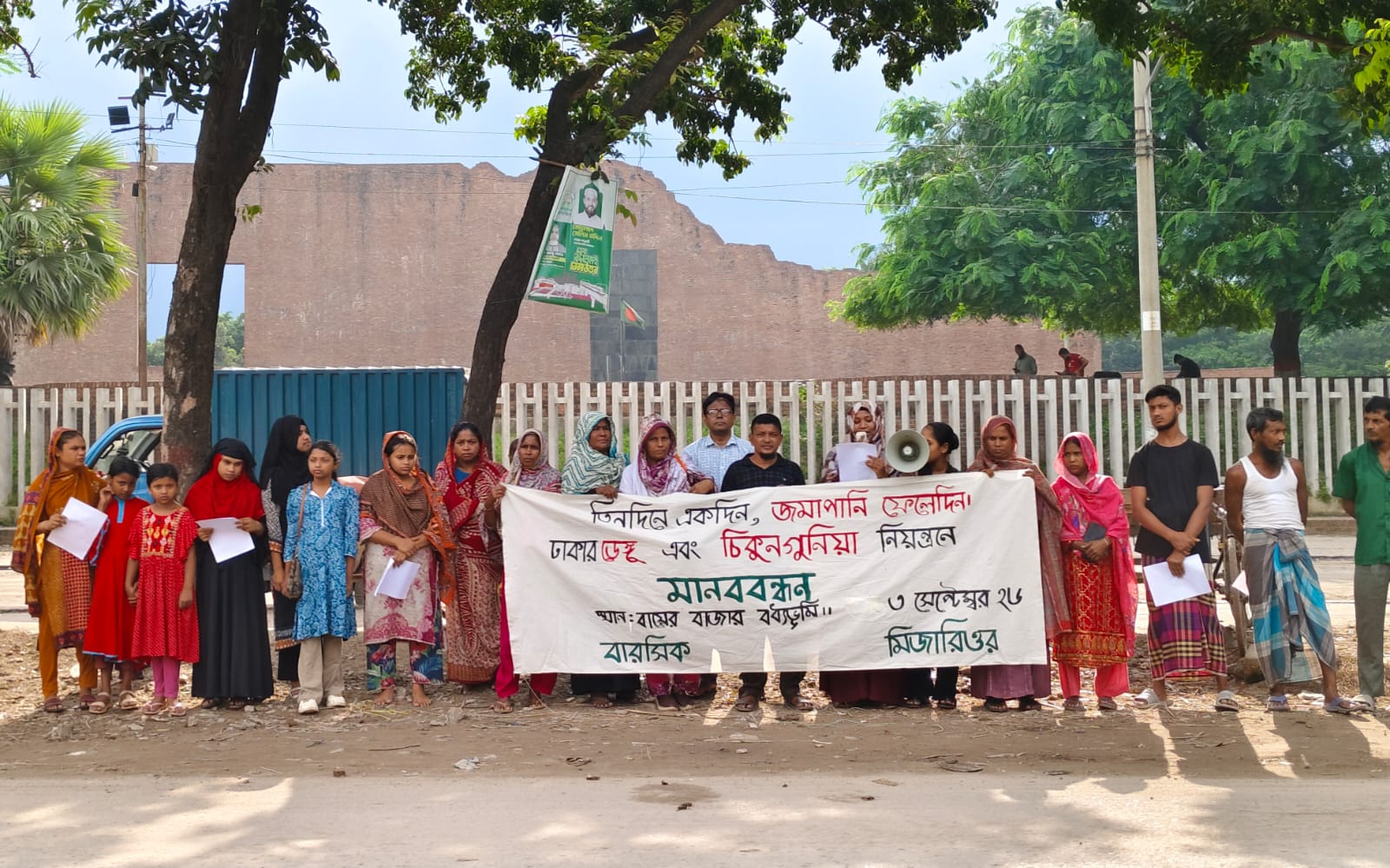
The campaign came at a critical time as dengue cases continue to rise nationwide. According to Directorate General of Health Services (DGHS) data released on 6 September 2026, Dengue has claimed 117 lives, while 42,590 people have been hospitalized this year. Although no Chikungunya-related deaths have been reported in 2026, health experts continue to regard the disease as a significant public health concern.
Community leaders highlighted the risks of Aedes mosquito breeding in informal settlements and discussed symptoms and practical prevention measures. Speakers emphasized on four key actions: removing stagnant water from containers, tires, coconut shells and air-conditioning units every three days; using mosquito nets while sleeping during both day and night; wearing full-sleeved clothing; and keeping doors and windows closed to prevent mosquito entry.
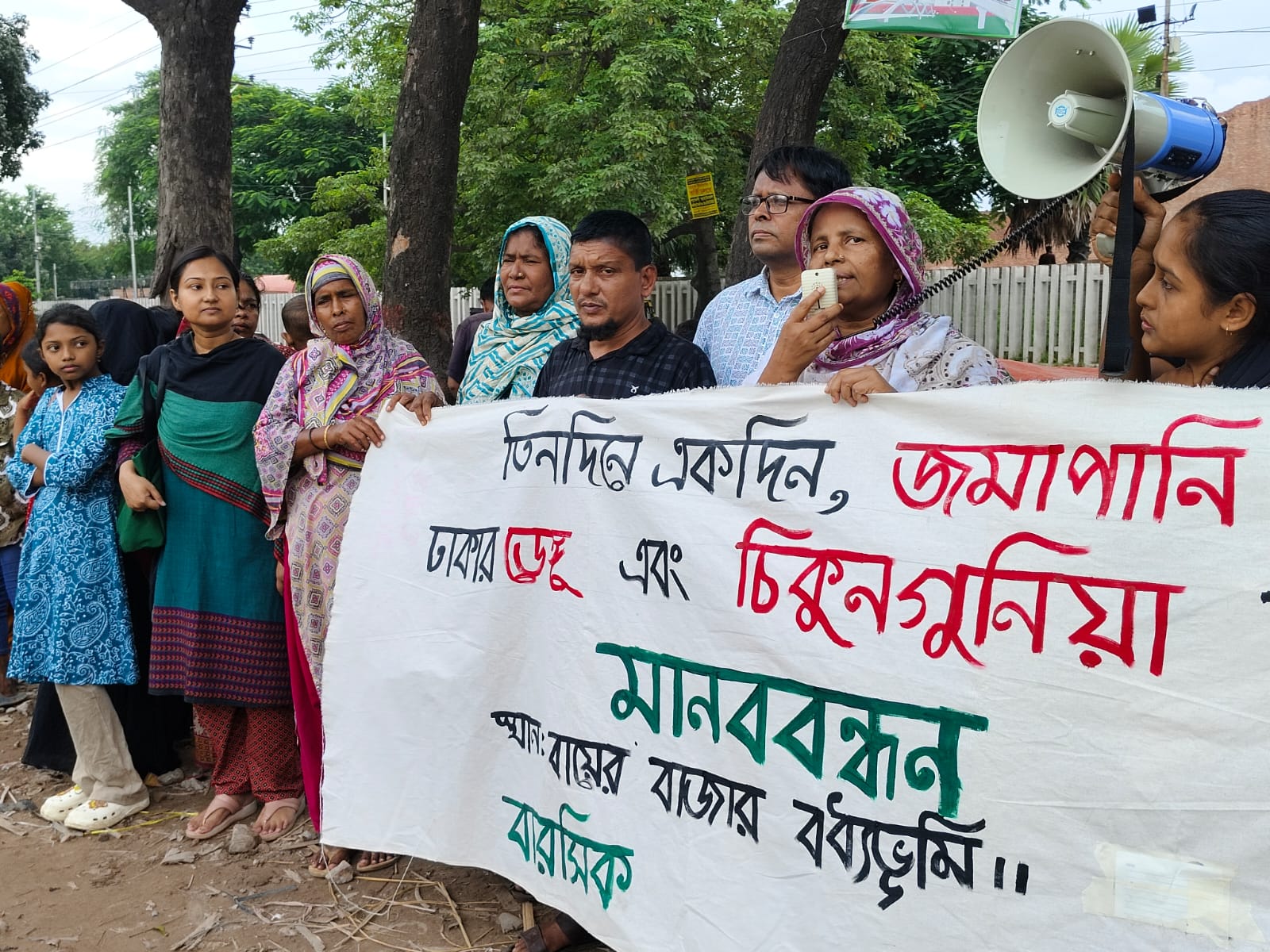
Mohammadpur community leaders Rozina Begum and Md. Faruk, along with Hosne Ara Begum Rafiza, President of the Slum Dwellers Rights Protection Committee (BOSC), called for urgent government and municipal action to control mosquito-borne diseases in low-income communities.
Md. Jahangir Alam, Coordinator of BARCIK, said that a safe and healthy environment is a fundamental right of every citizen. He added that the initiative aimed both to strengthen health awareness among vulnerable communities and to raise their demands for urgent mosquito-control measures with government authorities.