
By Atikur Rahman Atik from Rajshahi
Despite various government social protection programs, many low-income and marginalized people living in Rajshahi’s slums remain excluded from effective benefits. At an advocacy meeting held in Budhpara slum held recently, urban poor called for their meaningful inclusion in social protection programs amid poverty, insecure employment, rising living costs, health risks, unsafe housing and increasing climate-related hazards.
The meeting, titled “Challenges Faced by Low-Income Urban People in Accessing Social Protection,” was jointly organized by BARCIK and Barendra Youth Forum.
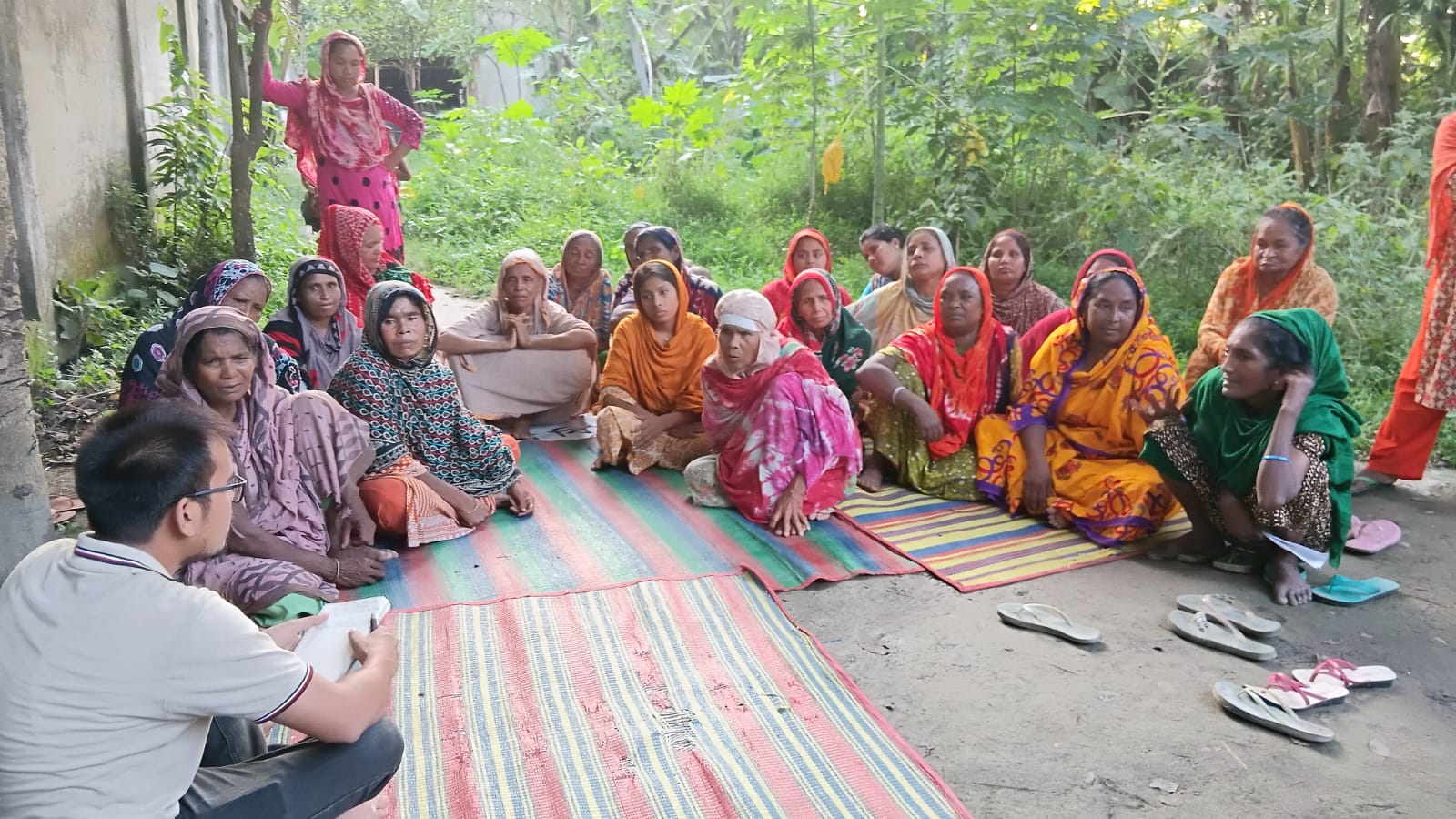
Speakers said eligible slum residents are often excluded because of limited information, lack of National Identity Cards and birth certificates, address-related problems, complicated application procedures and difficulties communicating with government offices. They stressed that social protection is a right, not charity or a donation, and that urban poverty requires approaches different from those used in rural areas.
Most urban poor living in slums work in the informal sector as domestic workers, rickshaw and van drivers, construction workers, street vendors, cleaners and small traders. Their incomes are irregular and livelihoods vulnerable. Heatwaves, waterlogging, heavy rainfall, fires, illness and sudden loss of employment can quickly push families deeper into poverty. Speakers therefore, called for social protection systems that are life-cycle based, employment-sensitive and responsive to climate and disaster risks.
Budhpara resident Rahima Khatun, 60, said many urban poor do not know where or how to apply for government support and often face difficulties because of documentation and address requirements. She urged government agencies to provide information and application assistance directly in slum communities.
Another resident, Zaheda Begum, 55, said irregular income and climate-related shocks make it particularly difficult for poor families to recover from illness, accidents, extreme heat, waterlogging or fires.
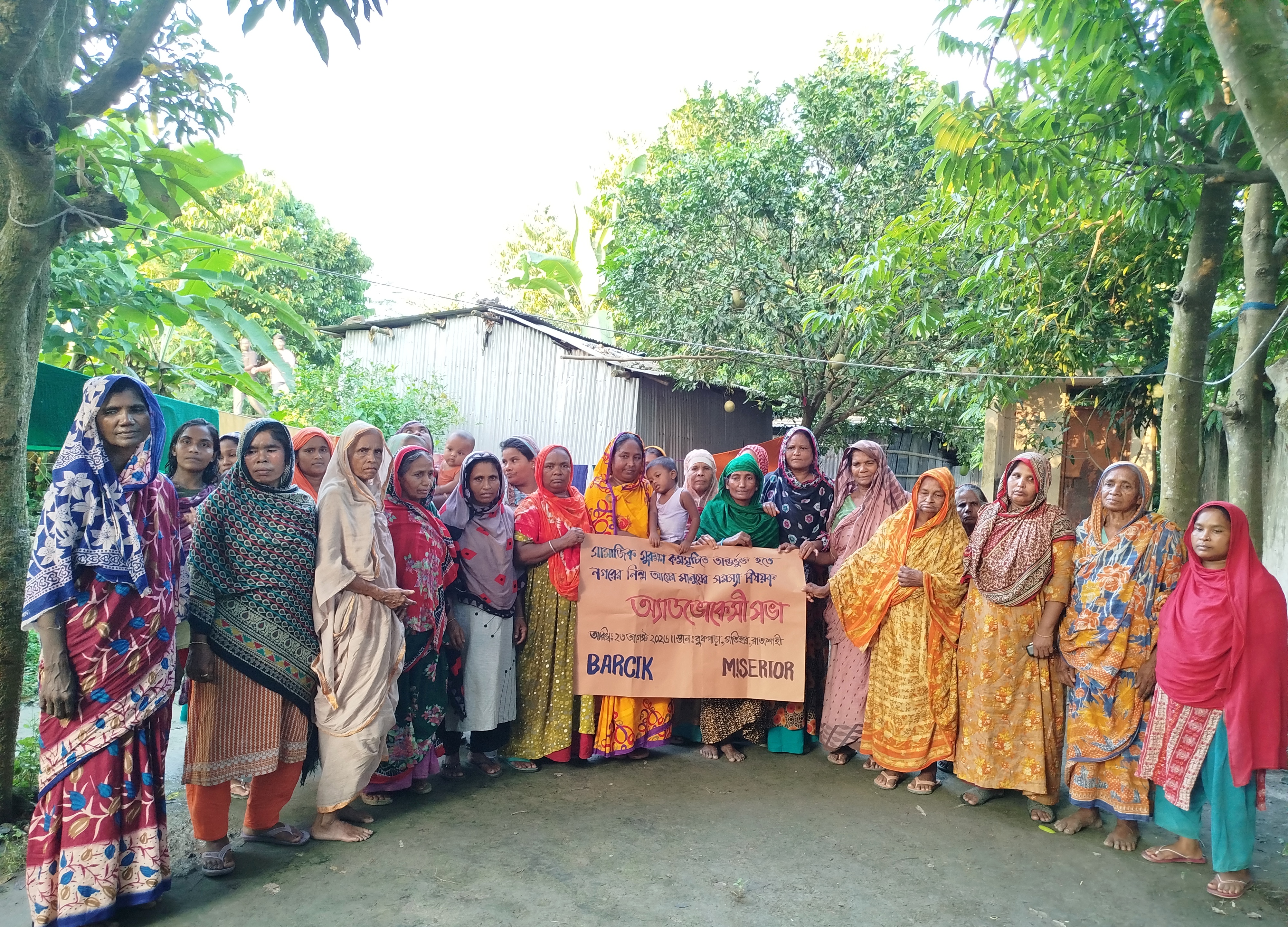
Barendra Youth Forum President Md. Atikur Rahman said exclusion caused by administrative and documentation barriers reflect broader social inequality. He called for simplified application procedures, clear targets for urban poor communities and stronger public participation, while linking social protection with climate adaptation.
BARCIK Programme Officer Amit Sarker said that slum poverty cannot be measured by income alone, as residents face multiple risks related to housing, health, water, sanitation, fires, waterlogging and heatwaves.
The meeting called for updated beneficiary lists in all slums and informal settlements; inclusion of eligible older persons, widows and vulnerable women, persons with disabilities, pregnant and lactating mothers, and poor students; local information and assistance desks; support with essential documentation and financial accounts; adequate budget allocations; transparent beneficiary selection; and climate-responsive support during heatwaves, waterlogging and fires.