
Biswajit Mondal, Shyamnagar, Satkhira
Konklata Mistry, a woman farmer from Baghpara of Purba Kalinagar village in Munshiganj Union, Shyamnagar Upazila of Satkhira, owns only 16.5 decimals of homestead land. Her family consists of five members, and her husband, Shyamdulal, works as a day labourer. Despite limited land, coastal salinity, and other challenges, Konklata had long dreamed of using her homestead to grow vegetables throughout the year.
However, the lack of essential farming materials prevented her from fully pursuing this dream. With farming input support, her initiative has now gained new momentum. Previously unused spaces around her homestead are now being brought under vegetable cultivation. Although Konklata had some cultivable space around her home, she lacked the materials needed to build fencing and trellises. This made it difficult to protect the crops and grow climbing vegetables effectively.
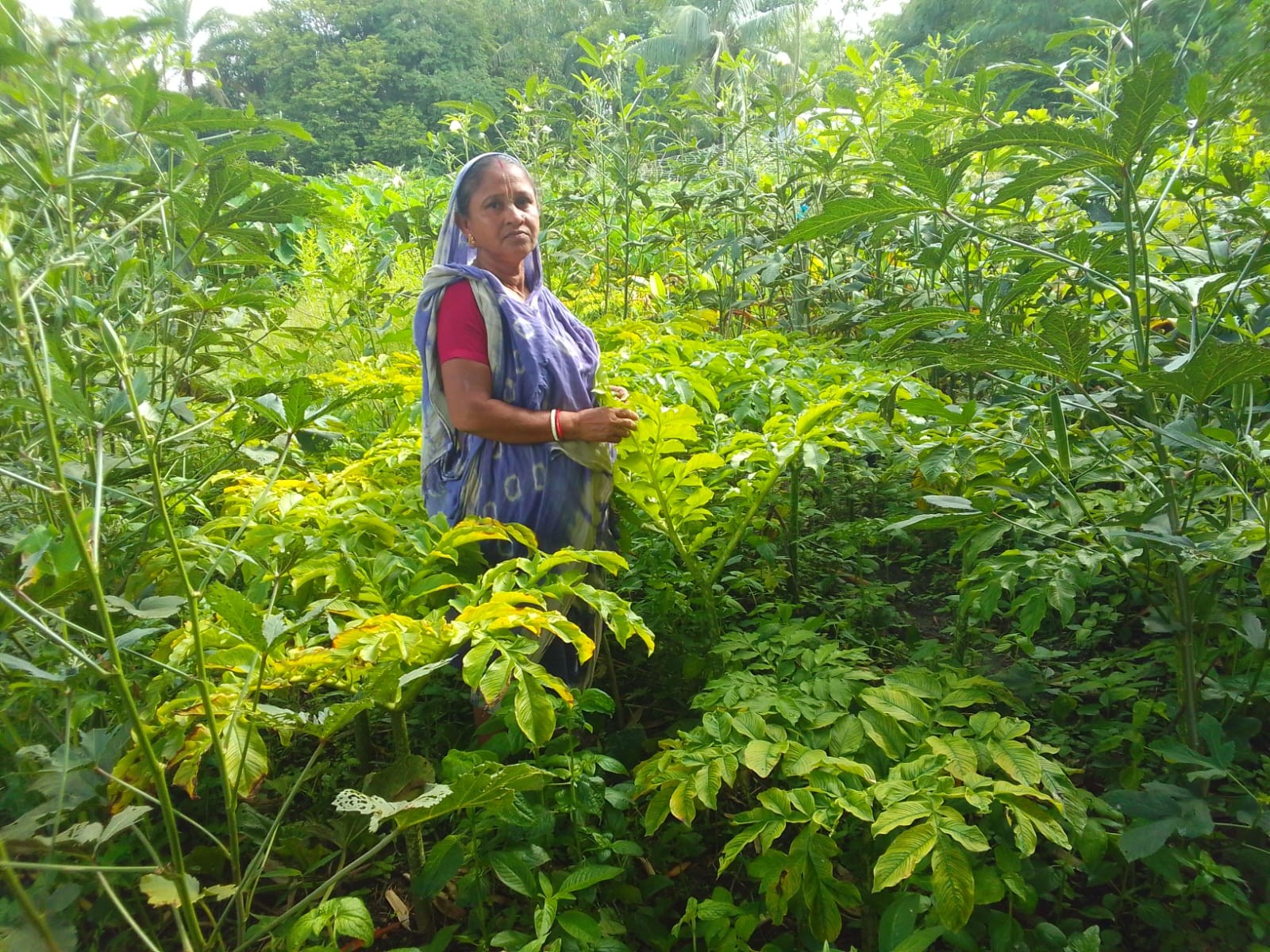
Later, with support from BARCIK under the Empowerment of Women through Climate-Resilient, Low-Carbon Livelihoods in Coastal Areas Project, funded by Standard Chartered Bank, Konklata received nets, bamboo, trellis netting, and fencing materials. She also received training on organic farming practices and the preparation of environmentally friendly cooking stoves. These supports have encouraged her to expand her agricultural activities.
Konklata has built trellises in her homestead courtyard and created structures for climbing vegetables. She also uses nets to protect her crops. As a result, spaces that were previously underused are now contributing to food production.
At present, her homestead garden includes bottle gourd, pumpkin, cucumber, ridge gourd, snake gourd, ginger, taro, okra, elephant foot yam, wax gourd, bitter gourd, and yard-long beans. She plans to rotate crops according to the seasons and produce different vegetables at different times using the same trellis structures. In this way, her 16.5-decimal homestead is gradually becoming a year-round vegetable production space.
Konklata Mistry says: “I always wanted to grow vegetables at home, but I could not afford the materials needed to build trellises, fence the garden, and protect the plants. So, I could not grow vegetables on a larger scale. This year, after preparing my seedbed and raising the seedlings, I was worried about how I would support the plants. In the past, I used tree branches or the roof of our house to support climbing vegetables. At that time, BARCIK provided me with nets, bamboo, trellis netting, and twine. Now I have been able to train my vegetable plants onto trellises. The plants are growing well, and year-round vegetable cultivation has become much easier.”
She further added: “We can now eat vegetables from our garden and sell the surplus. This has increased my confidence and encouraged other women in the community to grow vegetables at home. I also received training from BARCIK on agroecological farming and environmentally friendly cooking stoves. The inputs and training have played an important role in strengthening my farming activities.”
Konklata reports that inspired by her initiative, two other women from the village, Minti and Parul, have also started growing vegetables on trellises in their homesteads this year. Her experience is therefore encouraging other women to make better use of their available homestead spaces.
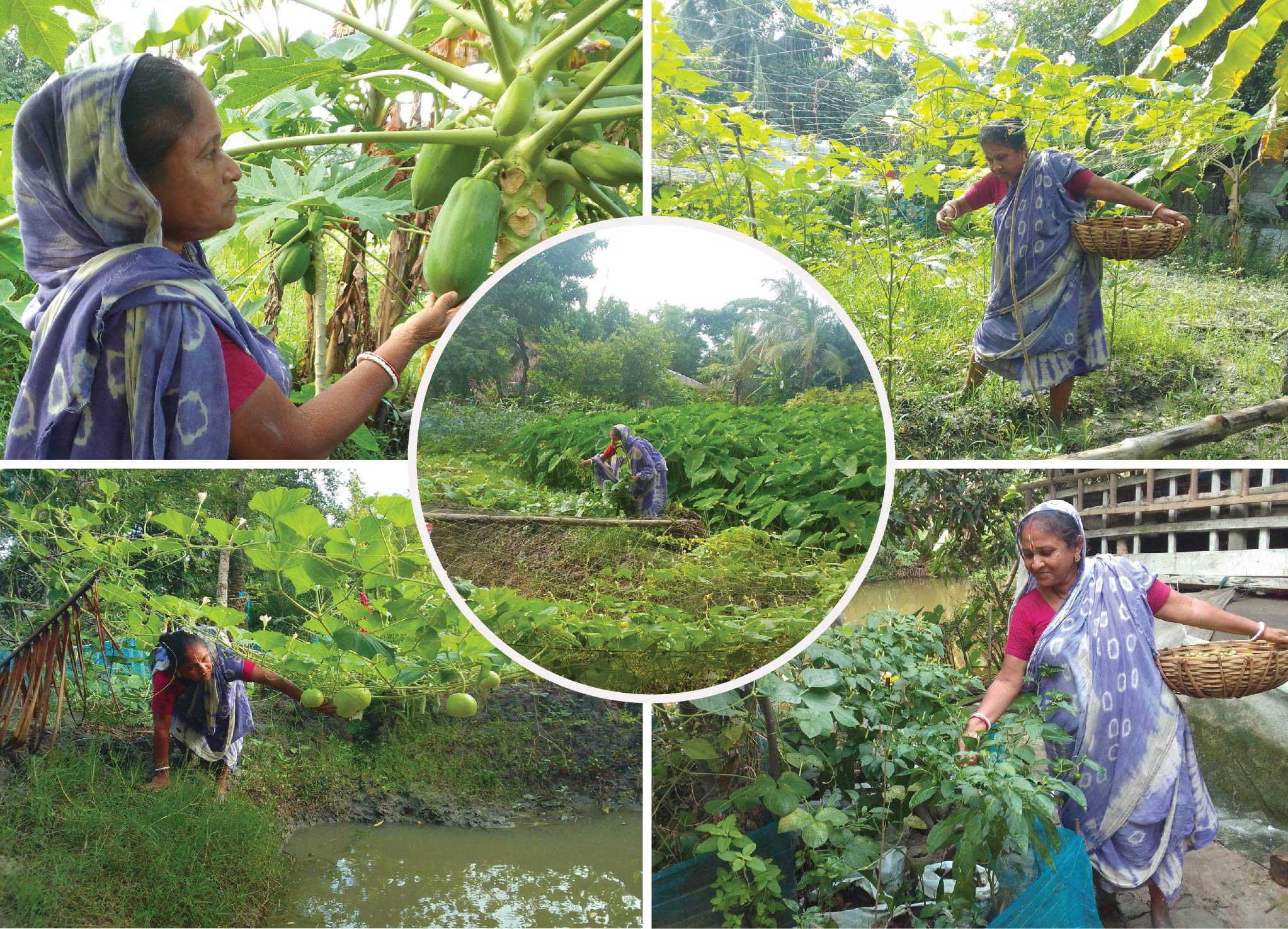
So far this season, Konklata has consumed vegetables worth approximately BDT 2,500 from her garden for her family’s food needs. She expects to sell an additional BDT 8,000–10,000 worth of vegetables during the current monsoon season. This will help meet her family’s nutritional needs while also generating additional income.
Konklata’s experience demonstrates that even with limited land and resources, farmers can make their homesteads more productive when their own interest and hard work are combined with appropriate agricultural inputs and technical support. A relatively small amount of input support has expanded the scope of her vegetable cultivation and created an opportunity for year-round production.
Today, Konklata Mistry’s homestead is more than just a place to live. It is gradually becoming a source of food and nutrition for her family, an opportunity for additional income, and an inspiring example of homestead-based vegetable cultivation for women in the surrounding community.
Translation: ABM Touhidul Alam