
By Ohidur Rahman from Netrakona
For nearly a decade, severe waterlogging had kept hundreds of acres of farmland under water in five villages of Atpara Upazila. A collective initiative by local farmers has now restored the natural flow of the Koinchakhali Canal, bringing relief to the farming community.
The approximately four-kilometre-long Koinchakhali Canal flows through the villages of Deshiura, Rameshwarpur, Abhaypasha, Hosenpur and Basati before connecting with the Saiduli River. It is the main drainage channel for these five villages.
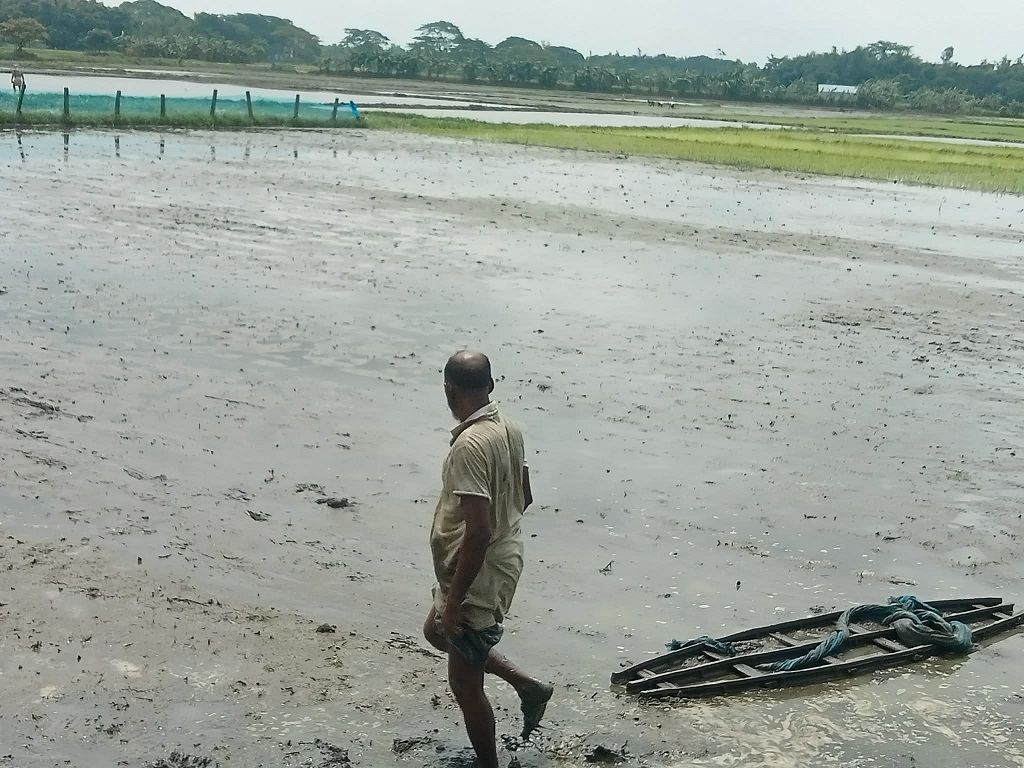
For around ten years, however, the canal’s water flow had been severely obstructed by the construction of makeshift fish enclosures and unplanned settlements along its banks. As a result, rainwater could not drain properly during the monsoon, leaving at least 500 acres of agricultural land belonging to around 250 farmers submerged for long periods.
The waterlogging caused repeated crop losses, particularly during the Aman rice season. Farmers often had to transplant rice seedlings two or three times, only to lose their crops after heavy rainfall. Vegetable production was also severely affected.
Being frustrated by years of hardship, local farmers decided to take collective action. With support from the Tushaipar Farmers’ Organization, Baghra Haor Farmers’ Organization and Atpara Green Coalition Committee, they discussed the problem with villagers and developed a plan to restore the canal through excavation.
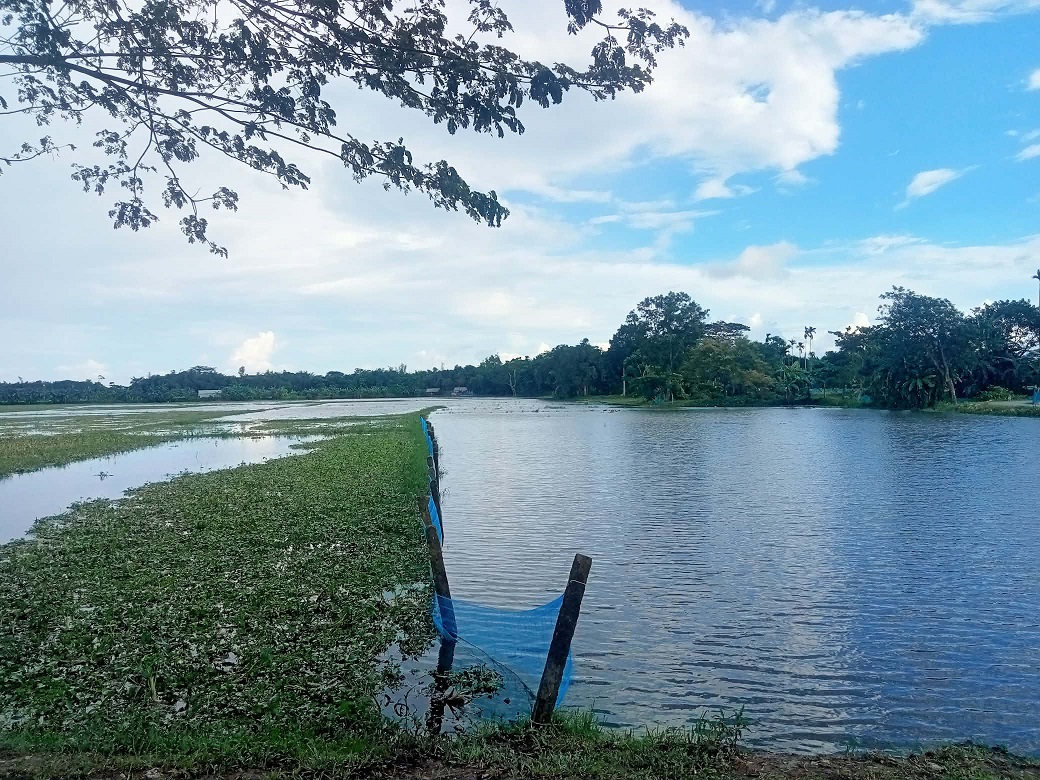
Led by local farmer Fazlul Karim Allad Mia, hundreds of farmers including Samrat Mia, Mukhlesur Rahman, Habikul Islam Aradhan, Janu Mia, Rafiqul Islam Habel Mia, Mukhlesur Rahman Parash Mia, Sayed Ahmed Khan Bachchu and Abdul Wadud Khan joined the initiative. Without waiting for government funding, they contributed their own labour and jointly excavated around two kilometres of the canal.
The excavation has restored the canal’s natural depth and water flow, bringing an end to the long-standing waterlogging in the five villages. Farmers have now resumed Aman rice cultivation with renewed confidence.
Fazlul Karim Allad Mia said, “The ten-year hardship and waterlogging experienced by around 250 farmers have finally come to an end. This year, we are cultivating our land with hope and happiness. There can be no greater joy than this.”
The initiative demonstrates how collective action, mutual cooperation and voluntary labour can help communities address major local problems. After a decade of suffering, the farming communities of the five villages are now experiencing renewed hope and relief.