
By Mofijur Rahman from Shyamnagar, Satkhira
At 32 years of age, Dipti Rani, a fagmer from Shrifalkati Village in Ishwaripur Union under Shyamnagar Upazila, has become an inspiring example of how agroecological practices can transform livelihoods, strengthen food security, and promote women’s leadership.
Managing a family of four, Dipti cultivates crops on 30 decimals of homestead land and 33 decimals of paddy fields. Five years ago, she began participating in training programs on agroecology, organic farming, indigenous seed conservation, year-round vegetable cultivation, water management, vermicomposting, biological pest management, mulching, and poultry rearing.
Before receiving this training, she depended heavily on chemical fertilizers and pesticides and purchased seeds from local markets every season. She also struggled to protect crops from excessive rainfall, which frequently destroyed seedlings and forced her family to rely on purchased vegetables.
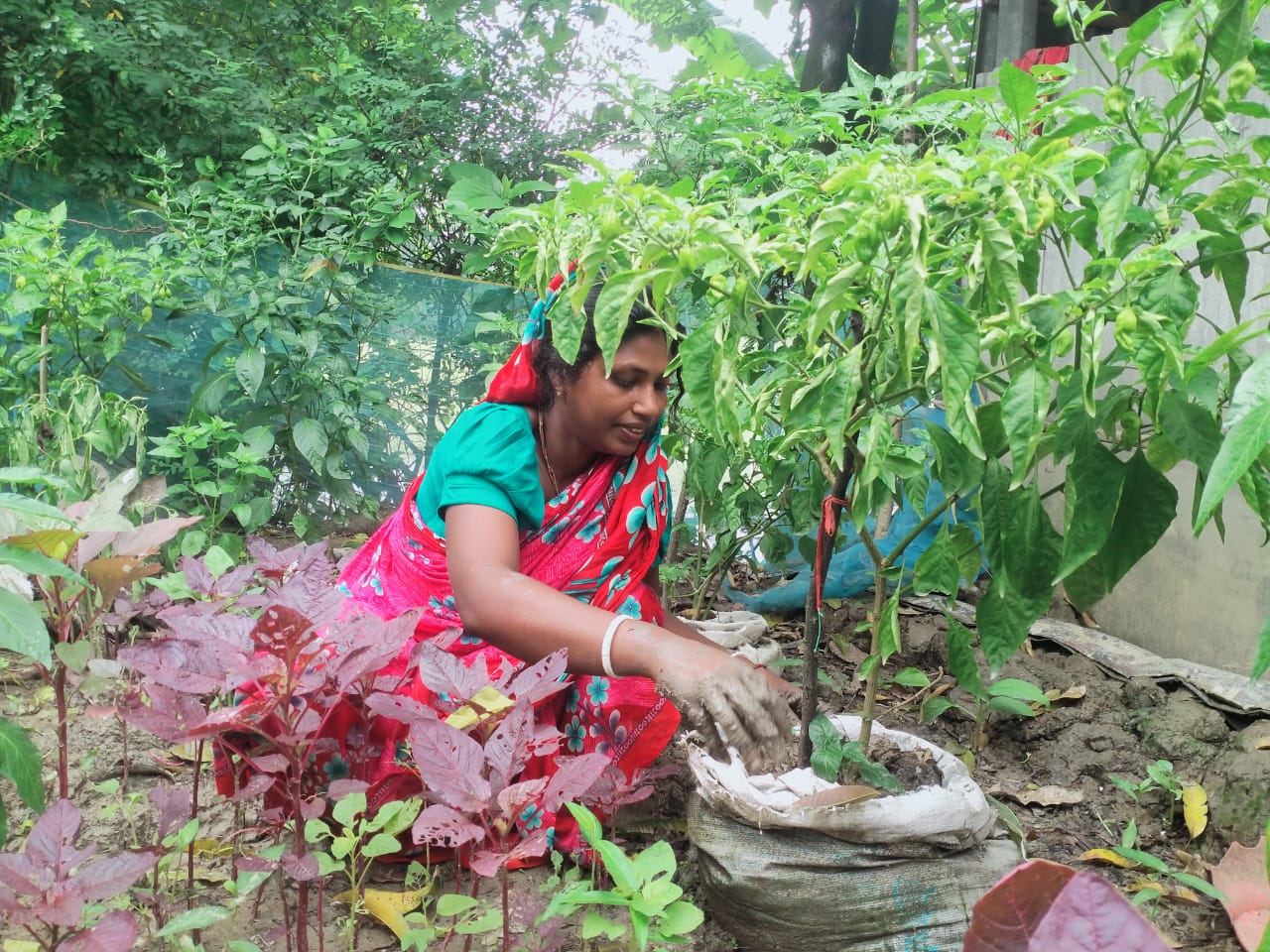
Today, her homestead has been transformed into a diverse and productive nutrition garden that produces a wide variety of vegetables, including okra, eggplant, beans, gourds, spinach, cucumbers, tomatoes, pumpkins, mustard, and numerous other crops. She also maintains a diverse collection of fruit trees, including mango, guava, pomegranate, jackfruit, coconut, tamarind, and lemon.
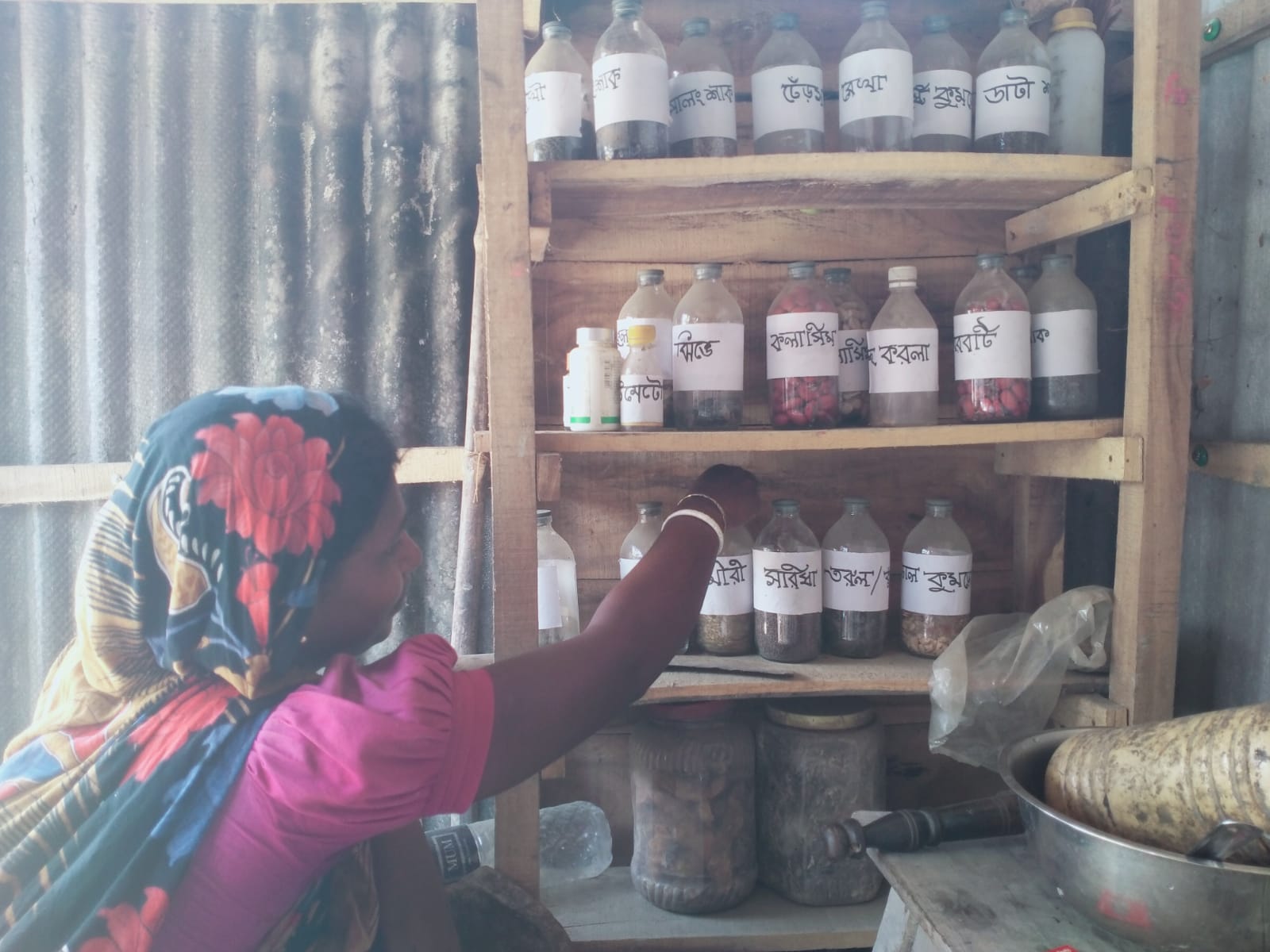
One of her most remarkable achievements is the conservation of indigenous seeds. She currently preserves 23 varieties of vegetable seeds in her household seed bank. By carefully selecting healthy plants, collecting mature seeds, drying them properly, and storing them in glass containers, she has become self-sufficient in seed production and no longer depends on commercial seed markets.
Her diversified farming system has generated significant economic benefits. The family’s daily vegetable requirements are entirely supplied by their own farm, saving considerable household expenses. Additional income is generated through the sale of vegetables, fruits, poultry, eggs, and fish. Altogether, her family’s annual income and savings from these activities amount to nearly BDT 149,500.
Beyond agriculture, Dipti’s social position within her community has changed dramatically. Once reluctant to speak in public, she now confidently shares her experiences at community meetings and training events. Neighbors regularly seek her advice on seed conservation, organic farming, and diversified crop production.
Inspired by her success, at least 25 neighboring farmers have adopted year-round vegetable cultivation and other agroecological practices. Community members also consult her on social and family matters, recognizing her as a trusted local leader.
Dipti Rani’s story demonstrates that combining local knowledge, appropriate training, and personal determination can empower women to become catalysts for both agricultural innovation and social transformation.