
By Subir Sarker fromManikganj:
A local women farmers’ organization organized a fair in Sarupai village of Manikganj Sadar Upazila to conserve indigenous crop seeds, promote agricultural biodiversity and explore opportunities for establishing a local market for traditional seeds and uncultivated plants.
Held on 17 August in Sarupai village of Nabagram Union, the fair brought together women farmers from Sarupai as well as participants from the Joynagar and Ramdianali Agroecology Learning Centers. Farmers displayed a wide range of indigenous seeds and uncultivated plants that they had collected and preserved themselves.
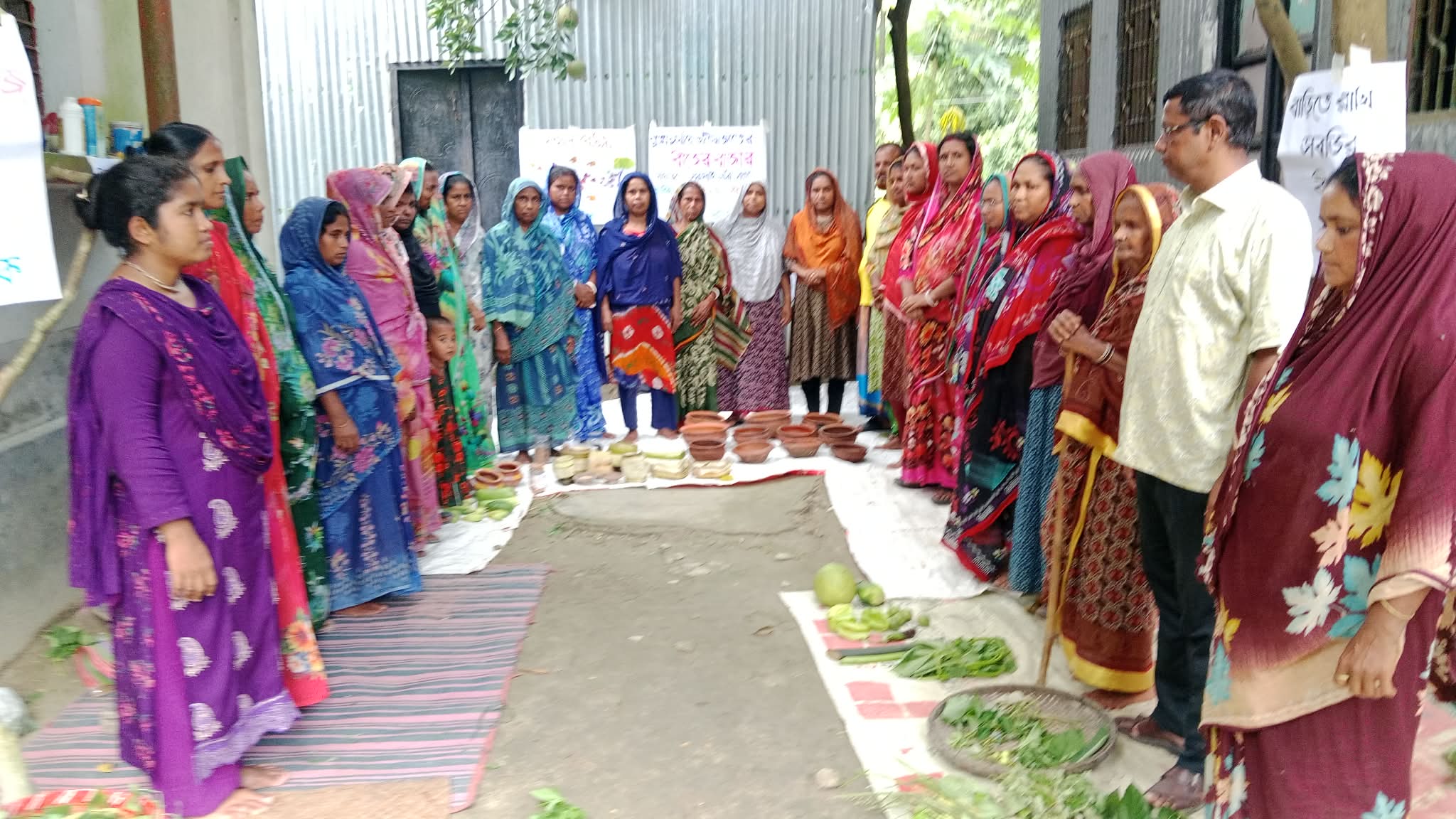
More than 100 local varieties of seeds and plants were displayed, including indigenous bottle gourd, beans, ridge gourd, chilli, cucumber, ash gourd, radhuni, black cumin, fenugreek, Chaitra mustard, safflower, amaranth, indigenous rice varieties such as Digha, Bhaoyalya, Dudh Bhaoyalya, Dhepo, Madhushail, Hijal Digha and Mulla Digha, as well as water lily, thankuni, Dima greens, sesame, red amaranth, punarnava and helencha.
Alongside the exhibition, participating women farmers also sold seeds and plants from their own collections, creating an opportunity for direct exchange and local marketing.
The participating farmers emphasized the need to establish a permanent local market for farmer-preserved seeds. Such a market, they said, could strengthen indigenous seed conservation while creating additional income opportunities for farming households.
A discussion and experience-sharing session was held under presided over by Reshma Akter, President of the Sarupai Women’s Organization. Researcher and farmer Md. Monowar Hossain, BARCIK Program Officer Kamal Chandra Dutta, Subir Kumar Sarker, General Secretary of the Women’s Organization Nurjahan Begum, and local farmers including Selina Akter, Alpana and Anjana participated in the discussion.
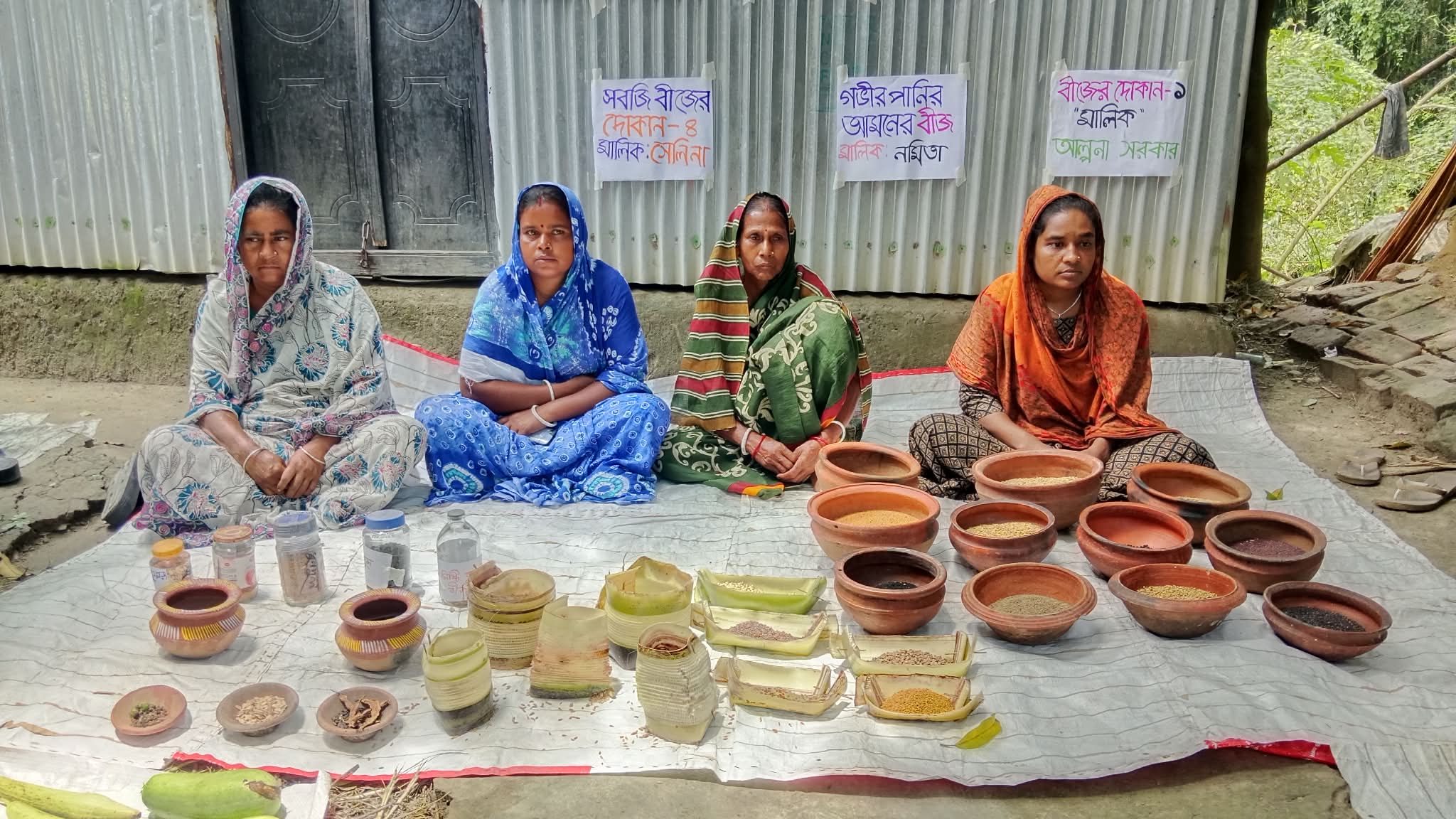
Speakers stressed that developing local markets for indigenous seeds would help to conserve agricultural biodiversity and increase farmers’ income and strengthen community control over local seed resources.
The fair demonstrated the important role of women farmers in conserving traditional crop diversity, sustaining indigenous knowledge and developing community-based seed systems.