
By Md. Shahidul Islam from Rajshahi
Bangladesh’s agriculture stands at a crossroads. As the race to increase food production intensifies, dependence on pesticides grows raising critical questions about the country’s agricultural philosophy and commitment to environmental and public health.
Bangladesh has a long legal history surrounding pesticide regulation, beginning with colonial-era laws of 1877 and 1914, evolving through post-independence policies, and culminating in the Pesticide Act 2018, one of the most comprehensive legal frameworks in South Asia. On paper, it covers everything that ranges from registration to sales, use limits, toxicity classification, illegal trade, and penalties including license cancellation and imprisonment.
Yet, reality tells a different story. Despite the strong legal framework, harmful and even banned pesticides remain widely available. Research by BARCIK reveals that many pesticide retailers operate without licenses or training. Some cannot distinguish between banned chemicals, high-risk products, or recommended dosage. Many still sell Category 1a and 1b pesticides—extremely hazardous substances known to harm reproductive health, damage lungs, and disrupt hormonal balance in humans and animals.
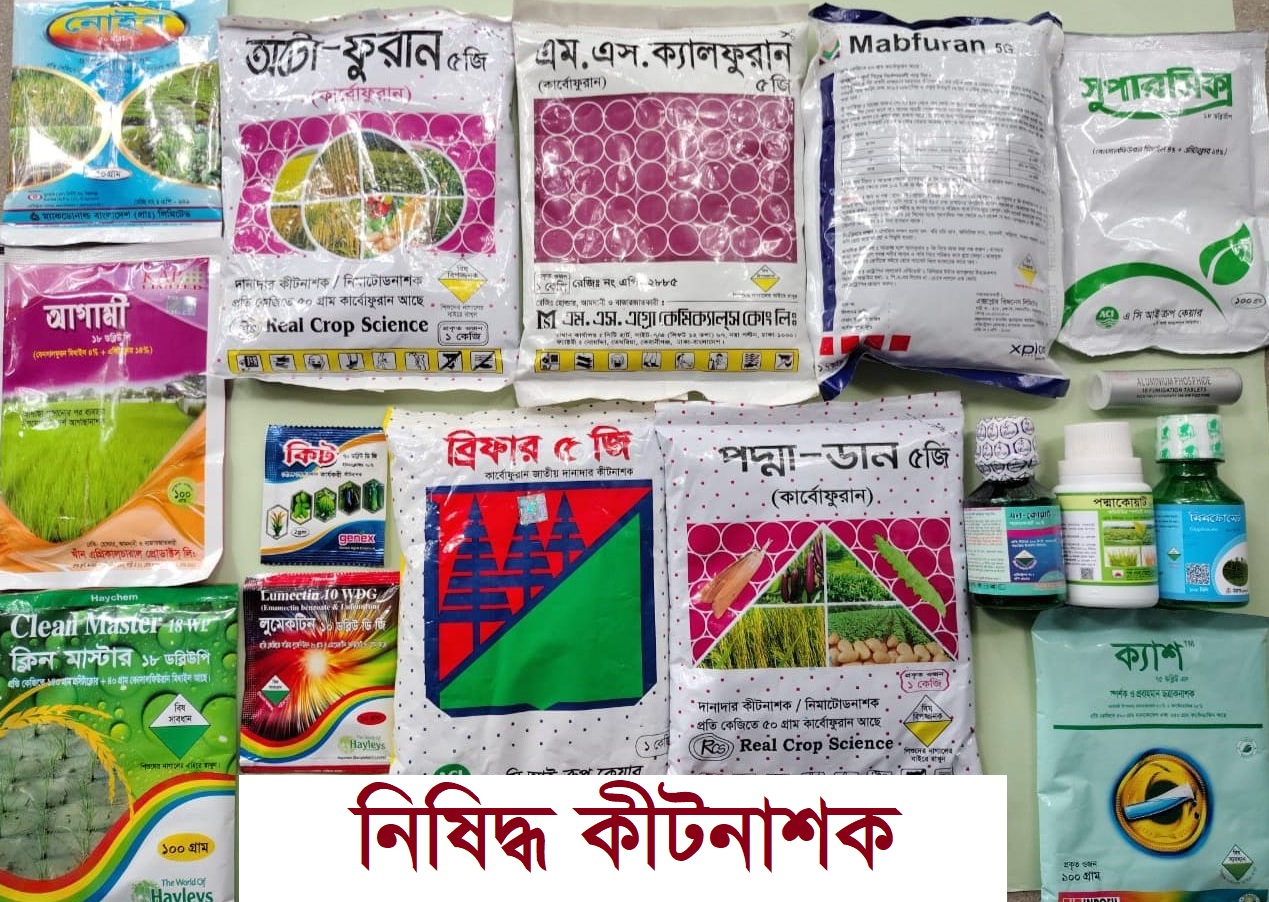
The contradiction is stark. The law exists, but enforcement does not. Bangladesh also has multiple environmental laws such as the Environmental Conservation Act (1995), Biodiversity Act (2017), Water Act, Forest Act, and Environmental Court Act all these laws intended to protect soil, rivers, fish, birds, pollinators, and ecosystems. Yet, agriculture and environmental regulation remain disconnected. There is almost no coordinated monitoring, testing, or prosecution for pesticide-driven ecological destruction. Cases of biodiversity loss rarely reach environmental courts due to lack of laboratory support and evidence tracking.
The consequences are visible at every level. Farmers often spray chemicals without gloves, masks, or training. Children play in freshly treated fields. Livestock graze where pesticides were applied hours earlier. Symptoms such as nausea, skin burns, headaches, breathing problems, and long-term risks like cancer, infertility, and neurological disorders are now common yet remain undocumented in the health system.
Biodiversity is collapsing. Pollinators decline, frogs and insect-eating birds disappear, soil microorganisms die, and aquatic life suffers. As natural pest control systems weaken, chemical dependency only deepens, locking agriculture into a dangerous cycle.
The recent ban on Carbofuran and other harmful pesticides in 2023 is a positive step, but the chemicals are still found on store shelves. This is proof that regulation stops at the announcement, not enforcement.
To bridge the gap between law and practice, urgent reforms are needed:
- Create a unified Pesticide Governance Council involving agriculture, health, environment, and industry ministries.
- Digitize and enforce licensing, making training mandatory for sellers.
- Launch nationwide zero-tolerance enforcement against illegal pesticides.
- Provide seasonal farmer training and ensure access to safe alternatives.
- Enable environmental courts to prosecute cases of pesticide-driven ecological damage.
- Center agroecology, organic farming, and indigenous knowledge in national policy.
Bangladesh must ask itself: Is food security only about quantity or also about the health of people, soil, rivers, and future generations? If the state remains absent from this toxic marketplace, the cost will not only be environmental degradation but a slow, silent public health disaster. The time to act is now. Otherwise, the poison in our fields may define the future of Bangladesh.