
By Mofijur Rahman from, Shyamnagar, Satkhira
In Khoshalkhali village of Shyamnagar, Satkhira, farmer Rupa Rani has transformed her homestead into a diverse source of food, nutrition and income. Using available space around her home, she now grows 23 types of vegetables and 18 types of fruits, while also rearing cattle, goats, ducks and chickens. She conserves 11 varieties of local seeds and uses homemade organic fertilizers and biopesticides instead of chemical inputs.
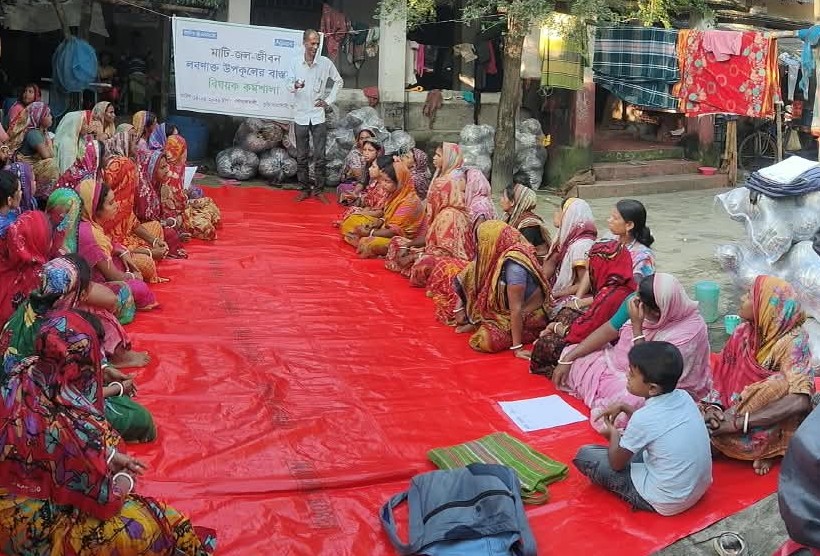
Previously, much of her homestead remained unused and the family depended more heavily on markets for vegetables. After coming in close touch of BARCIK, Rupa received training on vermicompost, biopesticides, local seed conservation, beneficial and pollinating insects, crop diversity and mixed farming. Visits to the Dhumghat and Sriphalkati Agroecology Learning Centres further demonstrated how small homesteads could support food security and income.
Today, her homestead produces vegetables including bottle gourd, pumpkin, bitter gourd, cucumber, yardlong bean, eggplant, ridge gourd, okra, taro, yam, ginger, Malabar spinach and others. It also contains diverse fruit trees such as mango, guava, lemon, coconut, jackfruit, papaya, moringa, jujube, wax apple, wood apple, tamarind, palmyra, date and sapodilla.
Rupa carefully selects, dries and stores seeds in glass bottles and by hanging them from the rafters. Her collection includes local varieties of yardlong bean, taro, yam, chilli, ginger, red amaranth, spinach, Malabar spinach and other crops. She also shares seeds with neighbours, strengthening local seed exchange.
Through training, she learned to produce vermicompost and biopesticides and to grow ginger in sacks and reuse discarded containers. She says the cost of fertilizers and pesticides has fallen to around one-quarter of its previous level.
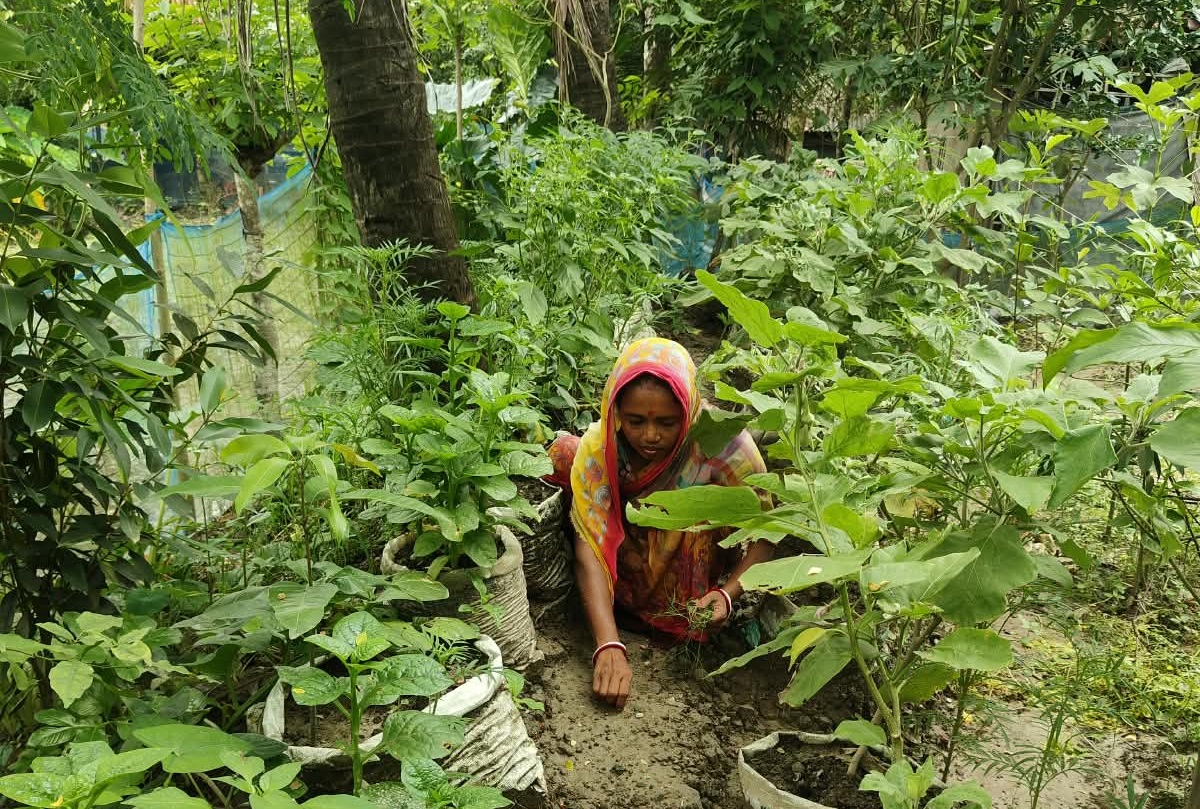
Her family now collects about 3 kg of vegetables daily, worth approximately Tk 90 at market prices. Around Tk 32,000 worth of vegetables are consumed annually, while surplus sales generate about Tk 48,000, providing an estimated total annual benefit of Tk 80,000.
Rupa says BARCIK’s training and visits to agroecology learning centres were among her most valuable learning experiences. Her homestead has also become a place where neighbours seek advice on local seeds, vegetable cultivation and organic pest management.
Her experience demonstrates how even a small homestead can become a foundation for food security, nutrition, biodiversity conservation, income generation and women’s empowerment, particularly in the saline coastal environment.