
By Maruf Hossain Milon, from Coastal Region
In the cyclone- and flood-prone coastal region of Satkhira, food insecurity is a recurring challenge. Yet Anita Mallik, a resident of South Bhetkhali village in Shyamnagar Upazila, has developed a practical way to prepare for difficult times. Drawing on traditional knowledge and household experience, she preserves 88 types of food through drying and pickling seasonal fruits, vegetables, herbs and fish. Her initiative helps to meet her family’s food and nutritional needs as well as offers an inspiring example for other women seeking to strengthen household food security during and after disasters. Anita has been associated with BARCIK since 2025.
Turning disaster experiences into food preservation
Having grown up in a financially disadvantaged family, Anita has faced many challenges throughout her life. She now manages a seven-member household with her husband, Asit Mallik, two sons, daughters-in-law and grandchildren. Alongside household responsibilities, farming and livestock rearing, she is actively involved in women’s leadership and community activities through the Kachharibari Women Development Organisation. Living in the coastal region, Anita has repeatedly witnessed how cyclones, tidal surges and floods damage crops, vegetable gardens and domestic animals, disrupting household food supplies. Fresh vegetables and other food become particularly difficult to obtain during and after disasters. These experiences encouraged her to explore alternative ways of preserving food. Around 14 years ago, she began drying seasonal produce and preparing pickles. Gradually, using traditional knowledge, family practices and her own experience, she developed considerable skills in food preservation. Today, this practice has become an important part of her family’s food management.
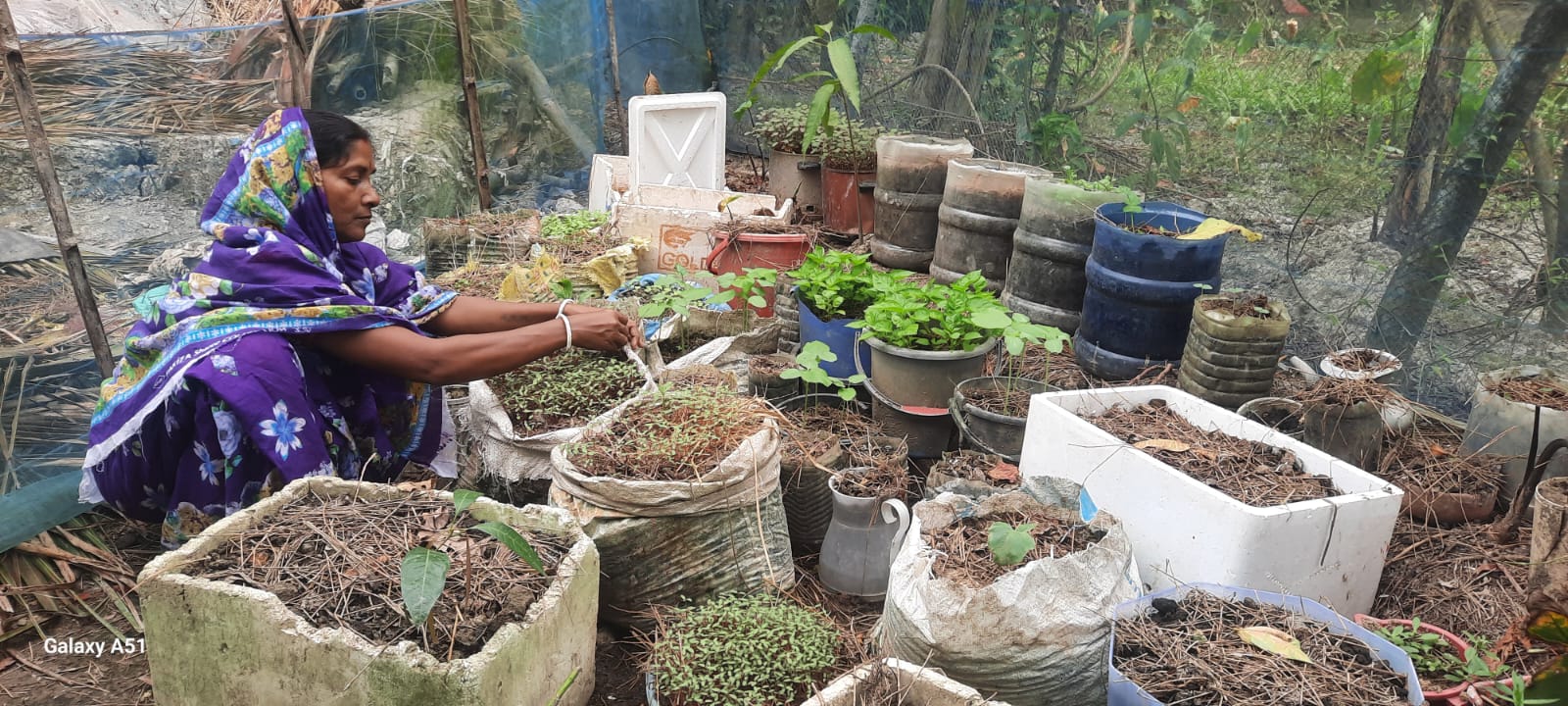
Preserving 88 types of food through traditional knowledge
Anita’s collection reflects the diversity of locally available food resources. She preserves different vegetables, fruits, leaves, herbs, roots, fish and other food products. These include cabbage, green chilli, potato, taro, eggplant, tomato, radish, cauliflower, drumstick flowers, beans, jujube, tamarind, mango, chalta, keora, neem leaves and flowers, thankuni leaves, ginger and bottle gourd leaves. She also prepares dried lentil dumplings (bori), dried fish and various fruit and vegetable pickles. Altogether, she has developed a collection of 88 types of dried foods and pickles. Depending on the food, she stores them in glass jars, earthen pots, plastic containers and airtight polythene packaging to keep them available for future use. Her preserved food collection includes dried vegetables, leafy greens, fruits, medicinal plants and different varieties of local fish, such as rohu, tilapia, tengra, koi, shol, punti and hilsa, as well as shrimp. She also prepares pickles from mango, olive, cucumber, tomato, star fruit, jujube, keora, water apple and guava. Collecting seasonal produce when it is abundant and preserving it for later consumption, Anita makes a wider variety of food available throughout the year. This practice also helps to reducing food waste and dependence on market supplies.
Strengthening food security during disasters
Anita believes food preservation is particularly important for women living in disaster-prone coastal communities. She said, “During disasters, vegetable gardens and rice fields are often destroyed, and domestic animals may die. Families then face serious food shortages. Having dried food and pickles stored in advance makes it easier to manage food needs during and after disasters.” She collects seasonal fruits and vegetables when they are readily available, dries them or turns them into pickles, and stores them for later use. She also shares her knowledge with neighbouring women, many of whom have started preserving food at home. She emphasizes that food preservation alone cannot address every challenge during prolonged disasters. Adequate food supplies, safe drinking water and cooking facilities are also essential. Nevertheless, properly prepared and stored food can provide an important household reserve.
From a household practice to a community initiative
Anita wants to expand her initiative beyond her own household. Through participation in events and fairs organized by local organizations and BARCIK, she displays preserved foods and encourages other women to adopt similar practices. So far, she has taught 25 people how to prepare preserved foods and around 145 people tailoring skills. Through exhibitions and interactions at different fairs, she has also raised awareness among more than 500 women about food drying and preservation. Although she has not yet earned income from selling preserved foods, the practice reduces her family’s food shortages, supports nutrition and helps them prepare for disasters. She also distributes preserved foods free of charge among relatives and neighbours. Her other activities contribute to household income. She earns approximately Tk 3,000 per month from farming, Tk 5,000 from tailoring and Tk 6,000 from livestock rearing. She also plays an important role in family financial decisions, including income, expenditure and savings. Her husband and two sons regularly entrust their earnings to her. Beyond her family, Anita has established a women’s organization in her village and helped to developing a community seed bank. She also works to promote women’s rights and leadership by encouraging access to government and non-government training opportunities.
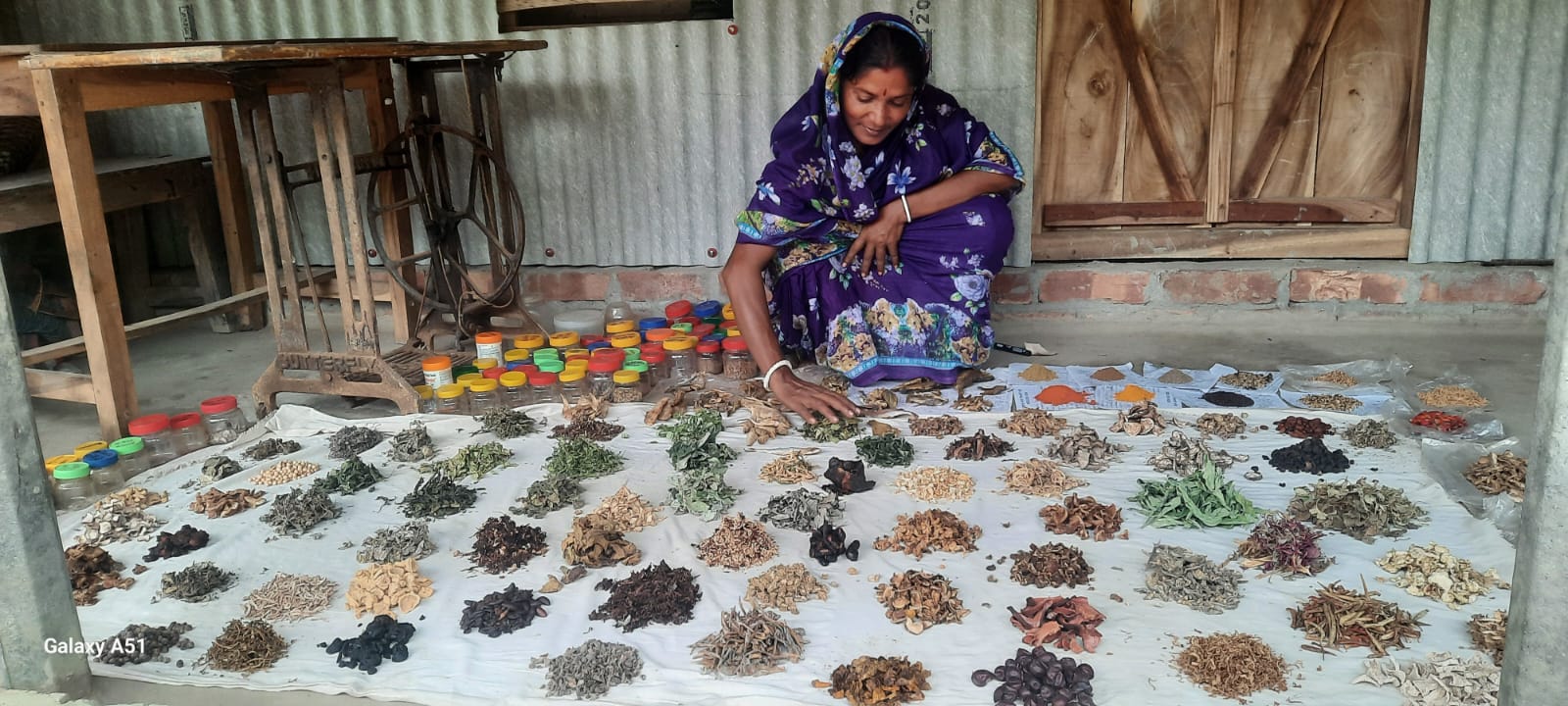
A model of women’s leadership and climate adaptation
Anita Mallik’s experience demonstrates how traditional knowledge, household skills and women’s initiatives can contribute to climate resilience. In disaster-prone coastal communities, preserving seasonal food can help families to maintain dietary diversity, reduce food waste and prepare for periods when fresh produce becomes scarce. Her collection of 88 types of dried foods and pickles represents more than a household preservation practice. It reflects women’s knowledge, leadership and capacity to turn locally available resources into practical solutions. With appropriate technical training, food-safety guidance, improved storage facilities, product development and market connections, such initiatives could also create income-generating opportunities for coastal women. Anita’s journey shows that recognizing and sharing women’s knowledge is essential to strengthening community resilience. Her work offers a valuable example of how local food traditions can support household food security, women’s empowerment and climate adaptation in coastal Bangladesh.