
By Ranjit Barman, from Shyamnagar, Satkhira
“We do not consume poisonous food ourselves, nor do we want others to consume it. With courage, confidence and proper planning, development is possible,” says Chandana Rani, a 30-year-old woman from Kadamtala village of Burigoalini Union, Shyamnagar, Satkhira, near the Sundarbans.
Despite the growing impacts of climate change in coastal Bangladesh, Chandana has developed a biodiversity-rich, climate-resilient family farm on her 30-decimal homestead. Her husband, Ranjan Mondal (34), is a day laborer, and they have two children, Sajib Mondal (9) and Dhriti Mondal (3).
Chandana has transformed her homestead into a practical climate-resilient agricultural learning centre using local knowledge, technologies and adaptation practices. Her farm includes local varieties of ducks, chickens, goats and cattle; seasonal vegetables; indigenous fish species; uncultivated plants; medicinal herbs; and fruit and timber trees.
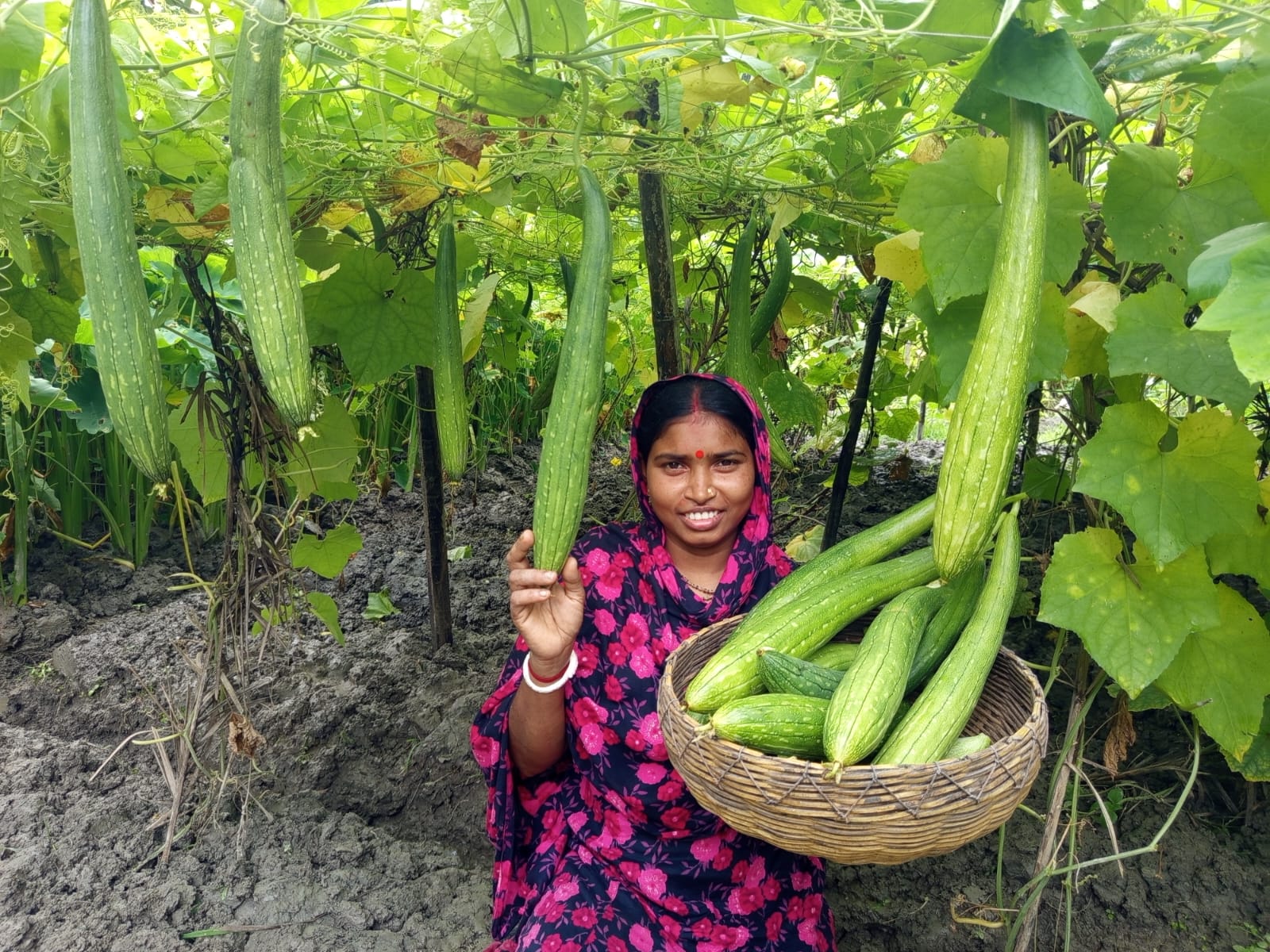
Her farm demonstrates a range of low-cost practices, including ginger cultivation in sacks, chilli cultivation in recycled containers, trellis and bed-based vegetable production, a nursery of local plant varieties, three-tier cropping, fish cultivation in ponds combined with vegetables on raised structures, and fruit trees along pond banks. She also collects and harvests rainwater, uses an improved fuel-efficient oven and produces crops using organic methods and botanical pest control.
Through a small women’s group, Chandana promotes environmental and community development activities. Inspired by her experience, neighboring women including Tulshi Rani, Anjali Rani, Dolly Rani, Parbati Rani, Asiya Parvin, Sita Rani and Renuka have established or are developing similar household farms.
Chandana has also established a local seed bank, where indigenous seeds are conserved, multiplied and exchanged. She sells farm produce locally and at weekly markets. In addition, she earns an income from tailoring at home. Her husband supports her agricultural activities alongside his work as a day laborer.
Her diversified sources of income have improved her family’s economic situation. She is now saving regularly through a bank account and a local non-government organization. Her aspirations are to improve her homestead and ensure quality education for her two children.
The local Sub-Assistant Agriculture Officer has visited her farm and provided technical advice. Chandana believes further training and access to government and non-government support, including agricultural inputs, would help her develop the farm further.
Chandana’s farm demonstrates how local knowledge, biodiversity conservation, climate adaptation and diversified livelihoods can strengthen household food security and resilience in coastal communities. Local stakeholders believe that recognizing and supporting such knowledge and practices could contribute to conserving coastal biodiversity and strengthening sustainable family farming across Bangladesh.