
By Sandra Nandini Bala from Dhaka
A five-day practical baking training organized by BARCIK has equipped 23 low-income women from the Hazaribagh slum area of Dhaka with new skills aimed at creating opportunities for self-employment and financial independence.
The training was organized to strengthen the skills and confidence of women from marginalized communities. Conducted in two batches, the sessions were led by experienced trainer Farhana Liya, who provided hands-on instruction in preparing a range of popular baked and snack items.
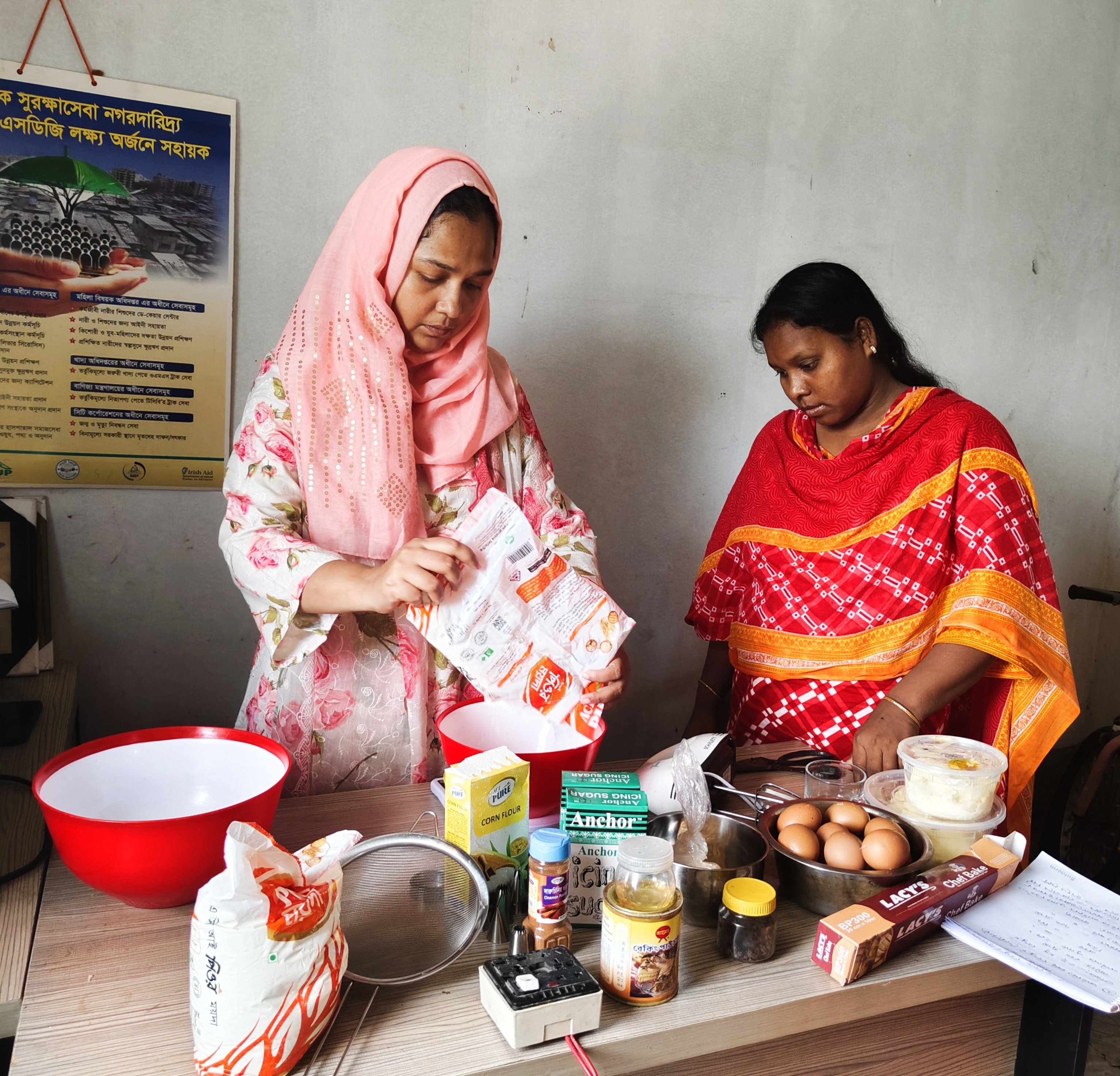
The first batch began on 25 August 2026, with 13 women from the Babubazar Balurmath slum in Hazaribagh participating. Over five days, they learned to prepare pound cake, cupcakes, buns, pizza, chicken nuggets and chicken donuts.
Following the completion of the first batch, a second five-day training session was organized for 10 women from the Section area of Babubazar Balurmath slum. Participants learned to prepare momos, vegetable rolls, samosas, salted biscuits, piping biscuits, nut cookies, birthday cakes, pastries and the traditional Bangladeshi sweet rosogolla.
According to Hena Akhtar Rupa, Associate Program Officer at BARCIK, the two consecutive training sessions enabled 23 women to gain practical experience in preparing a wide variety of baked goods and snacks.
Trainer Farhana Liya said the initiative was particularly encouraging because women from different age groups participated with enthusiasm and a strong interest in learning. She appreciated the effort to create opportunities for low-income women to develop practical skills that could potentially support their livelihoods.
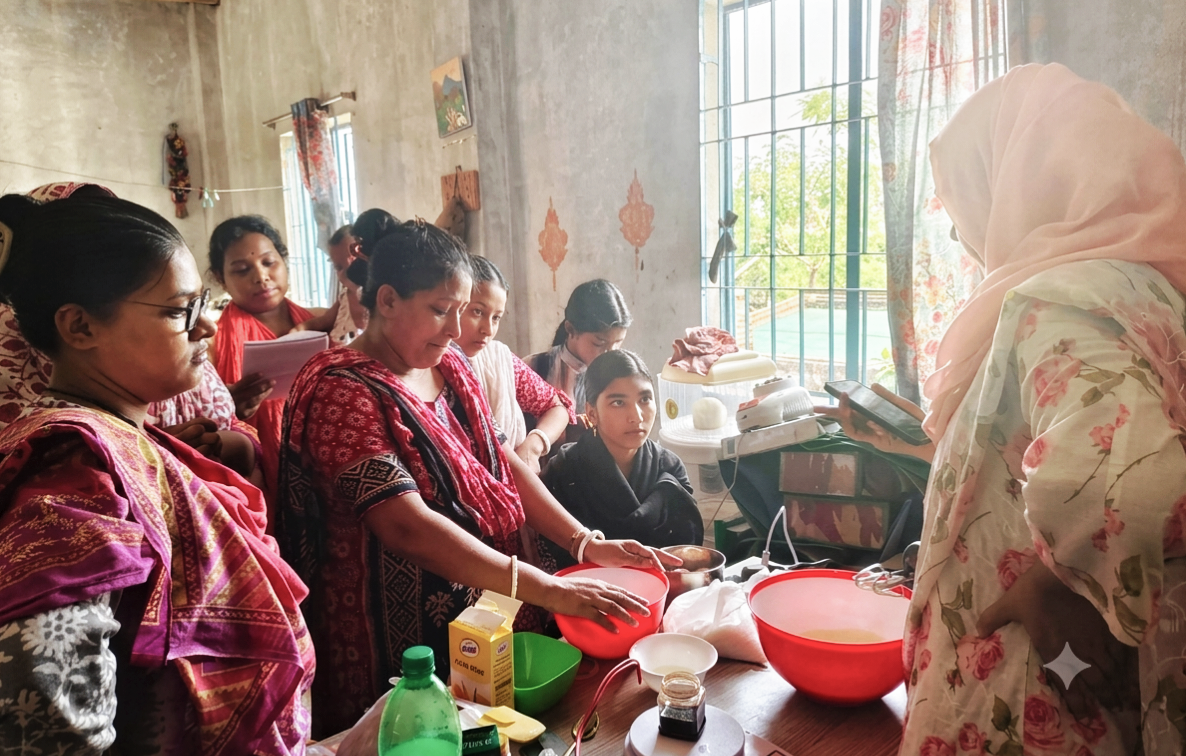
The training also provided participants with an opportunity to learn through direct practice rather than classroom-based instruction alone. Their enthusiasm and active participation reflected their interest in developing skills that could be used for household income generation or small-scale food businesses.
Sandra Nandini Bala, a BARCIK volunteer who observed the training, said the enthusiasm and concentration of the participants were inspiring.
She said that regular skill-development initiatives of this kind could help more women from marginalized communities to gain confidence, develop income-generating skills and move towards greater economic independence.
The initiative demonstrates how practical vocational training can create new possibilities for women living in economically vulnerable communities. Participants’ interest and commitment also point to the potential for similar programmes to be expanded to other low-income communities in the capital.