
By Md. Nazrul Islam from Manikganj
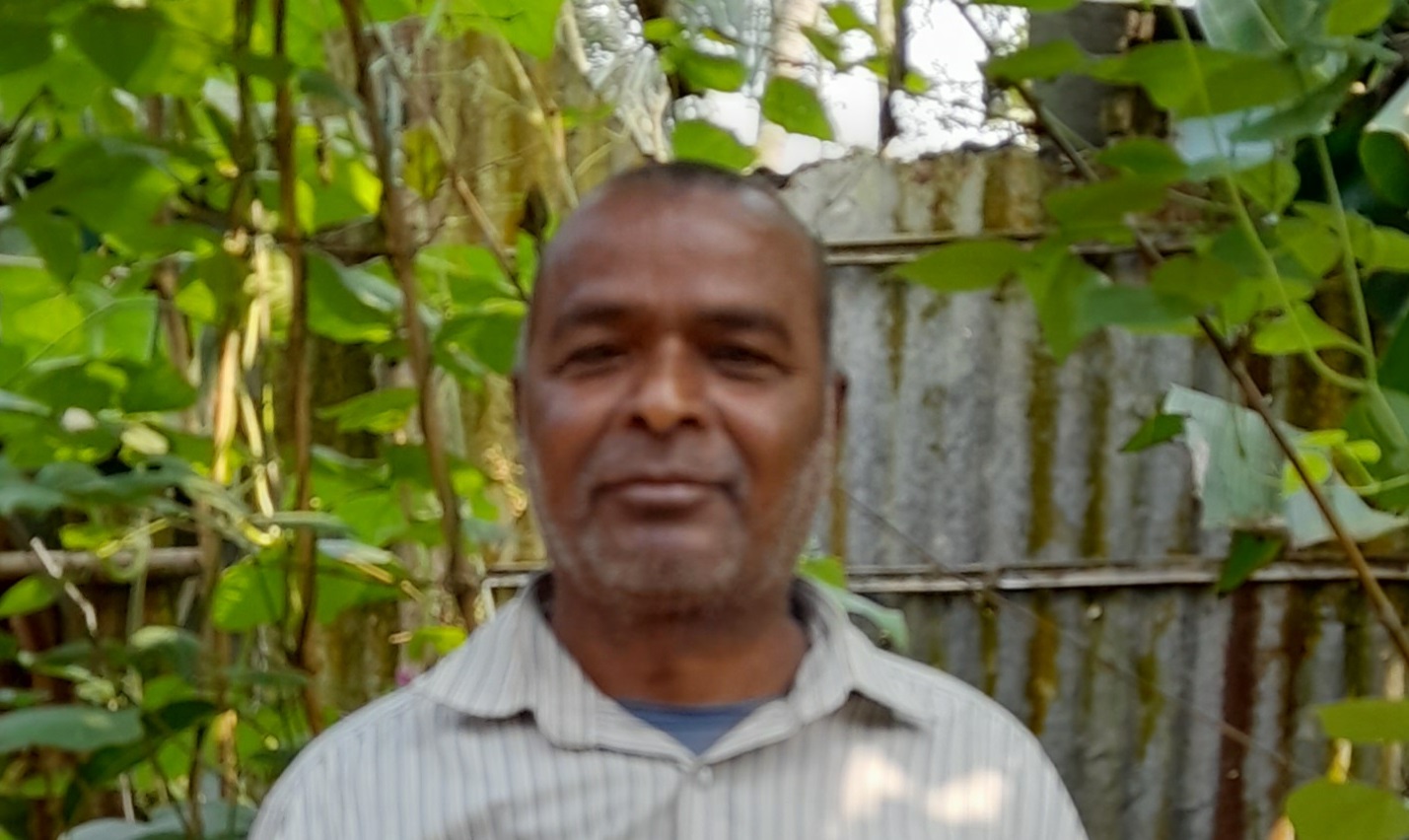
Traditional knowledge and family practices were once closely connected with agriculture, nature and rural life in Bangladesh. These included conserving indigenous seeds, using medicinal plants for home remedies, raising livestock and collecting natural resources from wetlands. Many of these practices are gradually disappearing under the influence of modernization. Yet some people continue to preserve this heritage through their experience and dedication. Manabendra Sarkar, 62, of Kaitra village in Manikganj Sadar Upazila, is one of them. He is a farmer, a practitioner of traditional herbal remedies and a dedicated custodian of rural biodiversity. During a recent visit, accompanied by colleague Gazi Shahadat Hossain Badal, we spoke with him about changes in agriculture, rural life, traditional fishing practices, biodiversity and the herbal knowledge he inherited from his father.
From family responsibility to farming
Manabendra is the eldest of four brothers and one sister. After his father, Harendra Nath Sarkar, passed away, he took responsibility for supporting his younger siblings and managing the family. Although he completed secondary school (SSC), he could not continue his education. Instead, he devoted himself to farming on approximately 16 bighas of family land. He also continued practising traditional herbal remedies, which he had learned from his father. “My mother used to say that the eldest son has greater responsibilities,” he recalled. “I gave up my studies so that my younger brothers and sister could continue theirs. With my father’s blessings, they all received higher education and are now established in their respective fields.” His two sons are also educated and established. Although fewer family members are now involved in farming, he remains committed to agriculture and traditional knowledge.
Changing agriculture and rural life
Remembering his childhood, Manabendra describes a time when farming was closely connected with livestock and nature. Families kept plough cattle, employed farmhands and used farmyard manure, ash and kitchen waste to prepare organic fertilizer. He recalls going to the fields with farmhands at dawn and breaking soil clods in the evening. He also remembers traditional Aman and Aus rice varieties, including Bhaoila, Haitta, Digha and Kalamonik. These varieties, together with mustard, grass pea, black gram, chickpea and peas, helped meet household food needs throughout the year. Over time, population growth, changing food demands and the introduction of modern technologies and high-yielding varieties transformed agriculture. Farmers increasingly depend on Boro rice, irrigation, machinery, chemical fertilizers and pesticides, raising production costs. “Earlier, an investment of Tk 10,000 could generate more than Tk 100,000 in annual profit. Now, even after spending over Tk 100,000 on tractors, irrigation, fertilizers, pesticides, seeds and labour, earning Tk 10,000 in profit is difficult,” he said. He also noted that traditional Aman rice produced more straw, which supported livestock rearing. Although modern Boro rice varieties often provide higher grain yields, they produce less straw, weakening the traditional connection between crop cultivation and livestock. Today, he has leased out most of his land to other farmers and cultivates only a small portion himself. He believes farming can still be profitable if farmers have access to their own machinery, irrigation facilities and adequate labour.
Traditional fishing and rural craftsmanship
Beyond farming and herbal remedies, Manabendra has a deep interest in fishing and traditional craftsmanship. During the monsoon, he makes fishing nets, cattle ropes and other fishing equipment. He can also make traditional bamboo fishing tools, including traps, baskets and different types of nets. Near his home are Bailadahi and Helachia-Bhatshala wetlands, where traditional polo fishing events were once held annually. Although these events continue, native fish have become much less abundant. “In the past, the wetlands were full of indigenous fish. Their numbers have declined because people use poison to catch fish. Many species are now at risk of disappearing,” he said. He also raises ducks, chickens and pigeons at home. For him, keeping birds and maintaining a connection with nature bring more satisfaction than financial returns.
Preserving his father’s herbal knowledge
Traditional herbal practice is more than a profession for Manabendra; it is a family heritage and a way of serving people. His father, Harendra Nath Sarkar, was also a traditional healer. “I saw my father watering and paying respect to the holy basil plant every morning. He would talk to plants. People came to him with different illnesses, and he used plants growing around our home for treatment,” he recalled. Manabendra learned these practices directly from his father, who instructed him never to charge people for treatment. He follows that principle. If patients voluntarily offer something after recovery, he uses it for religious and community food offerings.
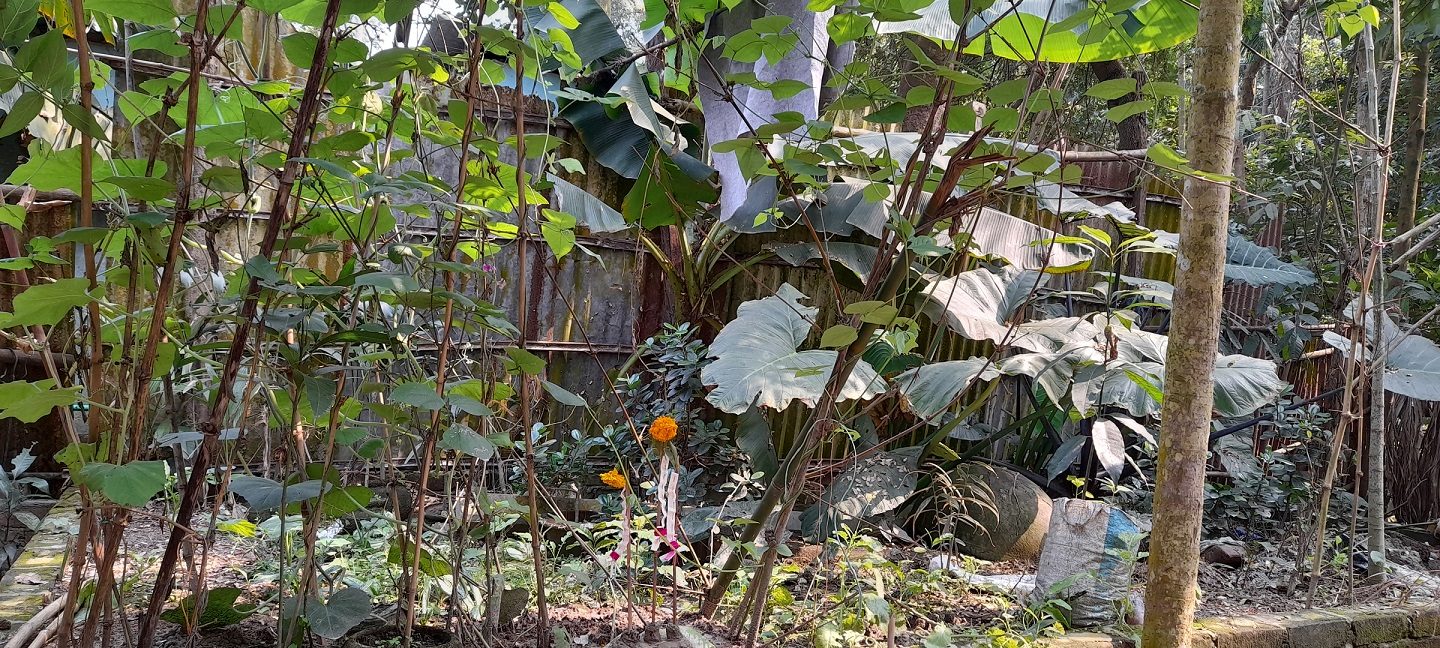
His home and surrounding area contain various medicinal and useful plants, including neem, holy basil, basak, durba grass, haritaki, amla, bahera, arjun, aloe, ginger, turmeric, marigold, bael, tamarind, lemon, pomegranate and papaya, among others. He says he prepares traditional remedies from these plants for conditions such as joint pain, diabetes, gastric problems, ulcers, piles and jaundice. He also recounts cases in which patients with infertility and serious illnesses reported benefits. However, these claims have not been scientifically established. His remedies should not replace qualified medical advice or evidence-based treatment, particularly for serious conditions such as cancer and diabetes.
Recognition and preservation of traditional knowledge
Manabendra Sarkar’s life reflects important aspects of rural heritage. He has witnessed major changes in agriculture while continuing to practice traditional fishing, preserve knowledge of medicinal plants, raise birds and maintain a connection with local biodiversity. Yet many experienced farmers and traditional knowledge holders like him remain outside formal systems of recognition and support. Their knowledge deserves careful documentation, scientific assessment and intergenerational transfer. Greater attention is also needed to conserve medicinal plants and create learning opportunities for interested young people. Manabendra says that, apart from BARCIK, he has not received formal training or official recognition from other organizations or government institutions. Initiatives such as farmer pensions and social protection programs could help support elderly and experienced farmers. Recognition and appropriate opportunities for knowledge sharing could also encourage the preservation of traditional practices. Preserving the legacy of people like Manabendra does not mean accepting every traditional remedy without question. Rather, it means documenting their knowledge, assessing it through scientific research and ensuring that valuable practices are passed on responsibly.