
By Md. Suhel Rana, Netrokona
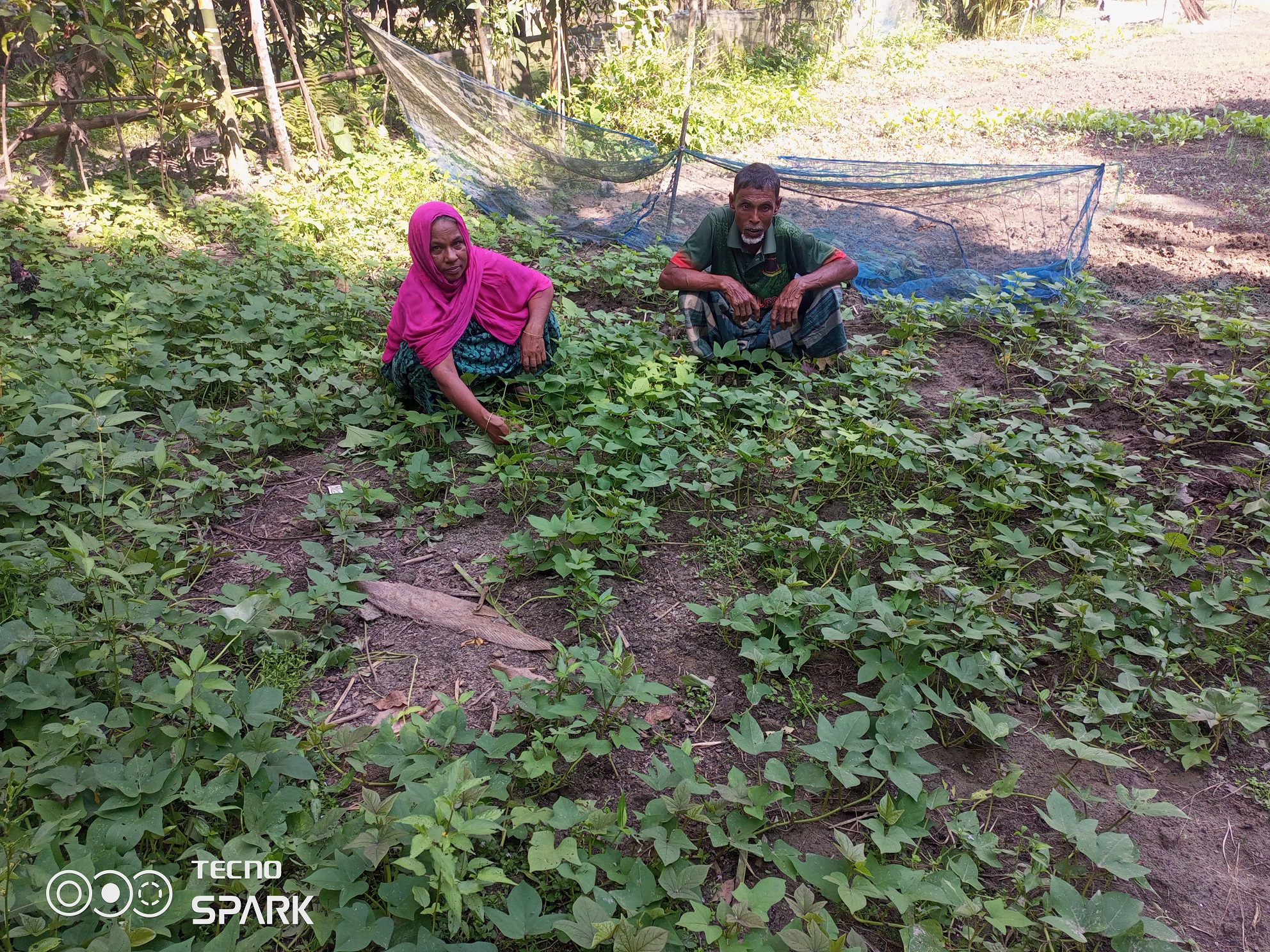
Fatema Akter was born into a farming family, where she developed an early interest in agriculture by learning from her father. As a child, she accompanied him to the fields and learned how to preserve seeds, prepare planting holes and cultivate crops. Although she struggled to continue her education due to family poverty, her connection with agriculture remained strong. After marrying into another farming family in a neighbouring union, she faced further economic difficulties. Despite owning some agricultural land, her husband could not generate enough food for the family through farming. Fatema therefore took responsibility for supporting the household. She collected paddy by working in other people’s homes and sold it to help meet the family’s food needs. She has two daughters and one son. Determined to overcome financial hardship, Fatema began cultivating vegetables, pulses and spices on her homestead and previously underutilised land. Initially, she collected seeds from a neighbouring woman farmer, her parental home and relatives. With careful preservation and cultivation, she gradually expanded her garden. For nearly 15 years, she has been growing vegetables, and her garden now contains 21 varieties. She preserves all the seeds herself. Skilled in working with bamboo and cane, she also makes various household and agricultural tools using these materials.
An innovative Irrigation Practice
During the summer of 2025, severe heatwaves and prolonged drought damaged crops across her village. With little rainfall and extremely dry soil, many farmers lost their vegetable crops. However, Fatema’s garden remained productive because she developed a simple but effective water-management system. She dug a large pit beside her vegetable plot, using the excavated soil to raise the cultivation area. Initially, she filled the pit with water pumped from a nearby pond. Later, rainwater replenished it, allowing her to maintain a year-round water reserve. She collects water from the pit daily to irrigate her crops. While neighbouring farmers struggled to harvest vegetables or had to purchase them from markets, Fatema continued meeting her family’s needs and selling surplus produce. Her practical innovation attracted other women farmers, who regularly visit her to collect seeds and learn about her irrigation techniques. She encourages them to adopt similar approaches suited to their own circumstances.
Biodiversity and safe food production
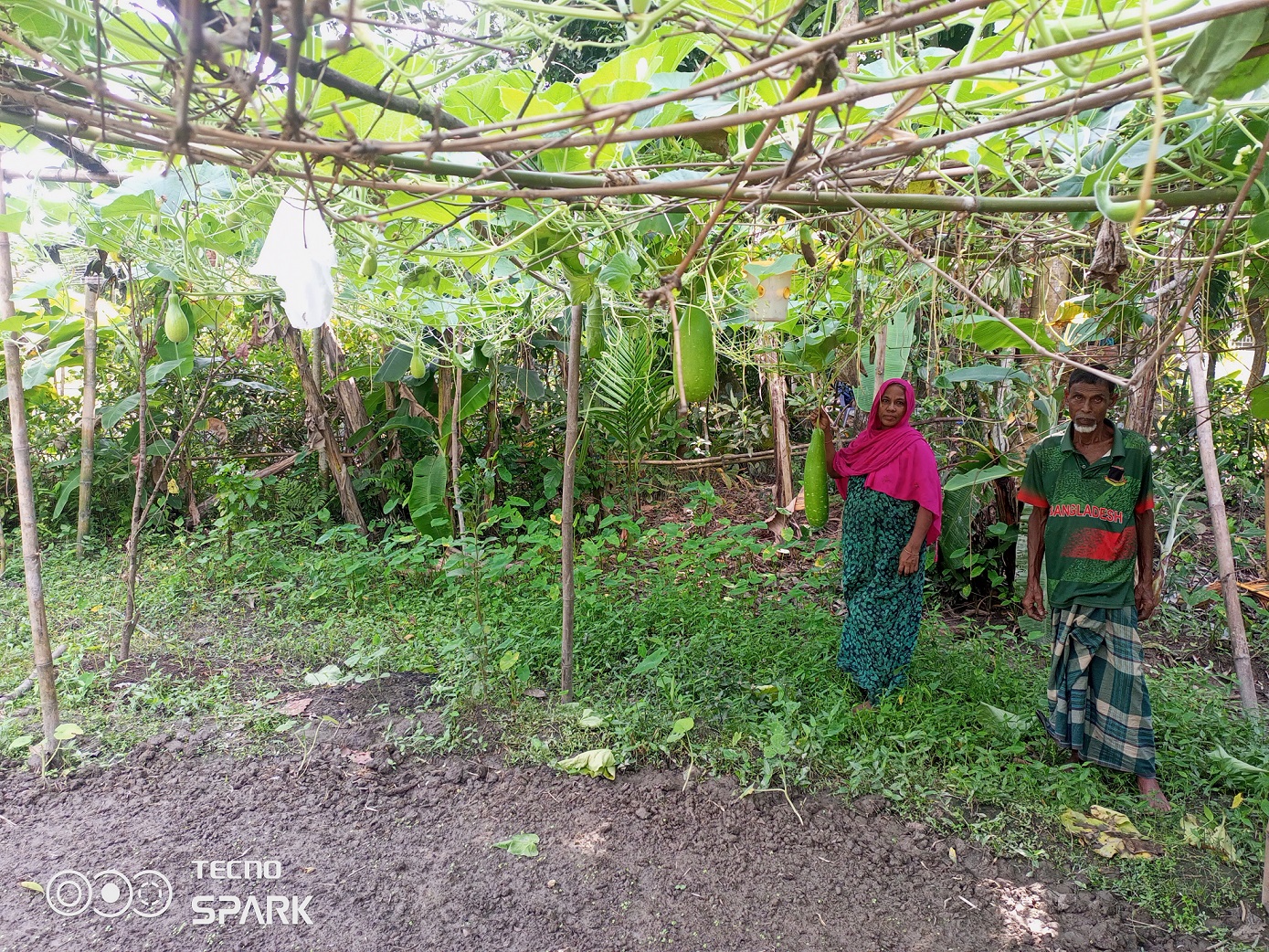
Fatema’s homestead is rich in plant diversity. Different fruit trees, including mango, jackfruit, banana, litchi, guava, pomelo, olive, wood apple, hog plum, date palm, papaya, coconut, betel nut, star fruit, pomegranate, jujube, lemon, tamarind, custard apple, elephant apple and lotkon, surround her home. Alongside cultivated vegetables, she incorporates various uncultivated plants into her family’s diet and uses locally available medicinal plants to address minor health problems. She relies on cow dung and vermicompost rather than chemical fertilisers for vegetable cultivation. Her agroecological practices include seed preservation, crop diversification, efficient use of homestead land, sack cultivation, year-round vegetable production, hanging-sack cultivation and growing vegetables along pond banks. She also prepares and applies organic pest-control materials and maintains diverse local fruit varieties. Through these practices, Fatema has made productive use of previously underutilised land and diversified her family’s food and income sources. Her household now has three cows and 25 ducks and chickens, while homestead cultivation and paddy farming remain important sources of livelihood.
Agroecology strengthens livelihoods
Fatema has been associated with BARCIK since 2010, participating in farmer-led rice research, biodiversity information sharing and community event organisation. Through this engagement, she has strengthened her knowledge of seed conservation, organic fertilisers, natural pest management and diversified farming. Her family’s food diversity has increased, while dependence on markets for seeds, vegetables and fruits has declined. Using local seeds and organic inputs has also reduced production costs. Fatema reports that she now earns approximately BDT 10,000 annually from vegetable cultivation, BDT 20,000 from livestock rearing and BDT 5,000 from spice cultivation. “Today, I have several sources of income. I use my homestead and pond banks to grow vegetables throughout the year,” she says. Agroecology has also strengthened her role in household decision-making. “My husband and I now discuss and jointly decide on farming activities, crops, seeds, land use and agricultural inputs. My opinions receive greater importance than before. I independently decide which crops to grow, where and when to plant them, and which seeds to preserve. My family also supports me in these activities,” she explains.
Community inspiration
Fatema believes her agricultural knowledge and experience have enhanced her social recognition, acceptance and respect within the community. Neighbouring farmers frequently approach her for advice on seed selection, planting seasons, seedling care and crop management. They also come to collect seeds and vegetables from her garden. Her agroecological knowledge has strengthened her confidence and ability to address challenges, claim her rights and plan for the future. She can now access services from the Department of Agricultural Extension, the Department of Social Services, the Department of Youth Development and the Union Parishad. She has also developed the capacity to continue her initiatives independently, without relying on others. Fatema’s journey demonstrates how local knowledge, biodiversity conservation, resourcefulness and confidence can transform women’s livelihoods and leadership. Her dream is to see safe and environmentally friendly agricultural practices adopted in every household.