
By Sattaranjan Saha from Harirampur, Manikganj
Harirampur in Manikganj is a low-lying floodplain area along the Padma River. Its riverbanks have sandy-loam soil, while nearby fields contain silt-rich clay. Every year, monsoon floods deposit fresh silt across agricultural land, helping maintain soil fertility. Farmers also improve soil health by cultivating seasonal crops, conserving diverse seeds and adopting farming practices suited to changing weather conditions.
To protect soil health, farmers grow dhaincha as green manure, use decomposed water hyacinth and cow dung as organic fertilizers, and apply crop residues as mulch. They also cultivate flood-tolerant crop varieties during the rainy season.
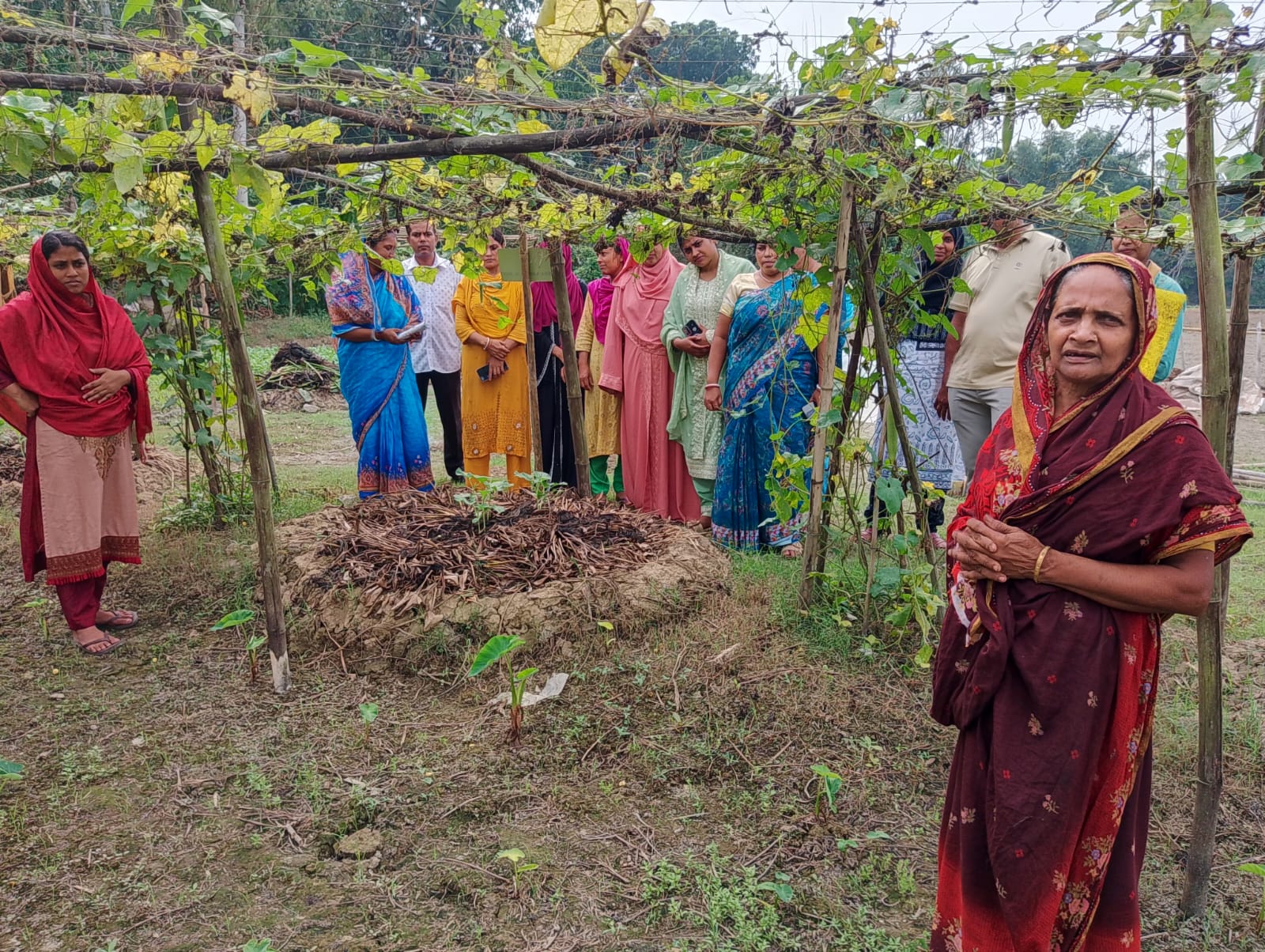
Roshonara Begum, a farmer associated with the Khabashpur Agroecology Learning Centre, has practiced agriculture since childhood. She said, “I learned farming from my parents and grandparents and continued it after marriage. My greatest inspiration is the initiative to promote farmers’ natural farming practices, conserve and exchange diverse seeds, and build farmers’ organizations that ensure women’s rights and dignity in agriculture.”
With her own experience and knowledge gained through BARCIK, Roshonara prioritizes soil health. She believes healthy soil produces better crops and that conserving locally adapted seeds is essential for sustainable agriculture. Crops suited to local environmental conditions require fewer inputs, reduce production costs and help to maintain soil fertility.
She uses decomposed water hyacinth collected from ponds and cow dung as organic fertilizer. Before planting vegetables, she applies these materials to planting pits to improve soil fertility. She says her crops grow well through these organic practices.
Roshonara cultivates a wide range of crops throughout the year. During the winter season, she grows coriander, radhuni, black cumin, onion, garlic, chilli, mustard, sesame, foxtail millet, bottle gourd, red amaranth, jute leaves, taro, okra, eggplant, water spinach, sweet potato, grass pea and jute. During the Aman season, she cultivates local rice varieties, including Hijal Digha, Chhoto Bhauyalya, Depar and Amshai.
She also grows seasonal vegetables around her homestead and conserves seeds from all the crops she cultivates. Additionally, she collects and exchanges seeds with other farmers and shares knowledge and experiences on organic farming and seed conservation.
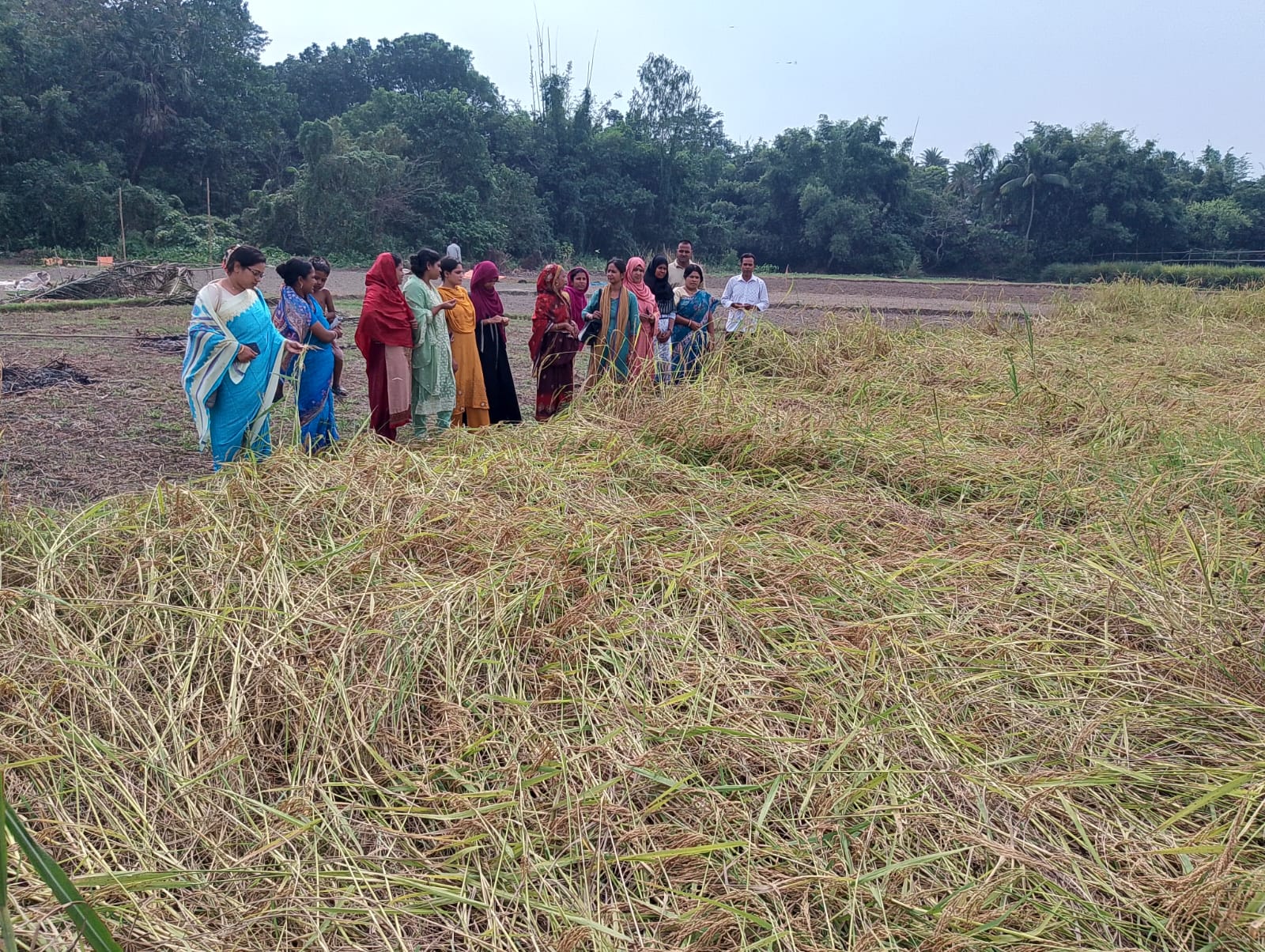
It is to mention that in Manikganj, monsoon rainfall during Ashar and Shraban, together with water from the Padma River, enters agricultural fields through the Ichamati River and local canals. Farmers cultivate traditional rice varieties in these silt-rich floodplains. Varieties such as Hijal Digha, Molla Digha, Bhauyalya, Barga Digha, Digha, Depar, Amshail and Mongura are sown in Baishakh and grow well in flooded conditions. As the rice plants grow with rising water levels, farmers can adapt to seasonal flooding. Conserving and reusing their own seeds also keeps production costs low.
Roshonara believes that conserving indigenous seeds and making responsible use of natural resources can reduce farming costs and help communities adapt to climate change. Growing diverse local crops also supports biodiversity and protects soil health and the environment. For her, farmer-led agriculture, seed conservation and environment friendly farming are essential to sustaining both livelihoods and nature.