
The Struggle and Success of Anima Mondal
By Yasin Arafat from Coastal Region
Farming in coastal Bangladesh is a constant struggle against salinity, water scarcity, extreme heat, heavy rainfall, tidal surges and pest attacks. Despite these challenges, Anima Mondal, a woman farmer from Jelekhali village in Munshiganj Union of Shyamnagar Upazila, Satkhira, has continued farming by drawing on local knowledge, decades of experience and her own initiative.
With nearly 40 years of farming experience, Anima is the primary person responsible for agricultural activities in her six-member family. What began as an effort to meet her family’s needs has gradually developed into a diverse farming practice involving local seed conservation, food production and knowledge-sharing with other farmers.
Adapting farming to climate challenges
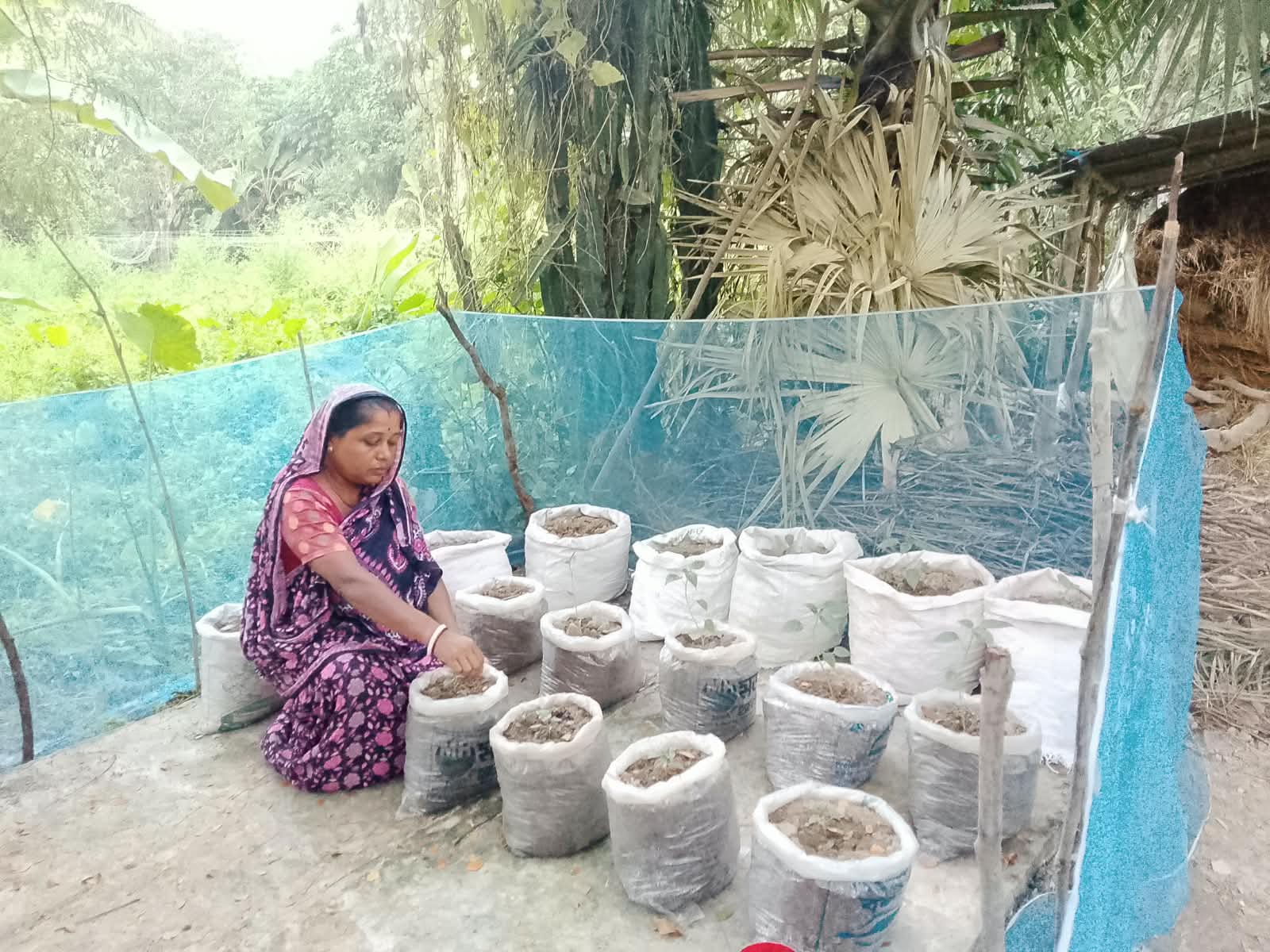
Salinity and water scarcity are major obstacles to agriculture in Shyamnagar, while excessive rainfall and tidal surges frequently threaten crops. Anima has learned to adapt her farming practices to these changing conditions. Since being affiliated with BARCIK in 2024, she has participated in various activities, exchanged experiences with other farmers and learned new approaches to agroecological farming. Combining this knowledge with her own experience, she now grows a variety of vegetables in her homestead garden, practices mixed cropping, uses organic fertilizers and produces vermicompost at home. She also collects and stores rainwater to meet irrigation needs during dry periods. To protect her crops from pest attacks, she uses safer, environment friendly pest management methods. Rather than giving up in the face of adversity, Anima makes the best use of locally available resources and explores practical ways to keep farming.
Conserving local seeds and reducing market dependence
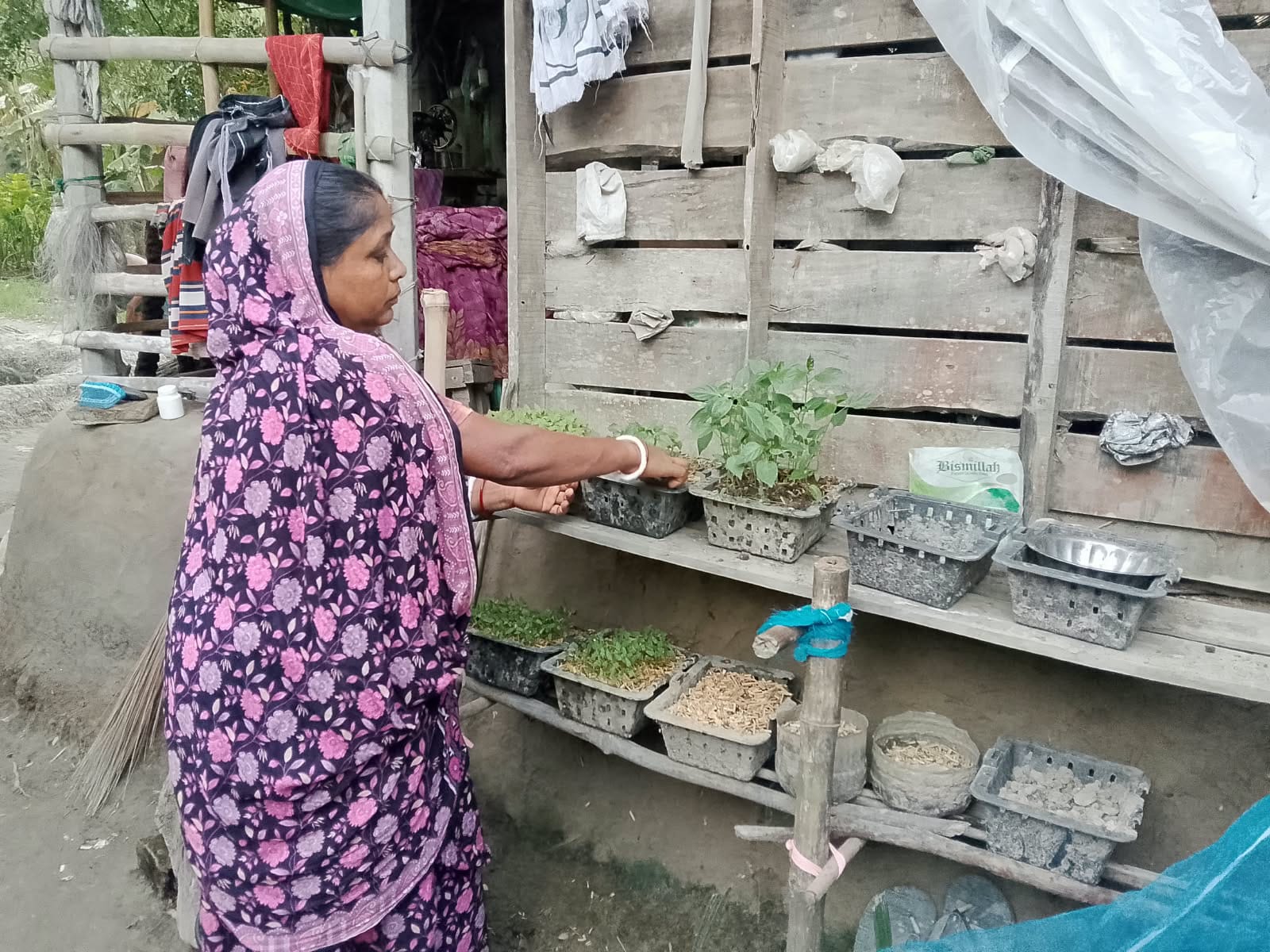
Seed conservation has become another important part of Anima’s farming journey. Before joining BARCIK, she mainly purchased vegetable seeds from the market and rarely collected or conserved seeds herself. Now, she selects healthy, mature plants, collects their seeds, cleans and dries them, and stores them for the next planting season. She uses these seeds in her own garden and shares them with other farmers when needed. For Anima, conserving local seeds is more than simply keeping seeds for future cultivation. It helps to reducing dependence on purchased seeds, maintain access to planting materials and conserve agricultural diversity adapted to local conditions.
Supporting family food and nutrition security
Anima grows different vegetables in her homestead and raises local ducks and chickens. Her garden was less diverse in the past, but her involvement with BARCIK encouraged her to expand vegetable cultivation, conserve seeds and experiment with improved farming practices. The vegetables and other produce meet much of her family’s food needs. She sells the surplus in the local market, generating additional income. Through these activities, she contributes significantly to household food security, nutrition and livelihoods.
Sharing seeds and knowledge with other farmers
Anima does not keep her farming knowledge to herself. Inspired by her homestead garden and farming practices, neighbouring families have also become interested in cultivation. She provides them with seeds and seedlings and advises them on growing crops and conserving seeds. This year, she distributed different varieties of local vegetable seeds to more than 100 people. She also regularly participates in farmers’ group meetings, village gatherings and social events, where she shares her experiences. After achieving a good harvest of taro last year, for example, she shared her cultivation techniques with fellow farmers. Her efforts have helped improve access to local seeds and encourage other women to become involved in farming.
Strengthening women’s role in family decisions
Anima also plays an active role in household decision-making. As the family’s principal farmer, she independently decides which crops to grow, how much land to cultivate and which seeds to use. She also has a say in how income from farming is spent. This year, she used the income from cultivating taro in her homestead to build a poultry shed and purchase chickens. She also contributes to her children’s education expenses and covers most of the family’s medical costs when someone falls ill. After meeting household needs, she saves some money to prepare for future emergencies and disasters.
Her dream: More women conserving seeds and practicing farming
Anima hopes that more women will take up farming and use local resources and knowledge to support their families. She is willing to share seeds, seedlings and practical farming techniques with anyone interested. She said, “Everyone should start farming like I have. As far as I can, I will share seeds, seedlings and knowledge of different farming methods with others.” Anima Mondal’s journey demonstrates how local knowledge, farming experience, seed conservation and mutual support can strengthen the resilience of coastal farmers. Her efforts go beyond securing food and income for her own family. By sharing seeds and knowledge, she is also encouraging others to adapt to changing climatic conditions. Her story is an inspiring example on how women farmers can contribute to climate-resilient agriculture, conserve local biodiversity and strengthen their economic and social position in rural communities.