
By Md. Nazrul Islam from Manikganj
At 57, Hasna Begum, a landless woman farmer from Andharmanik village in Ward No. 8 of Manikganj Municipality, represents the resilience of Bangladesh’s marginal farming communities. Born into extreme poverty, she was married at only 13–14 years of age. Despite hardship and family struggles, she has continued farming and raising her family through persistent labor.
Hasna lives with her family on a small homestead inherited through her mother-in-law. Three households share only 3 decimals each, while another 4 decimals of land beside the river remain vulnerable to erosion. Despite having very limited land, Hasna cultivates rice, mustard, groundnuts and sweet gourds without relying on additional chemical fertilizers or pesticides.
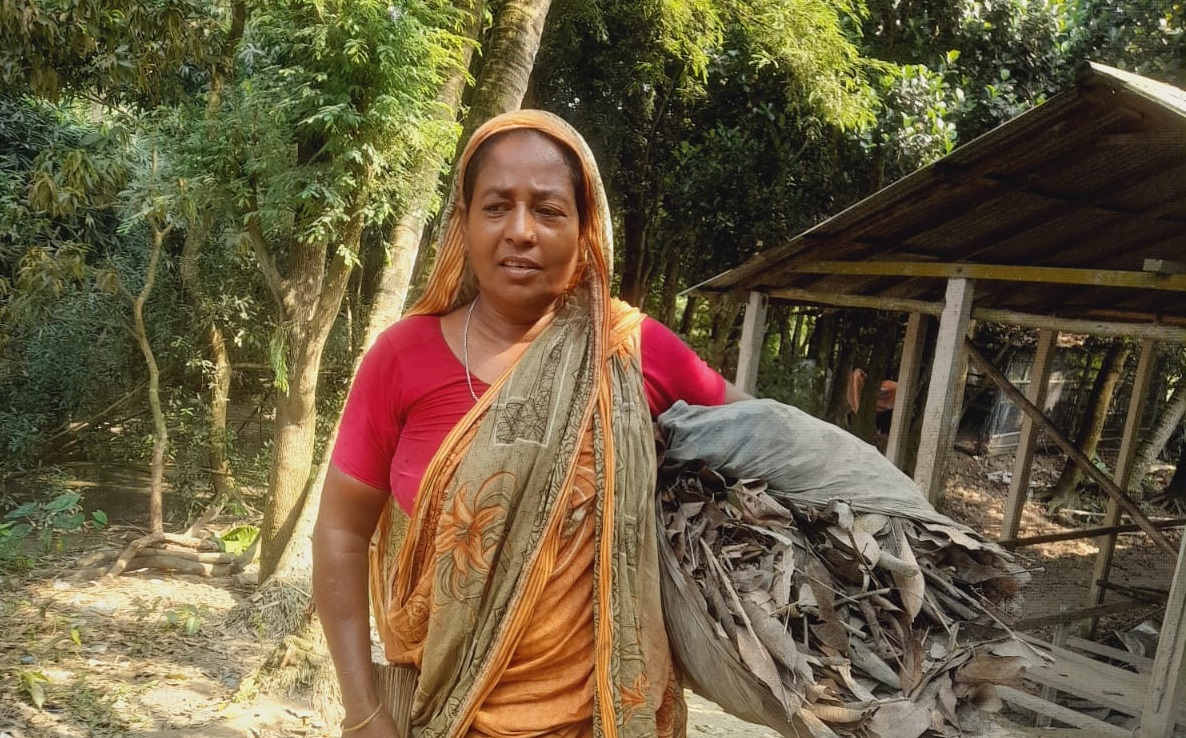
She and her husband once worked on other people’s farms, while her husband also worked as a cattle herder. According to Hasna, rising costs of chemical fertilizers, seeds, pesticides and agricultural technologies have reduced farming profits. Wealthier landowners increasingly avoid the financial risks of farming and depend on landless farmers to cultivate their land.
Hasna explains that marginal farmers often cultivate mortgaged land using borrowed money to purchase agricultural inputs. Even after harvesting, the income may not cover production costs and their own labour. This year, flash floods and sudden rain destroyed winter vegetables on two bighas of mortgaged land. She nevertheless replanted the crops and expects to take red amaranth and radish to market.
Years of hard physical labour and inadequate nutrition have taken a toll on her health. Yet she continues household work, collecting fuel and caring for livestock despite her physical limitations. For Hasna, one of life’s greatest achievements is seeing her children become self-reliant. Her elder son left school before completing secondary education to work in a garment factory and is now supporting his own family, while her younger son runs a business in Manikganj town.
Today, raising cattle and goats around their small homestead remains central to Hasna’s life. Despite severe social and economic constraints, she takes pride in having supported her family through her own labour and helped her children build independent lives.
Her story reflects the determination of landless and marginal farmers who continue to depend on agriculture despite limited resources, climate risks, rising production costs and land insecurity.