
By Atikur Rahman Atik from Rajshahi
The Barind Youth Forum, Suryakiran Samaj Kalyan Sangstha and BARCIK have called for regular entomological surveillance, stronger public awareness and coordinated public health action to address the growing risk of mosquito-borne diseases amid climate and urban environmental changes.
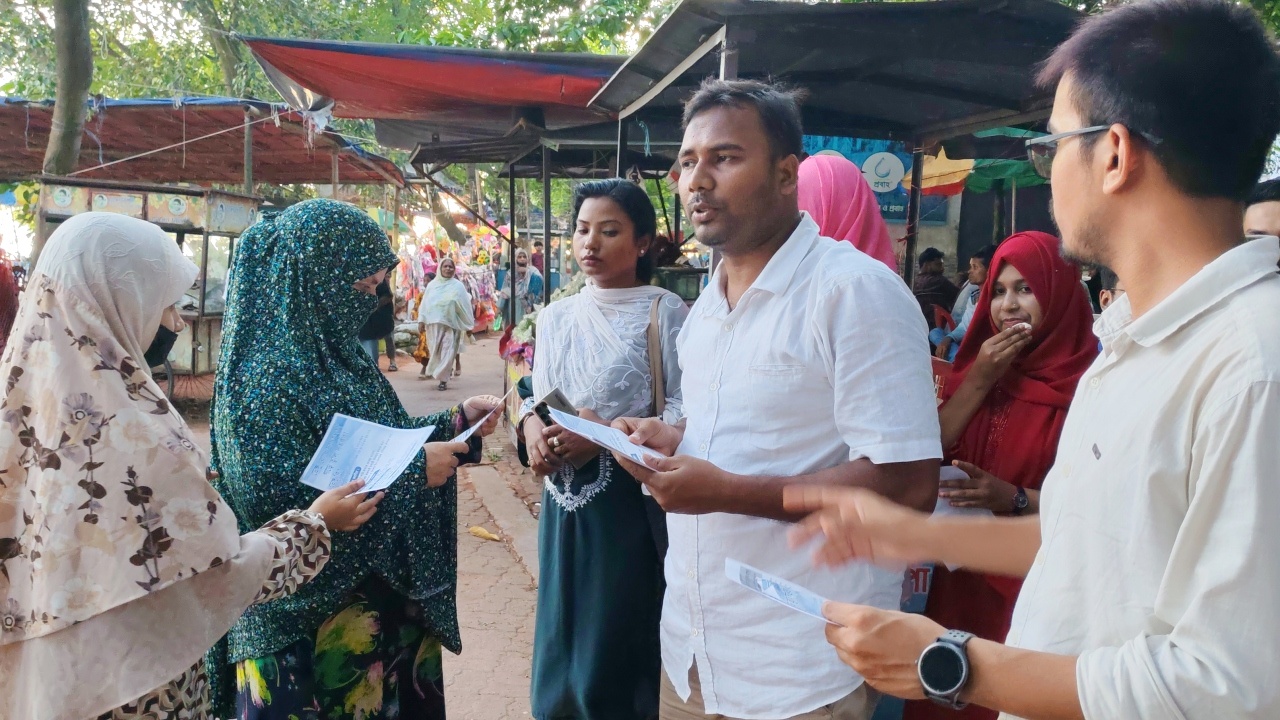
Under the slogan “Remove stagnant water once every three days,” a dengue awareness campaign was held recently at Padma Garden, Barakuthi, Rajshahi.
A study conducted in 30 wards of Rajshahi City Corporation during 2020–2022 by the Directorate General of Health Services, University of Rajshahi and researchers identified two Aedes species Aedes aegypti and Aedes albopictus in urban areas. The study also found that weather-related variables influence mosquito populations.
More recent findings indicate a significant risk. An entomological survey conducted from 3–10 August 2026 by the Rajshahi Divisional Office of the Directorate General of Health Services in Kazihata, Chandipur, Upper Bhadra, Namovadra and Hazrapukur found Aedes larvae in 24 of 75 households. The House Index was 32%, while larvae were found in 46 of 68 water-holding containers, giving a Container Index of 67.65%. The recorded Breteau Index was 61.33, compared with the WHO threshold of 20 for high dengue risk.
Of the 685 larvae collected from different breeding sites, 505 were Aedes albopictus, 86 Aedes aegypti and 94 other mosquito species. Breeding sites included flowerpots, plastic and ceramic tubs, earthen and metal containers, coconut shells, drums, waterlogged floors, paint buckets and plastic buckets.
Speakers said that temperature, rainfall, humidity and extreme weather can influence Aedes mosquito breeding, survival, distribution and the transmission potential of dengue. They emphasized, however, that local risk assessment requires the regular integration of mosquito surveillance, weather monitoring and epidemiological data.
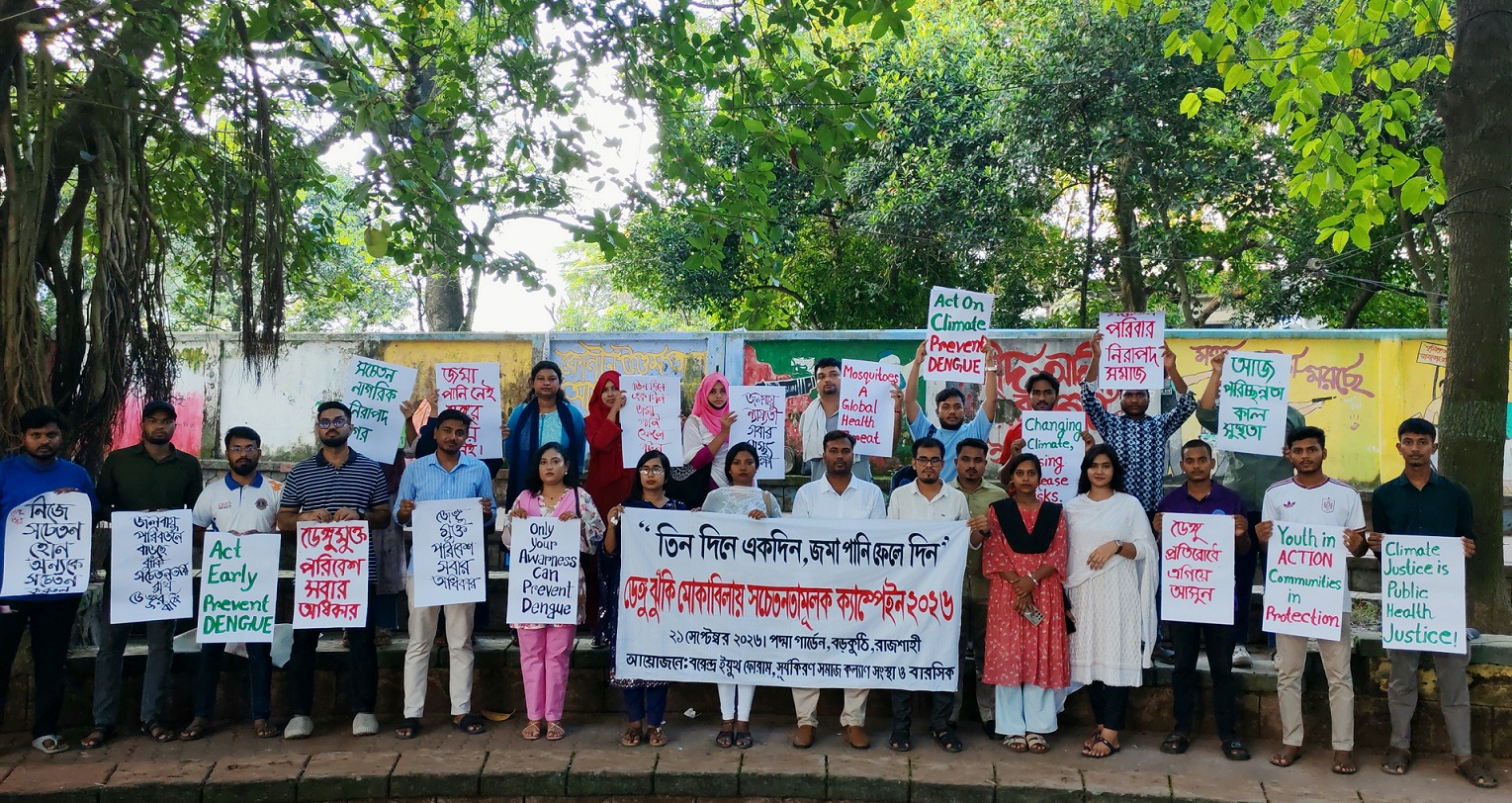
Barind Youth Forum President Md. Atikur Rahman said climate change is also a public health concern and called for stronger community action to eliminate breeding sites and improve public awareness.
Sabitri Himbrom, General Secretary of the Indigenous Youth Council, stressed that dengue prevention should go beyond mosquito control and integrate environmental management, public health protection and citizen participation. Rakib Hasan, President of Leo Club of Rajshahi Metropolitan, called for regular identification of breeding sites and evidence-based action in every city ward.
Among others, Samrat Raihan, Executive Director of the Social Welfare Organization; Amit Sarker, Associate Programme Officer of BARCIK; Tohura Khatun Lily; and Rayhan of Nabajagaran Foundation also spoke at the event.