
By Amit Sarkar from Rajshahi
“Health is a right for all, ensure healthcare for low-income people.” With this message, a free medical camp was organized for climate-vulnerable urban poor residents at Pabanapara slum in Ward 17 of Rajshahi City Corporation recently.
The event was organized jointly by the Rajshahi Urban Poor Rights Implementation Committee and BARCIK. The camp provided primary healthcare to 103 people, including women, men, children and older persons. Dr. Jayanta Pramanik of Rajshahi Medical College Hospital provided consultations, examinations and medicines.
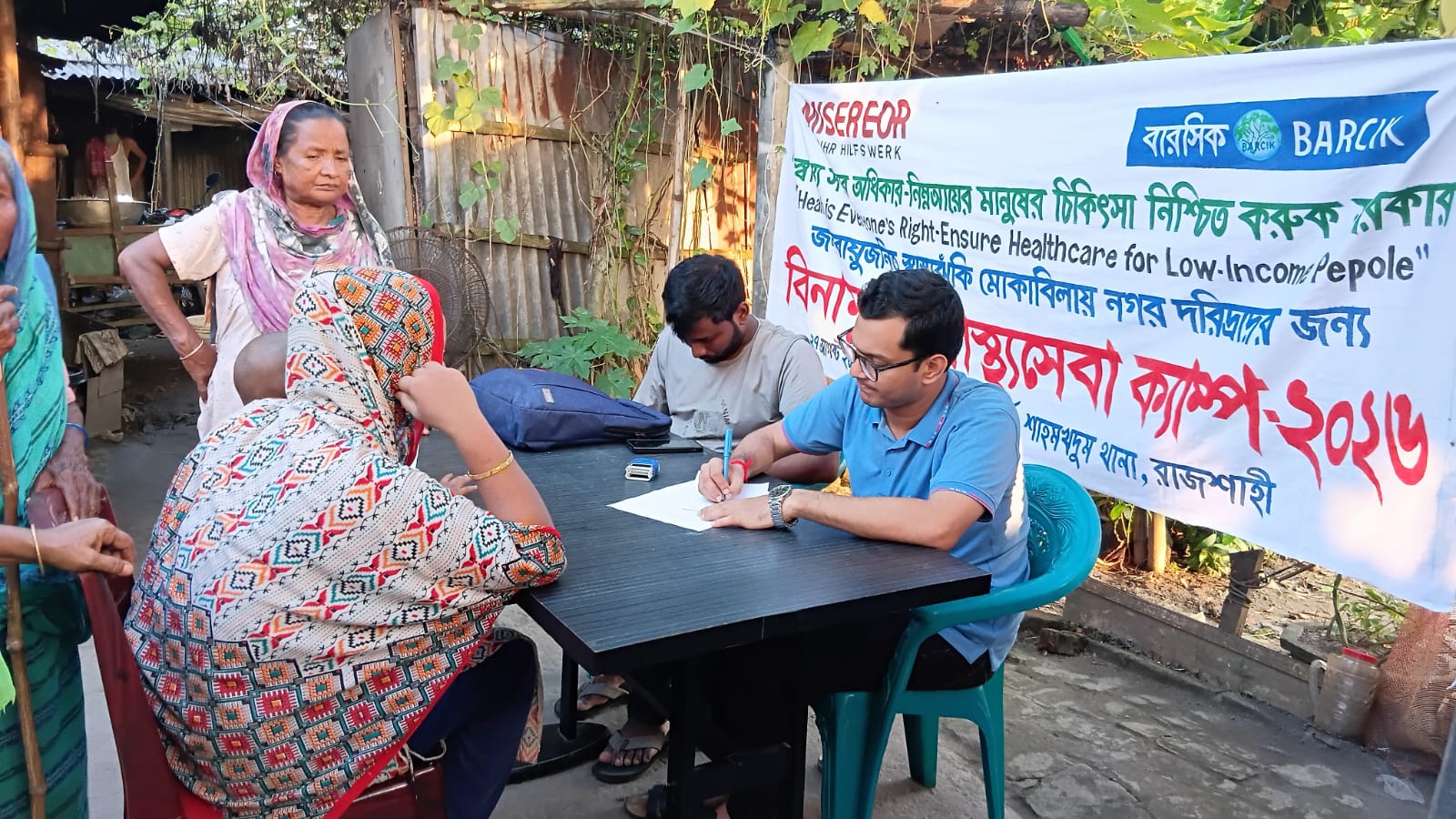
Many Pabanapara communities migrated to Rajshahi after losing homes, land and livelihoods due to river erosion, climate-related disasters and rural poverty. They now work mainly as rickshaw pullers, day laborers, domestic workers, small traders and construction workers. Despite their contribution to the urban economy, irregular incomes, unsafe housing, inadequate water and sanitation, and high healthcare costs leave them highly vulnerable. Extreme heat, heavy rainfall, waterlogging, mosquitoes and poor environmental conditions further increase health risks.
Seventy-year-old Kuddus Ali, who received treatment for fever, cough, body pain and blood-pressure problems, said poor families often cannot afford doctors or regular medicines. Similarly, 55-year-old Kouhinur Begum sought treatment for cough, cold, itching and skin problems. She said waterlogging and stagnant dirty water after heavy rainfall increase health problems, while visiting a hospital can mean losing a day’s income.
Several children also received treatment for fever, cough, cold, stomach and headaches, skin problems and loss of appetite. Older communities sought advice for joint pain, blood pressure and other ailments.
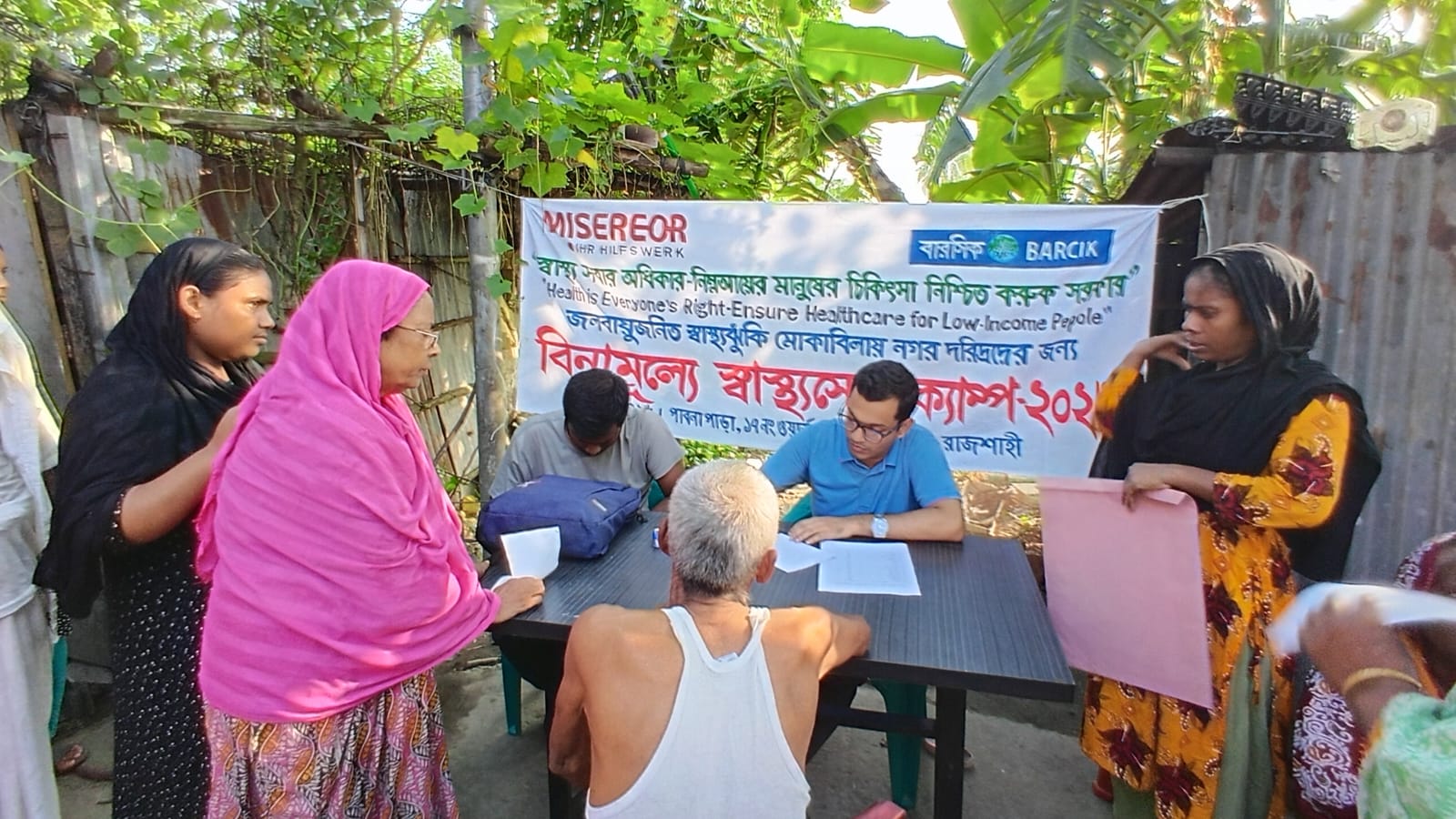
Nilufa Yasmin, Member Secretary of the Urban Poor Rights Implementation Committee, urged the government to expand free or affordable healthcare and medicine services for low-income urban residents. She said that people living in informal settlements face disproportionate impacts from heat, heavy rain, storms, pollution and other climate-related hazards, despite playing an essential role in keeping cities functioning.
The organizers emphasized that temporary medical camps, while useful, cannot replace long-term public health measures. They called for expanded government health services in slums, regular affordable treatment and medicine, specialized services for children and older people, and targeted programs addressing climate-related health risks. They stressed that healthcare is a fundamental right and should be integrated into urban development and climate adaptation planning.