
By Anbabila Sarker from Netrakona
Women’s labor often remains invisible despite being an essential part of household economies and local livelihoods. To highlight the contribution, challenges and rights of women engaged in cottage industries, a workshop titled “Cottage Industry Showcase” was organized by the Habada Cottage Industry Organization with support from BARCIK. Members of three other women’s organizations also participated in the event.
The workshop began with discussions on the importance of cottage industries, women’s labor and livelihoods. A small exhibition displayed products made by local women artisans, who shared their experiences of producing goods at home, sourcing raw materials and contributing to their families’ income and wellbeing.
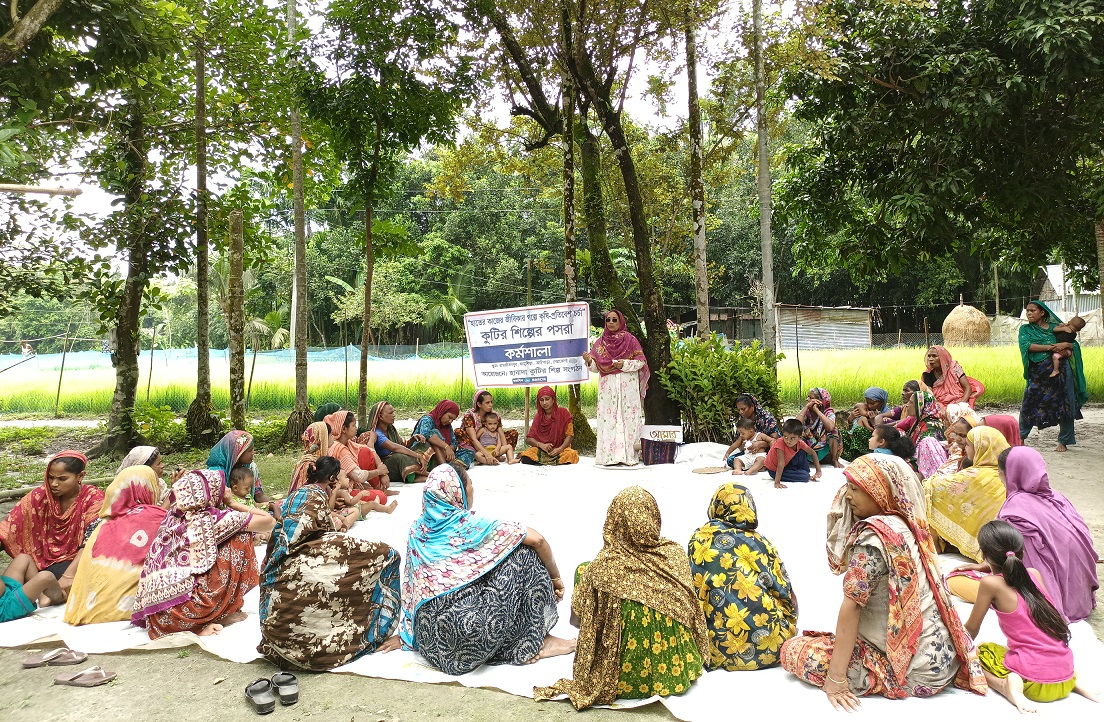
Participants emphasized that women’s work is often dismissed as ordinary household work, although they simultaneously perform productive activities such as seed preservation, agricultural processing, poultry and livestock rearing, sewing and handicrafts. As one participant expressed, “We do not only manage households; we also produce.”
Cottage artisan Dilu Akter said, “We work throughout the day, doing household work and making products with our own hands. Yet our labor is rarely counted. We want our work to be recognized as work.”
Hazera Akter added that artisans often struggle to receive fair prices because buyers do not consider the time and effort required to make their products. Hawa Akter said that women’s handicrafts support household livelihoods but their contribution is not always respected.
The discussion also highlighted the relationship between cottage industries and agroecology. Local materials such as jute, bamboo and rice straw are transformed into useful products, creating links between agricultural production, local resources, livelihoods and markets. Participants said that although they use local and environmentally friendly materials, their labor often remains undervalued.
Key challenges identified included unfair prices, limited market access, rising raw-material costs, inadequate recognition of women’s labor, and social attitudes that undervalue women’s work. Participants also discussed violence against women and emphasized that economic empowerment can strengthen women’s dignity, decision-making power and ability to speak out against violence.
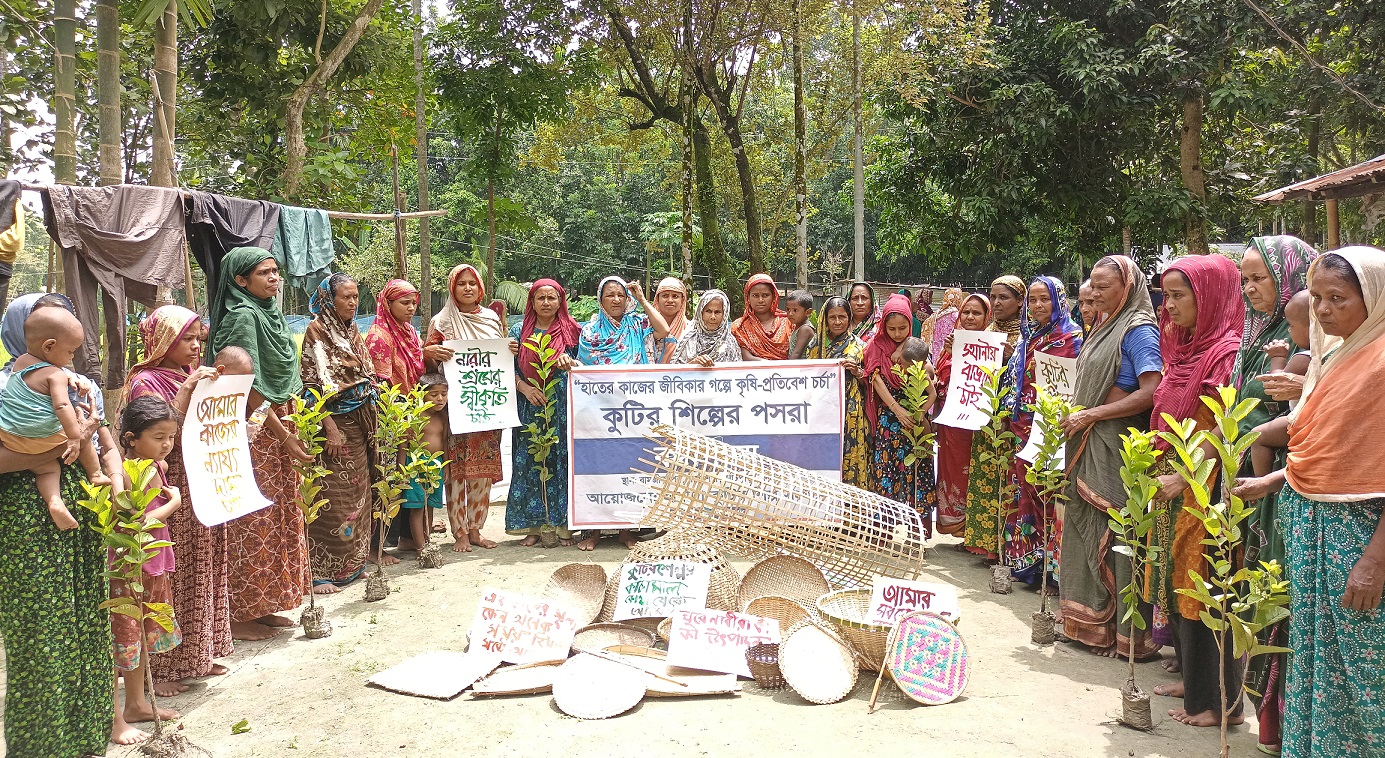
Participants demanded fair prices, recognition of women’s household and productive labor, accessible markets, greater opportunities to use local resources, skills training and institutional support, and effective measures to prevent violence against women. They also called for recognition of women’s dignity, safety and decision-making rights.
Resource persons Hawa Akter and Nasrin Akter facilitated discussions on women’s livelihoods, labor rights, local resources and economic empowerment. Nasrin Akter delivered the closing remarks, encouraging women to value their skills and continue advocating for fair recognition and rights.
The workshop demonstrated that every cottage-industry product carries not only economic value but also the time, labor, skills, aspirations and livelihood story of the woman who created it.