
By Mukanda Ghosh, Shyamnagar, Satkhira
Anita Mondol, a homemaker from Vetkhali South Para in Ramjan Nagar Union of Shyamnagar Upazila, Satkhira, lives with her six-member family in Bangladesh’s coastal belt. Her husband, Asit Mallik, is a homoeopathic practitioner, while both of their sons have completed their honours degrees. Living in the south-western coastal region, like most other families, access to safe drinking water has also long been one of their biggest challenges.
For drinking water, Anita had to travel about one kilometre to collect water from a Pond Sand Filter (PSF). At times, they also had to purchase desalinated and purified water from a Reverse Osmosis (RO) machine at a cost of Tk. 1 per litre. However, the PSF water was often slightly saline and, due to irregular cleaning and maintenance, sometimes became contaminated. Drinking such water frequently caused stomach-related health problems among family members. This increased household expenditure on both medical treatment and purchased drinking water, while also disrupting their daily activities.
Collecting water from the PSF was also extremely time-consuming. Anita had to walk nearly one kilometre, stand in a queue and collect water three times a day. Altogether, this consumed at least three hours every day.
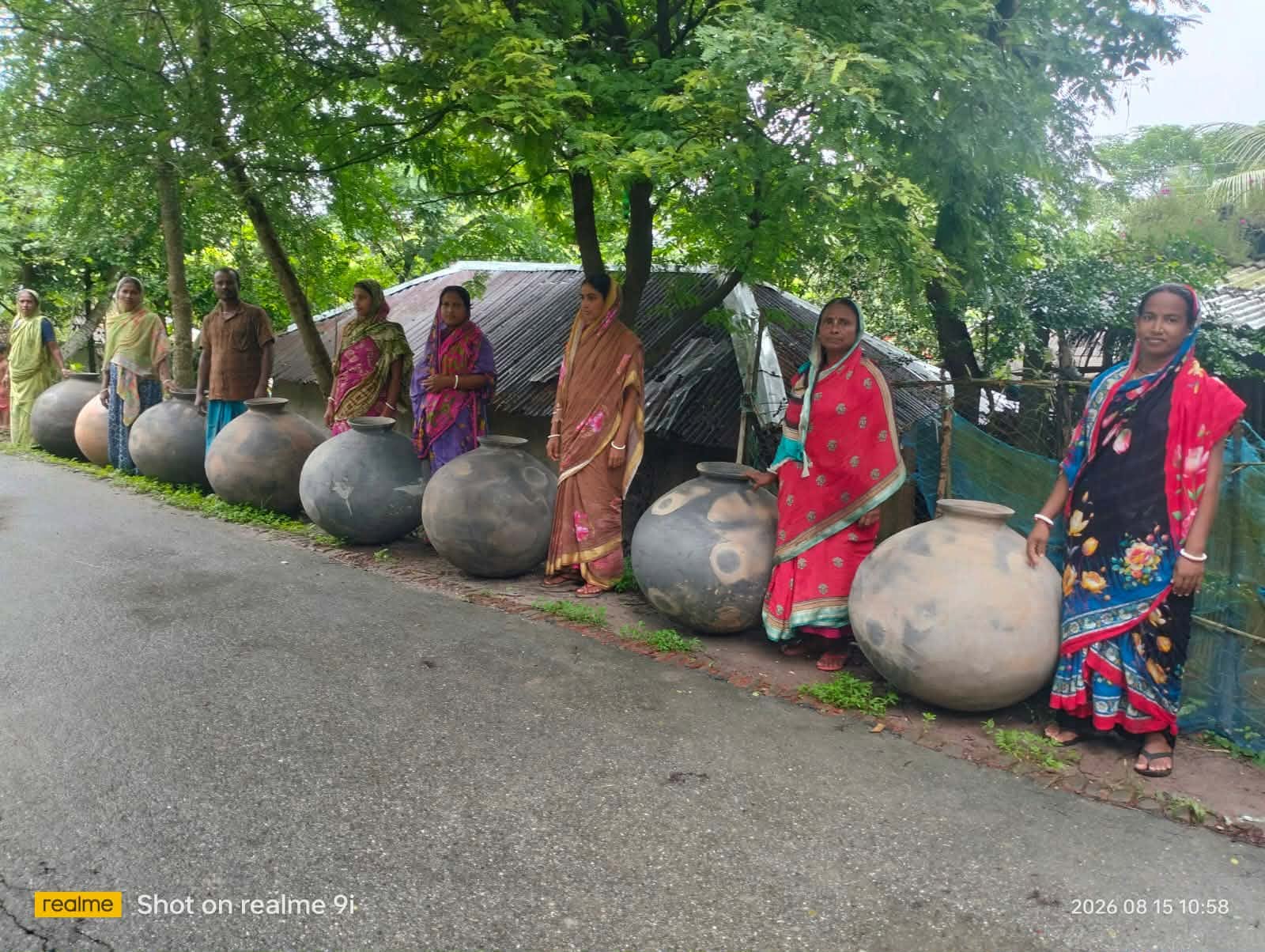
The introduction of a traditional earthen water pitcher, locally known as Mete, has brought new hope to Anita’s family. By harvesting and storing rainwater in the earthen pitcher, the family can now access safe drinking water for most of the year. Since the pitcher is made from natural clay, it is also environmentally friendly, while the water stored in it remains relatively cool during hot weather.
Anita said, “Previously, I spent almost three hours every day collecting drinking water from the PSF, which was about one kilometre away. Now I can save that time. I can use it to take care of our vegetable garden, ducks, chickens and goats. I can also do sewing work and earn some additional income. Safe drinking water has given me back valuable time and created new opportunities in my life.”
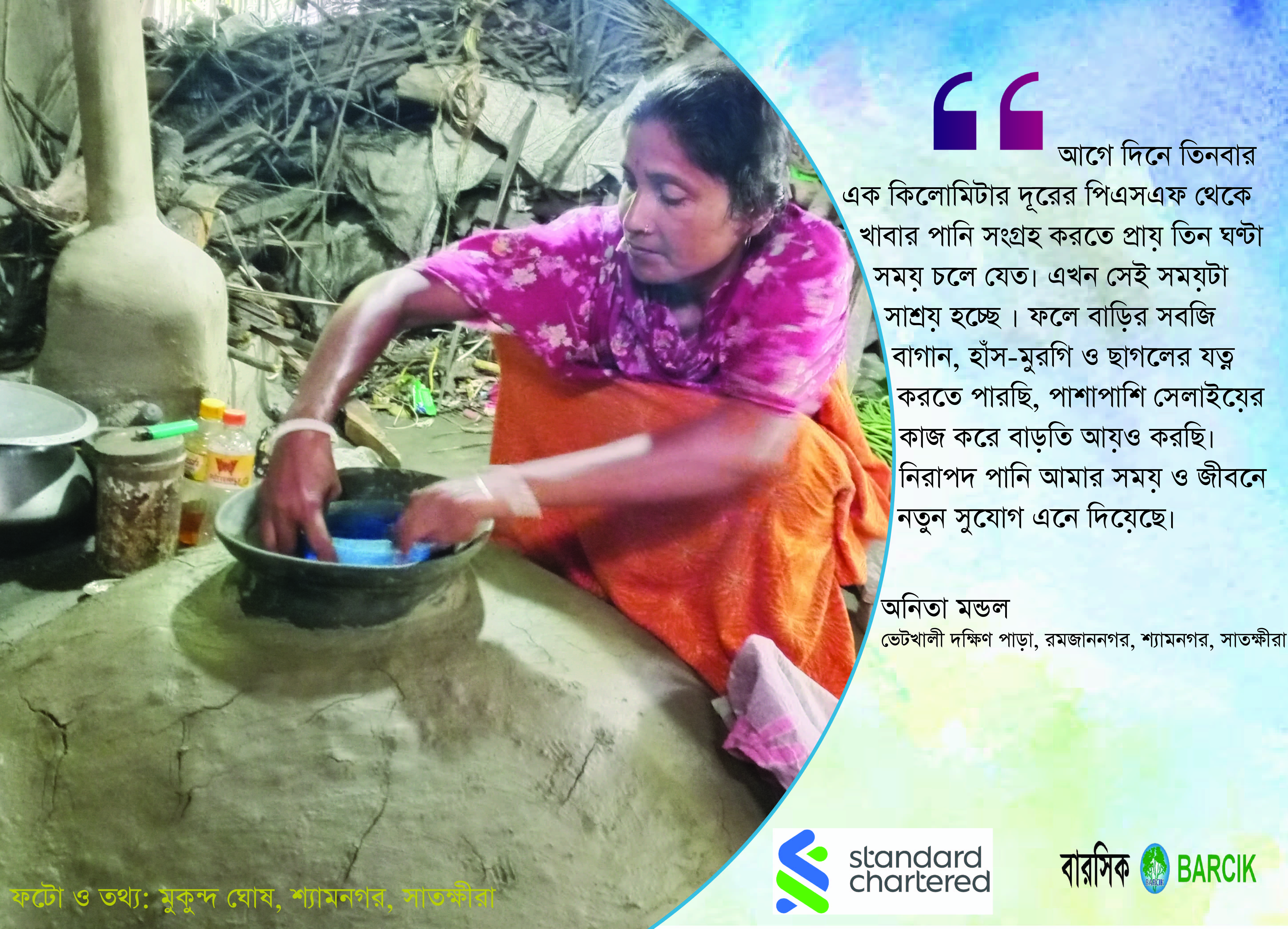
The earthen pitcher is therefore doing more than simply storing rainwater. By combining local knowledge with a simple, low-cost and environmentally friendly technology, it is helping Anita’s family reduce the time and money spent on collecting and purchasing drinking water. The saved time is creating opportunities for household food production, livestock care and income-generating activities, contributing to gradual improvements in the family’s livelihood and financial well-being.
As part of its efforts to address the drinking water crisis in saline-prone coastal communities, BARCIK has provided earthen pitchers for rainwater harvesting to six marginalised families in eight villages across five unions, with financial support from Standard Chartered Bank.