
By Sultana Khatun from Rajshahi
In drought-prone Rajshahi, Ayesha Begum, 40, has turned previously unused spaces around her homestead into a productive and safe vegetable garden. A member of the Model Shotobari initiative, she uses environmentally friendly farming practices to produce vegetables without harmful chemical fertilizers and pesticides.
Dighipara village has around 70 households, most of which depend on agriculture. Ayesha’s family consists of four members, with 11 decimals of homestead land and 20 decimals of cultivable land. Since 2021, BARCIK has conducted awareness activities in the village, and Ayesha gradually strengthened her knowledge through meetings, courtyard sessions and campaigns.
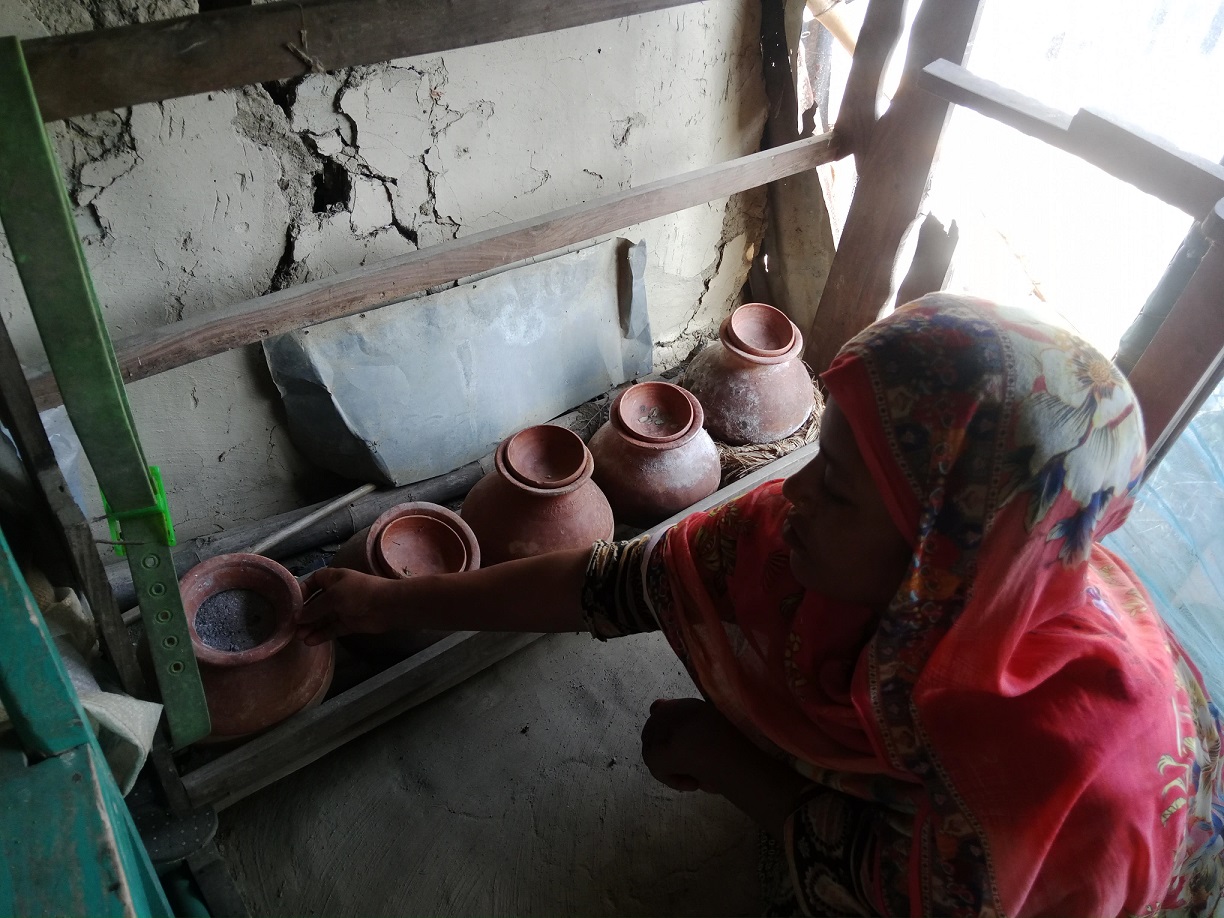
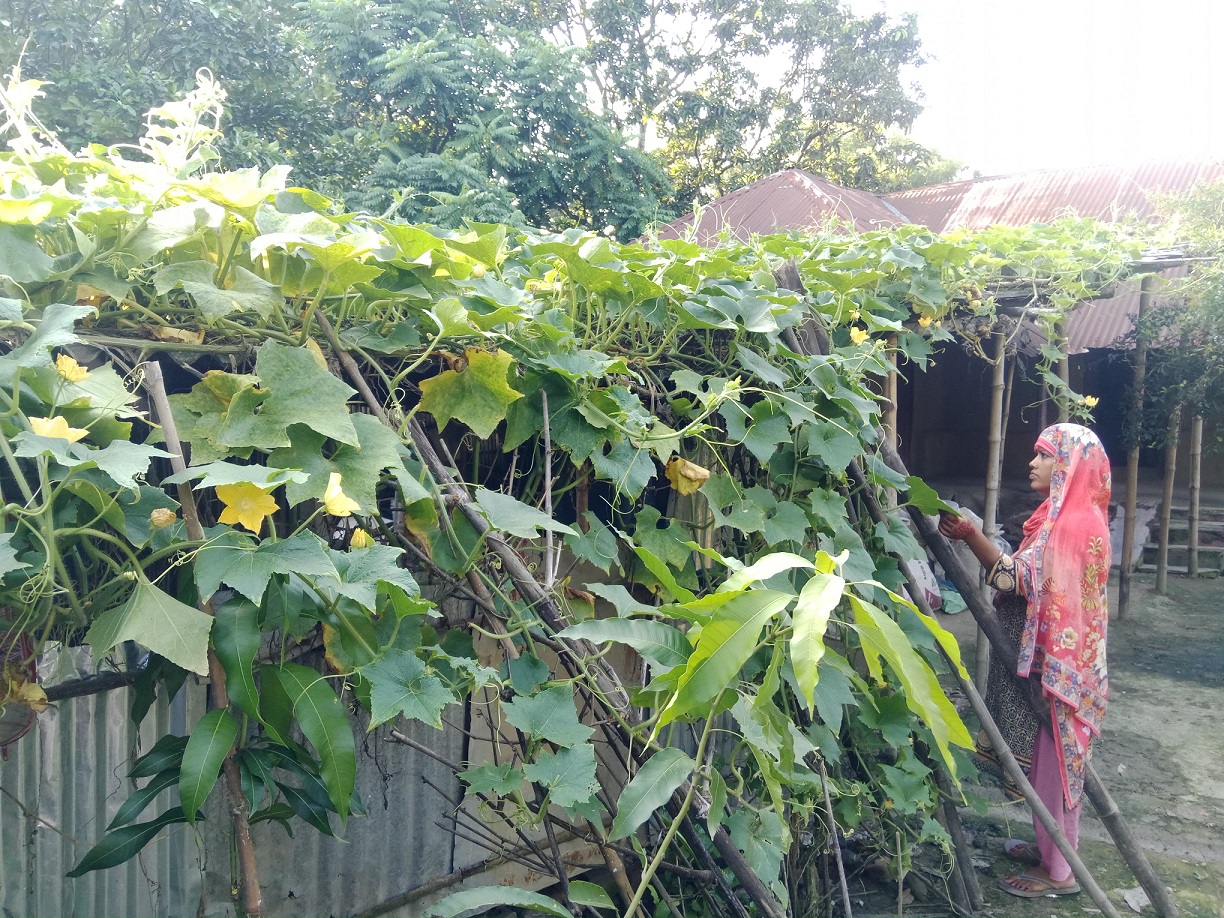
She now grows diverse vegetables, including ash gourd, pumpkin, two varieties of eggplant, bitter gourd, banana, papaya, ridge gourd, beans and other seasonal crops. She conserves seeds for future cultivation and exchanges them with neighbors. Through BARCIK training and experience-sharing, she has learned to prepare and use five types of organic pest-control preparations and uses organic manure to maintain soil quality.
She said, “Safe vegetable production reduces my costs, while demand for my fresh, chemical-free vegetables is high. People are willing to pay a little more for them.
She has also developed a small-scale duck farm. Starting with 100 local ducks, she earned BDT 25,000 by selling 50 ducks at BDT 500 each and currently keeps 50 ducks. To reduce feed costs, she collects grass, vines, leaves and snails from nearby wetlands.
Ayesha’s determination, combined with BARCIK’s guidance, has helped improve her family’s economic wellbeing. Her diversified farming practices are also inspiring other women in the village to adopt safer and more environmentally friendly agricultural practices.