
By Sattarajan Saha from Manikganj
Farmers in Harirampur, Manikganj have highlighted the growing impacts of climate change on agriculture and called for stronger protection of natural resources, indigenous seeds, and soil health to sustain farming livelihoods. Unpredictable weather, including excessive rainfall, prolonged droughts, floods, and rising temperatures, has increasingly disrupted crop production and reduced the availability of traditional crop varieties.
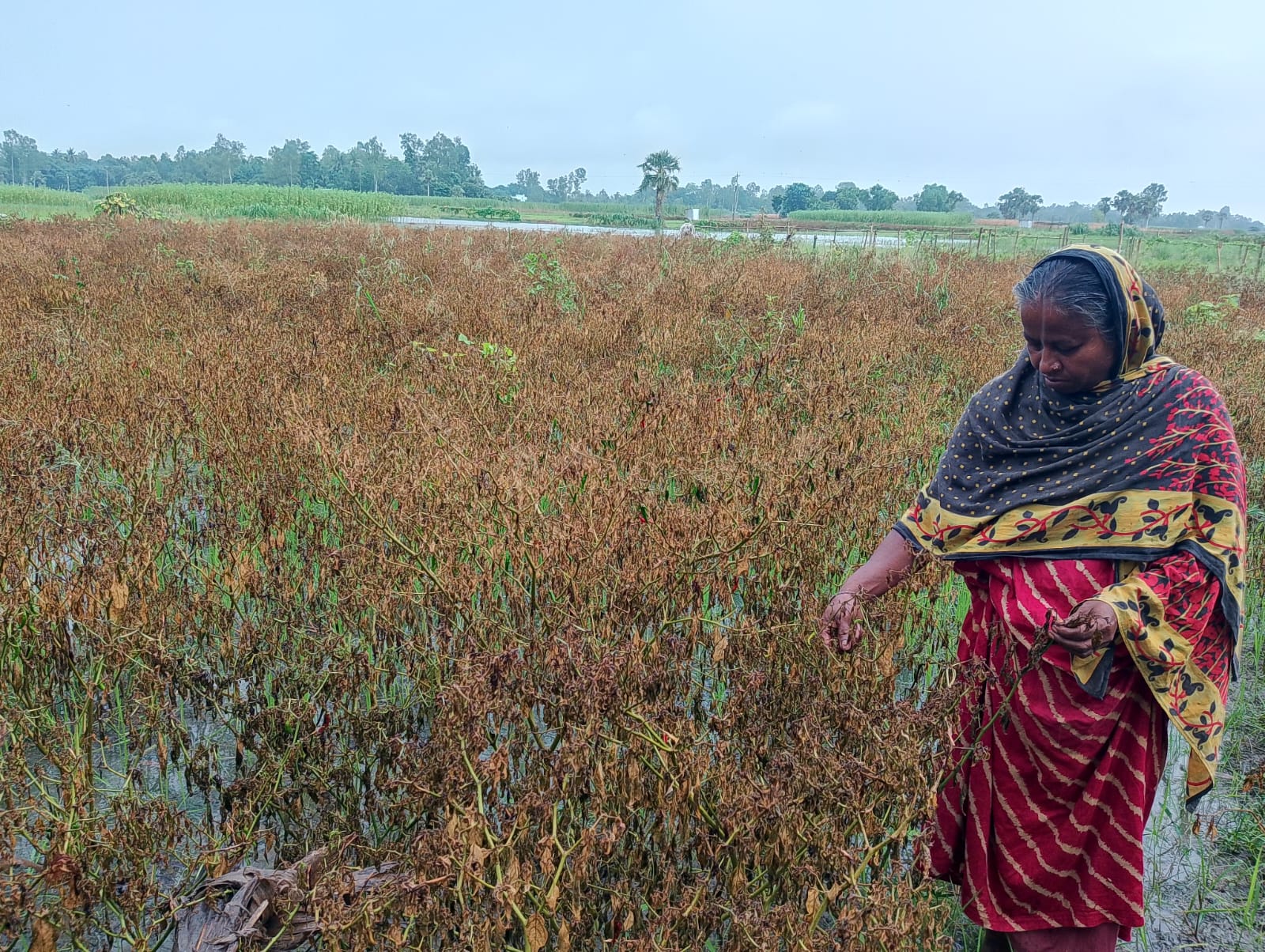
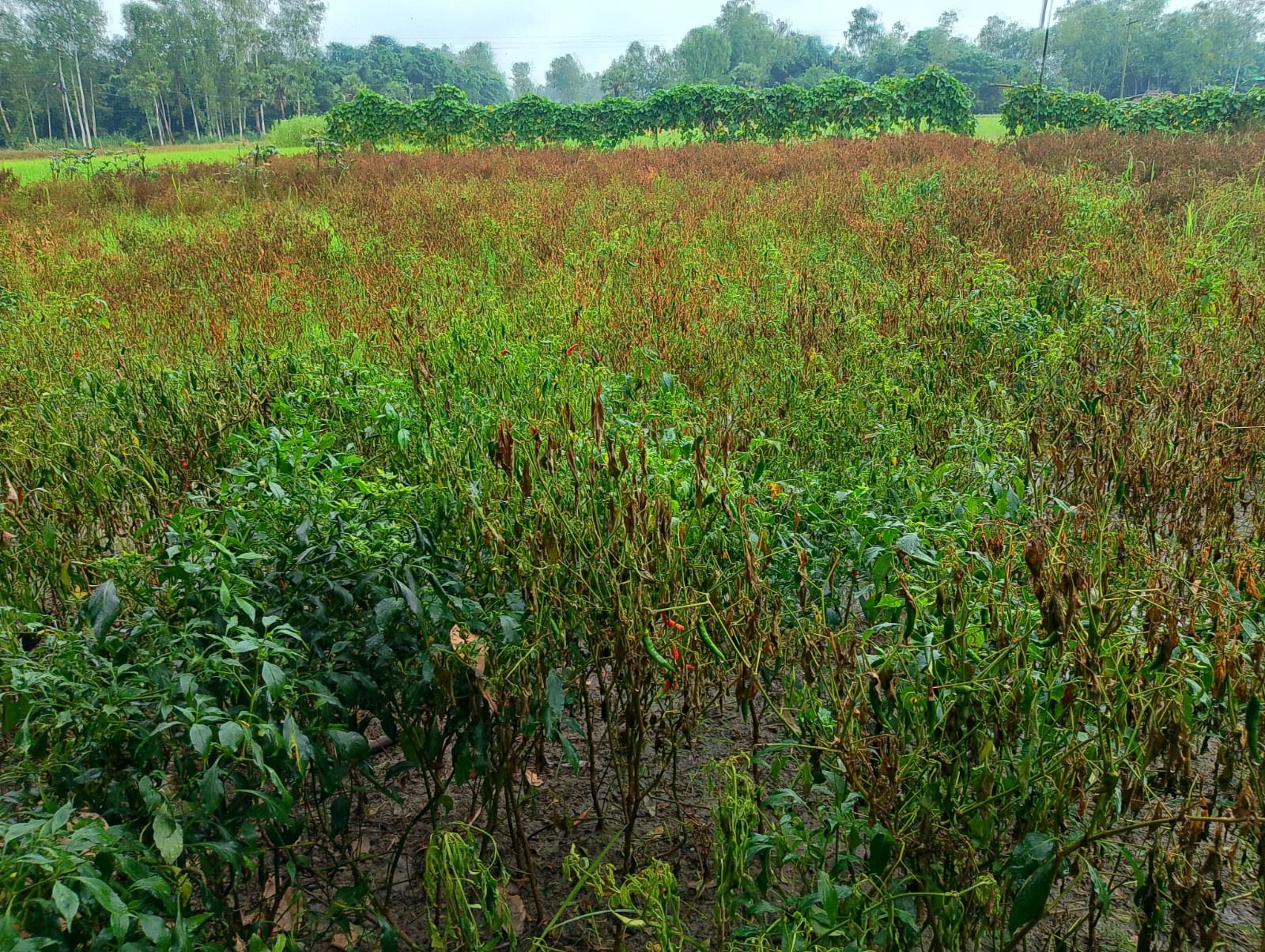
The floodplain district, enriched by the Padma, Ichamati, Kaliganga, and Dhaleshwari rivers, has long supported diverse agricultural production. However, farmers said that unusually heavy rainfall this year damaged chilli, vegetables, and other seasonal crops, while delayed river flooding reduced natural silt deposition and affected the growth of indigenous rice varieties. Many also expressed concern over declining cultivation of traditional crops and the loss of locally adapted seeds.
Local farmers said that sudden heavy rainfall destroyed seedbeds and prevented them from conserving seeds for the next planting season. They warned that increasing climate variability is making farming more uncertain and expensive.
Farmer-researchers emphasized that conserving indigenous seeds, improving soil health through organic manure, and expanding agroecological farming practices are essential for adapting to climate change and reducing dependence on external agricultural inputs. They encouraged farmers to protect local resources and indigenous knowledge to ensure long-term agricultural sustainability.