
By Mofijur Rahman from Shyamnagar, Satkhira
Champa Rani, a resident of Khoshalkhali village in Burigoalini Union of coastal Shyamnagar, Satkhira, has transformed her once-underused homestead into a diverse agroecological farm. Conserving local seeds and using organic farming methods, she has strengthened her family’s food and nutrition security while increasing household income.
Champa has received training on vermicompost, botanical pesticides, local seed conservation, uncultivated plant preservation and agroecology from BARCIK. After visiting to agroecology learning centers in Dhumghat and Sriphalkati also changed her understanding of how even a small homestead can become productive.
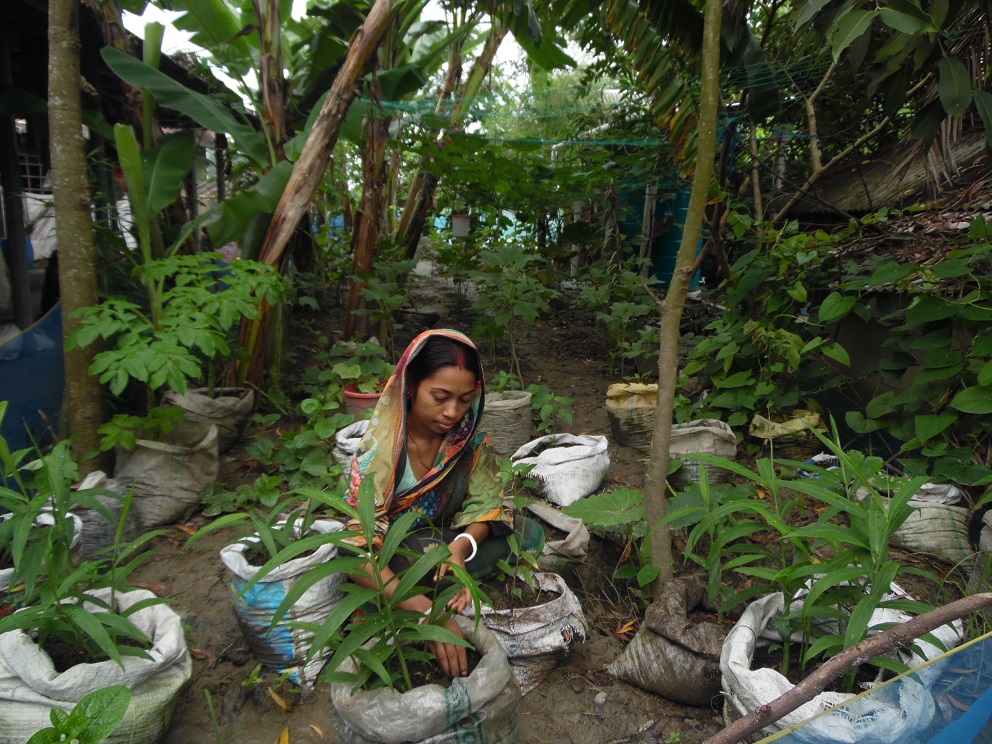
She now produces around 14 types of vegetables and 16 types of fruits, including gourds, bitter gourd, beans, leafy vegetables, mango, coconut, guava, papaya, lemon and drumstick. She also raises cattle, goats, ducks and chickens, contributing to family nutrition and income.
Champa carefully selects healthy plants for seed collection and conserves seeds for future seasons. She currently conserves 11 varieties of local seeds and shares surplus seeds with neighbours.
By producing vermicompost, organic pesticides and other inputs at home, she has reduced production cost of her foods. Her family consumes about 2 kg of home-grown vegetables daily while surplus vegetables generate income.
Her success has also strengthened her voice in household decisions and increased her standing in the community. Neighbours now seek her seeds and advice on farming.
She said, “An Agroecology Learning Center helped me understand that even a small homestead can provide food, nutrition and income. Now I leave no space unused and produce safe food through organic methods.”
Her experience demonstrates how local knowledge, training and agroecological practices can turn small homesteads into foundations for food security, economic self-reliance and women’s empowerment.