
By Subir Kumar Sarker from Ghior, Manikganj
In the low-lying villages of Joynagar and Begamnagar in Ghior Upazila, Manikganj, canals, wetlands, and rivers remain submerged during the monsoon, limiting the availability of vegetables and spices. To address this challenge, farmers are reviving the traditional practice of cultivating crops on floating beds made from water hyacinth and paddy straw, locally known as Gaota.
Floating cultivation has become an effective climate adaptation strategy for flood-prone areas, enabling farmers to produce vegetables, spices, and seedlings despite prolonged waterlogging. The practice improves household food and nutrition security, creates income opportunities, and makes productive use of inundated water bodies and fallow land.
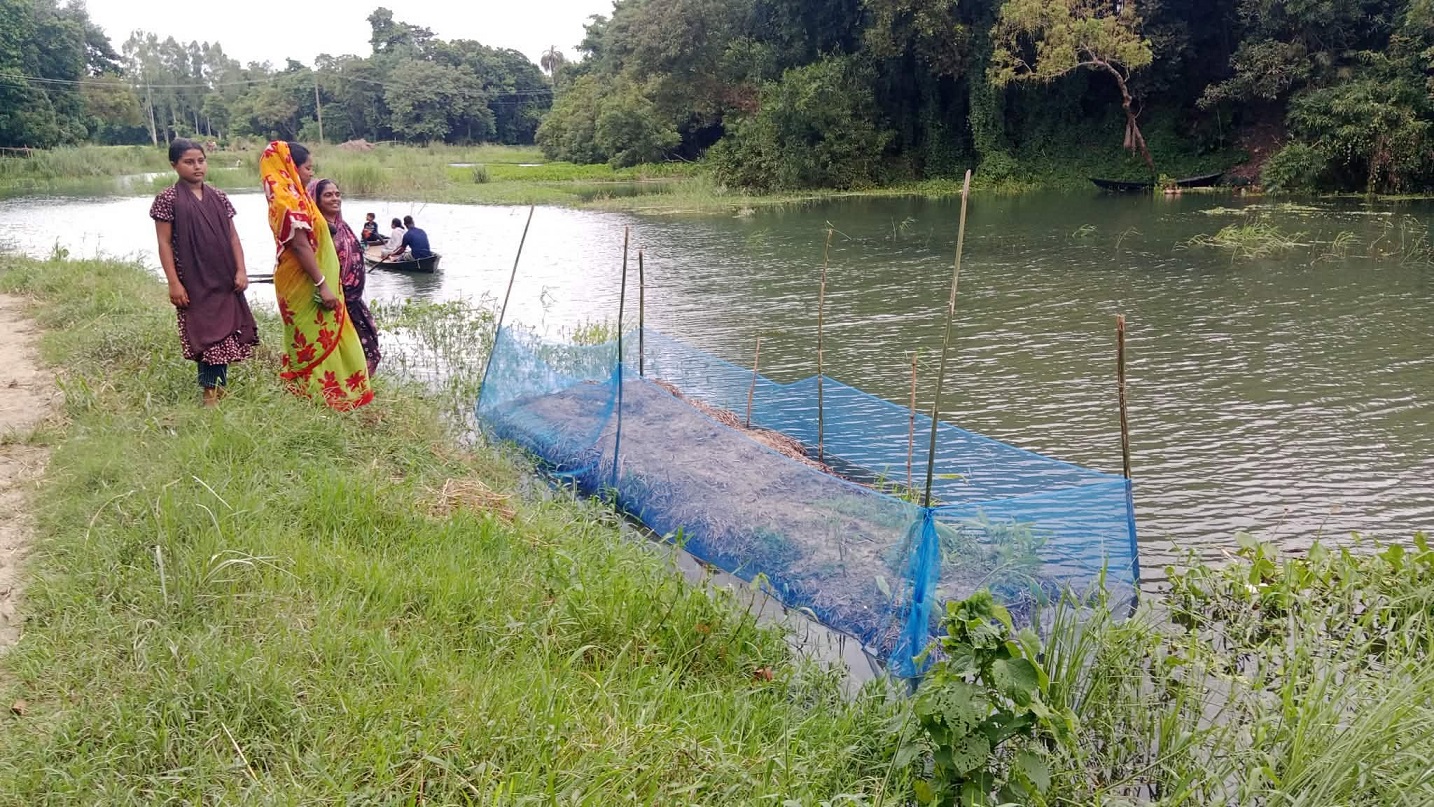
Among the successful practitioners is Alpona Rani Sarkar, a farmer and member of the Joynagar Agroecology Learning Center. This monsoon, she established floating beds in the Joynagar canal and cultivated turmeric, okra, and indigenous bottle gourd using organic methods. She believes floating cultivation protects crops from heavy rainfall and seasonal floods while ensuring a steady supply of safe and nutritious food.
Alpona prepares the floating beds with rice straw and water hyacinth, reinforcing them with bamboo where water currents are strong. Once the beds are ready, crops such as ginger, turmeric, bottle gourd, bean, and okra are planted directly without the need for chemical fertilizers. Protective nets are used to prevent damage from ducks.
She says this indigenous adaptation practice supports monsoon vegetable production and enables early winter seedling cultivation. Expanding floating farming in low-lying areas can strengthen climate resilience, improve food security, and provide sustainable livelihoods for farming communities.