
By Mofijur Rahman from Shyamnagar, Satkhira
Despite living in the climate-vulnerable coastal village of Khosalkhali in Burigoalini Union, Shyamnagar, farmer Sobita Halder has transformed her 29-decimal homestead into a climate-resilient, integrated farming system. Through year-round cultivation of seasonal vegetables, fruits, fish, poultry, and livestock, she has significantly improved her family’s food security, nutrition, and income.
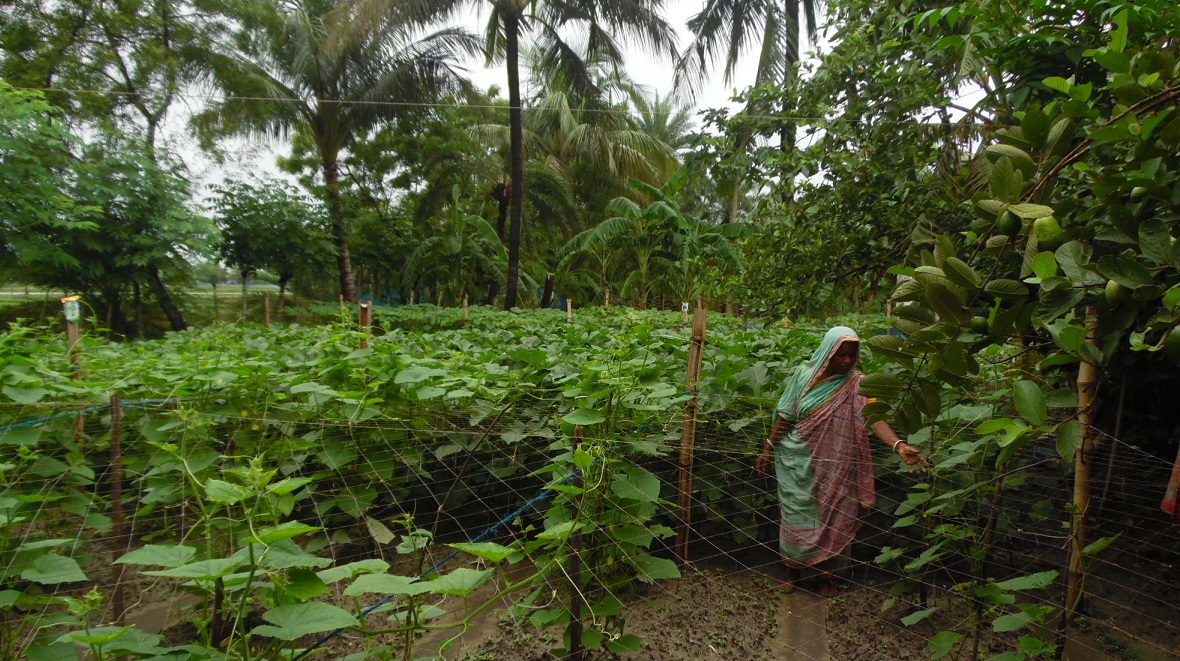
A six-month observation found that Sobita’s homestead (Known as Shotobari) produced around 24 varieties of vegetables, 12 species of fish, and seven types of fruits, alongside eggs, milk, and poultry meat. Altogether, her family had access to nearly 46 different food items, ensuring a diverse and nutritious diet throughout the year.
Sobita said, “Earlier, we depended on the market for most of our vegetables. Now, we grow almost everything we need, reducing food expenses while improving our family’s nutrition,” She also exchanges surplus produce with neighbours, strengthening community relationships.
The initiative has also generated substantial economic benefits. During the six-month period, Sobita earned from selling seven income sources, including the sale of vegetables, fruits, fish, ducks, chickens, eggs, and milk. At the same time, home-produced food reduced household food expenses bringing the family’s combined economic benefit.
Sobita’s homestead has become a model of environmentally friendly and climate-resilient agriculture in the coastal region. Inspired by her success, many neighbouring farmers are adopting integrated homestead farming practices, promoting agroecological production, diversified livelihoods, and sustainable food systems.
Her experience demonstrates that even a small homestead, when managed through integrated and ecological farming practices, can ensure year-round nutritious food, create multiple income opportunities, and strengthen household resilience to climate change.