
By Amreen Binte Azad from Dhaka
The need to protect haor ecosystems, reduce chemical dependency in farming, and strengthen farmer-led food systems came into focus at a regional dialogue held in Netrokona recently
BARCIK organized the event, titled “Climate-Resilient Food Systems in Bangladesh: Agroecology Leads the Way,” with support from Rosa Luxemburg Stiftung South Asia.
The dialogue brought together farmers, researchers, journalists, students, youth representatives, development workers, civil society members, and professionals from different sectors.
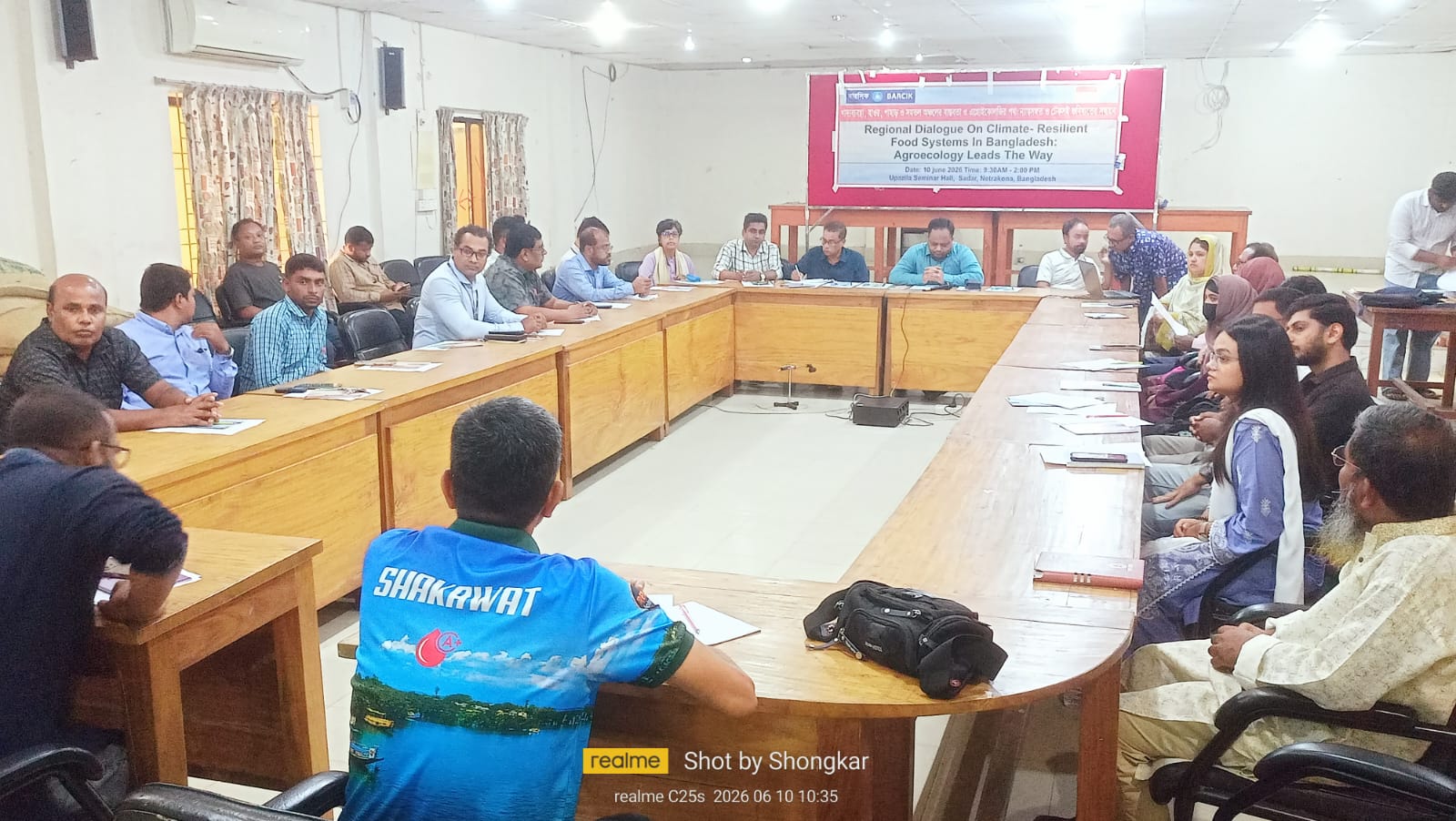
Netrokona Sadar Upazila Nirbahi Officer Abdullah Al Bakiul Bari inaugurated the programme as chief guest. Speaking as chief guest of the event he said that rivers, haors, forests, and other natural resources should be protected.
BARCIK Director Silvanus Lamin delivered the welcome remarks, while Regional Coordinator Md Ohidur Rahman moderated the session. Research and Policy Advocacy Officer Amreen Binte Azad shared field-based observations on agroecological opportunities.
Discussions focused on the distinct challenges facing haor, hill, and plain areas. Participants raised concerns about environmental degradation, disruption of natural water flow, overuse of chemical fertilizers and pesticides, disappearance of local seed varieties, declining native fish populations, and the gradual loss of farmers’ control over agricultural production and markets. Speakers also argued that agroecology should be strengthened through the use of local knowledge, organic inputs, low-cost farming methods, crop diversification, and biodiversity conservation. They also called for greater protection of rivers, canals, beels, wetlands, and haor ecosystems.
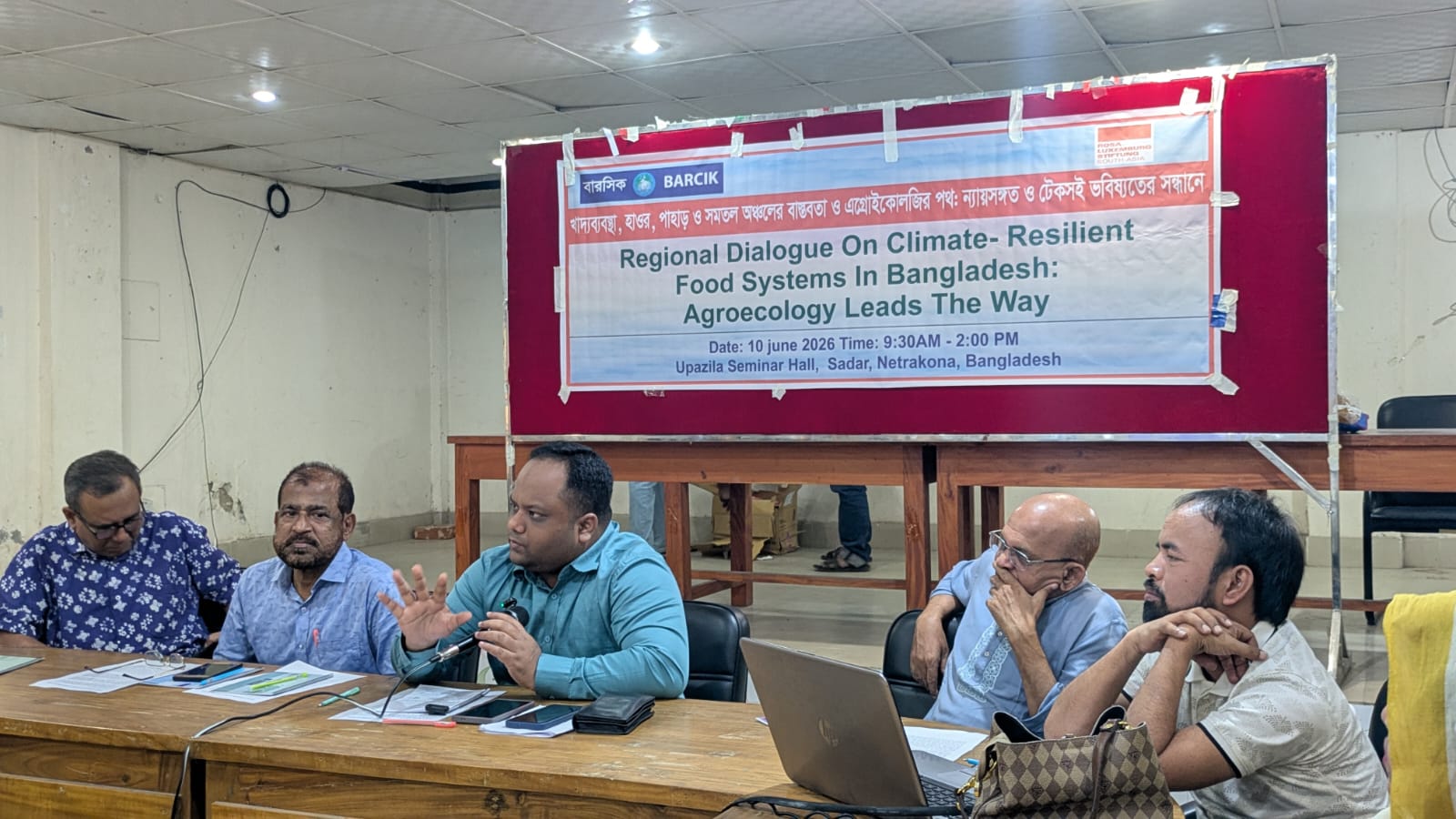
Journalist Alpana Begum recommended diversifying haor agriculture through greater cultivation of rabi crops and expansion of fish farming. Farmer-researcher Golam Mostafa highlighted the need to reduce toxic pesticide use and called for stronger recognition of women farmers in agricultural policy and planning.
Participants further recommended restoring rivers and canals, maintaining natural water flow, strengthening youth involvement in sustainable agriculture, improving farmer training, and bringing community experiences into local planning and policy discussions.
The dialogue ended with a call for stronger cooperation among farmers, youth, researchers, civil society organizations, local administration, and development agencies to build more resilient, inclusive, and farmer-centred food systems.