
By Parboti Rani Singh from Atpara, Netrakona
A dialogue titled “Use of Pesticides and Banned Equipment in Wetlands: The Extinction of Aquatic Biodiversity” was held recently at the Atpara Upazila Officers’ Club. The event was organized by BARCIK and the Atpara Green Coalition Committee.
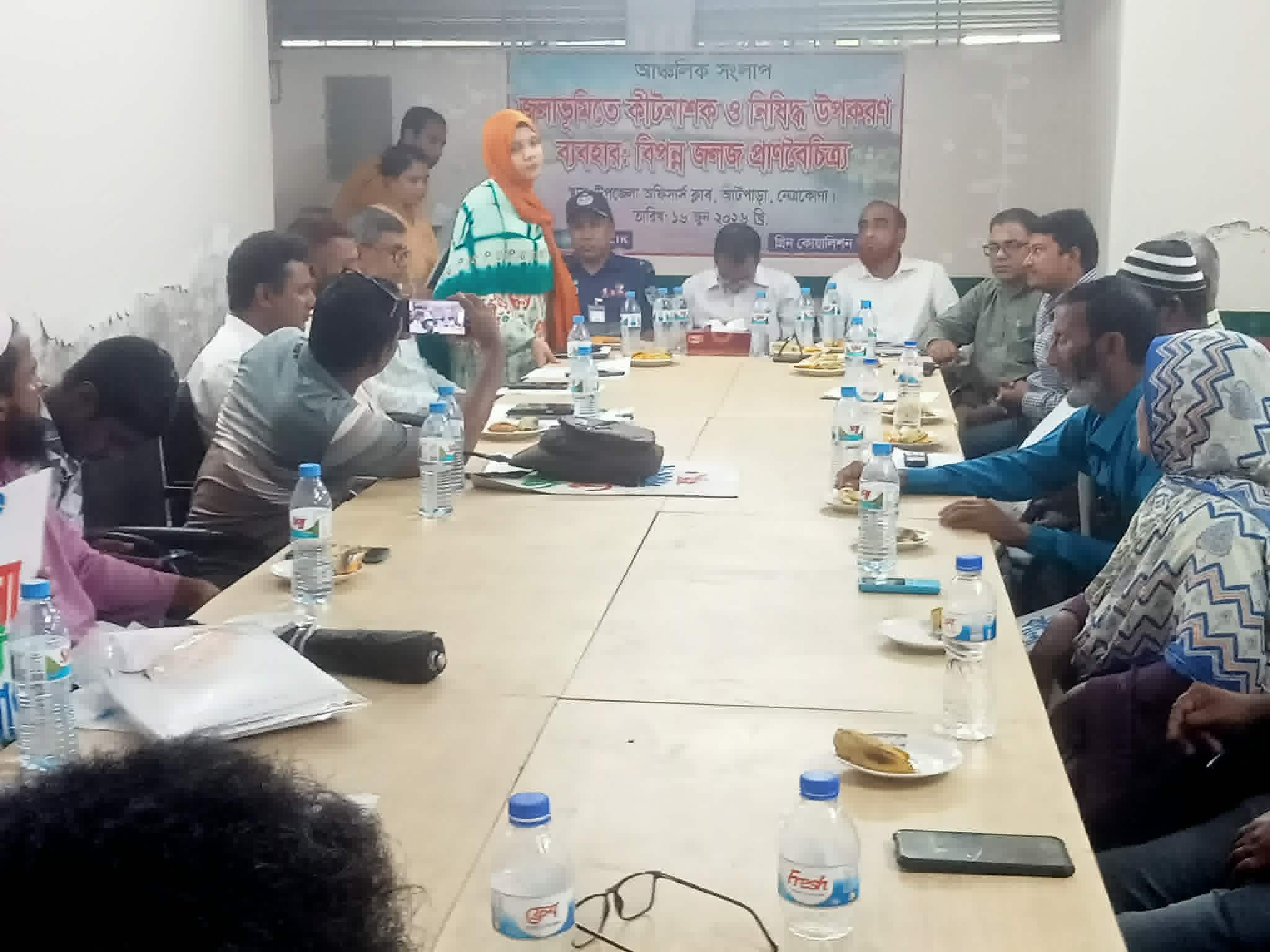
Government officials, journalists, farmers, fishers, students, teachers, cultural activists, and civil society representatives attended the discussion.
Speakers of the dialogue warned that excessive pesticide use and illegal fishing methods are severely damaging aquatic ecosystems and biodiversity. They said that wetlands play a crucial role in sustaining fish, birds, aquatic plants, wildlife, and overall ecological balance.
Agriculture officials said that indiscriminate pesticide use kills harmful insects and destroys beneficial pollinators and threatens public health. Participants also expressed concern over the use of destructive fishing nets and toxic substances in wetlands, which destroy fish breeding grounds and aquatic life.
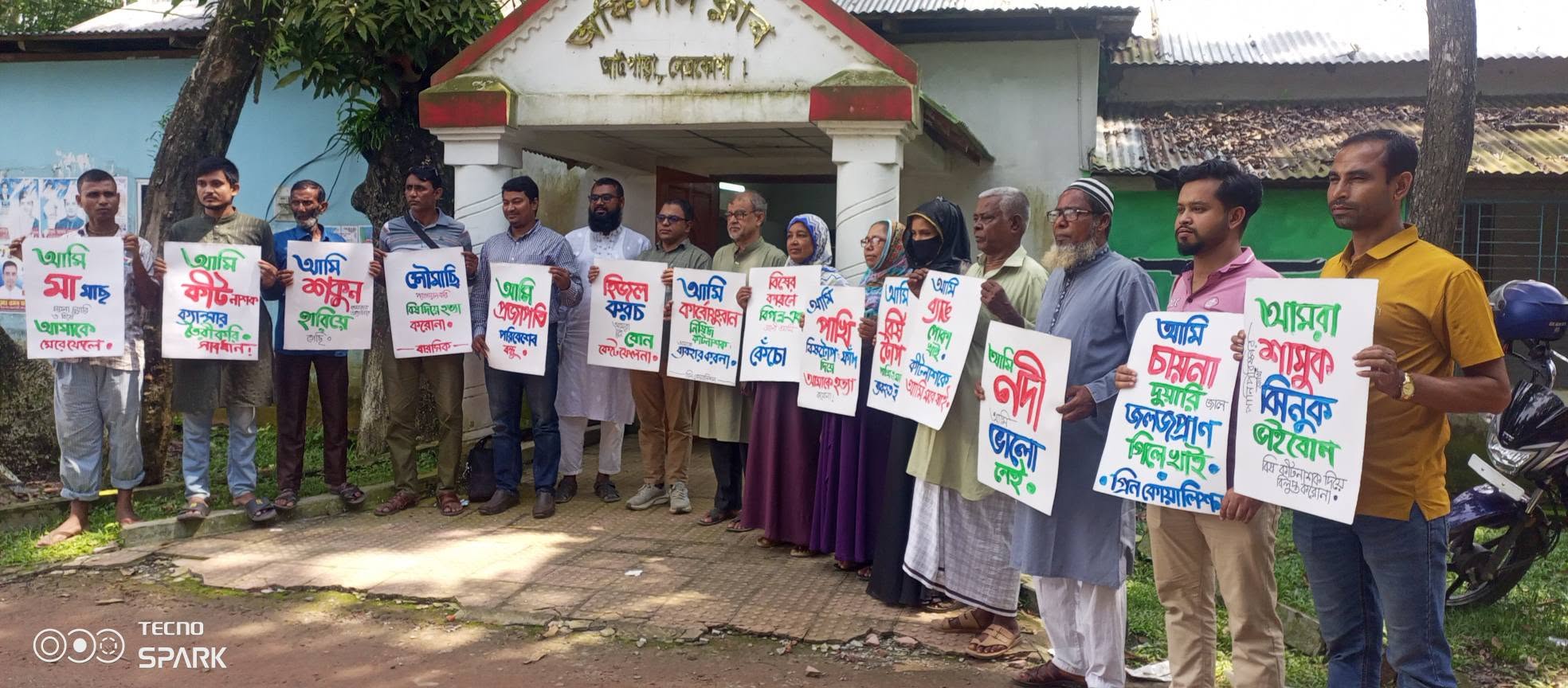
The dialogue concluded with a symbolic human chain and placard exhibition calling for stronger monitoring of pesticide use, promotion of eco-friendly alternatives, and protection of wetland ecosystems.