
By Biswajit Mondal from Shyamnagar, Satkhira
In Bangladesh’s coastal region, excessive rainfall during the monsoon often creates significant challenges for farmers, particularly in vegetable seedling production. Waterlogged seedbeds, excessive soil moisture, and increased disease outbreaks frequently damage young seedlings, forcing farmers to sow seeds repeatedly and increasing both production costs and labor requirements.
In order to address this challenge, Puja Rani (35), a farmer from Kultali Village in Munshiganj Union under Shyamnagar Upazila, has developed a simple but effective adaptation strategy. Living with her husband, Debdas Mondal, and their daughter, Puja contributes to her family’s livelihood through year-round crop cultivation on their small homestead.
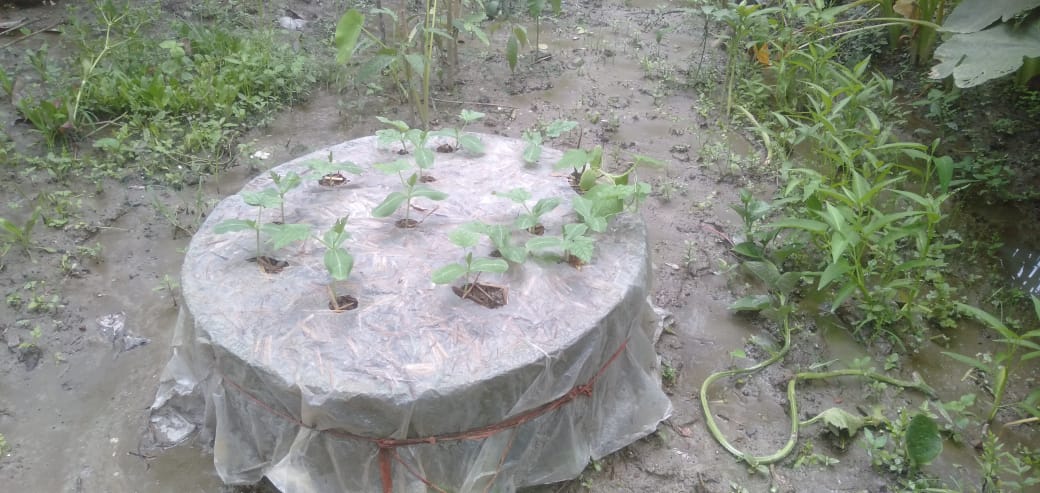
Her innovative approach involves producing vegetable seedlings in bamboo baskets filled with fertile soil, compost, and organic fertilizers. Seasonal vegetable seeds are sown in these baskets, which are then placed in elevated locations. During periods of heavy rainfall, the baskets are covered with plastic sheets that protect the seedlings from direct rain while still allowing adequate airflow.
According to Puja, conventional nurseries often fail during the rainy season because excess water causes seedlings to rot. However, using portable baskets allows her to move the seedlings to safer locations when necessary, significantly reducing the risk of water damage.
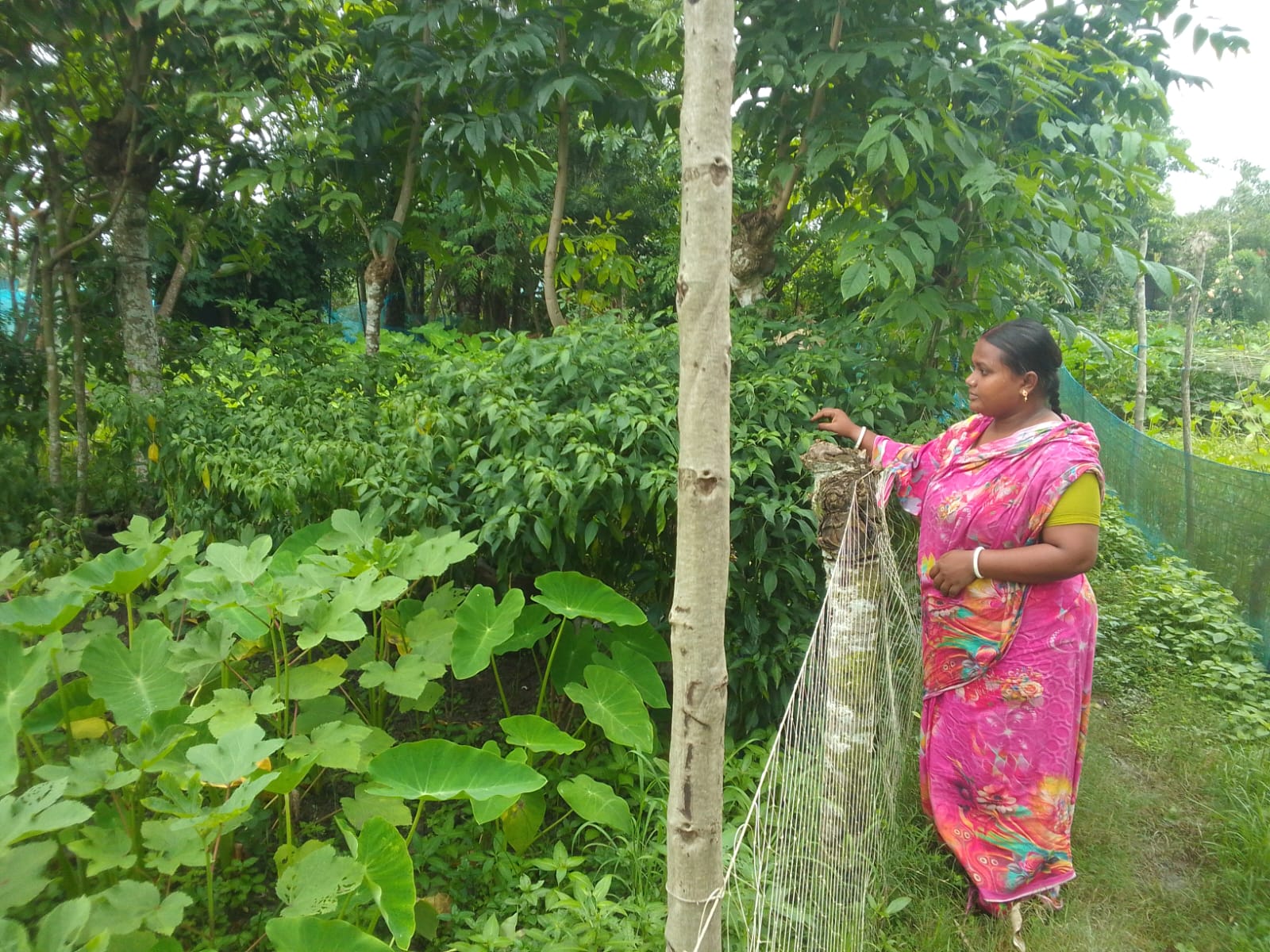
She believes that the greatest advantage of this technique is its simplicity. The required materials baskets, soil, compost, and plastic sheets are inexpensive and readily available in local communities. The method requires little technical expertise and can easily be replicated by other farmers.
Puja’s experience demonstrates that effective climate adaptation does not always require expensive technologies. Simple, locally developed solutions can play an important role in strengthening climate-resilient agriculture in vulnerable coastal regions.