
By Gazi Mahida Mizan from Satkhira
People and civil society representatives in Satkhira have demanded safe, affordable and climate-resilient housing, along with essential urban services, for low-income urban poor people.
The demands were raised at a human chain organized on recently, to mark World Habitat Day 2026. BARCIK, in collaboration with the Education, Culture and Diversity Protection Team, organized the program on the Satkhira Government Women’s College Road.
Speakers at the human chain included civic leaders Abdus Samad and G.M. Reza, Itagacha slum community Jahanara Khatun and Firoza Begum, Hafiza Khatun, Kajipara urban poor Sahida Khatun, and BARCIK Program Officer Gazi Mahida Mizan, among others.
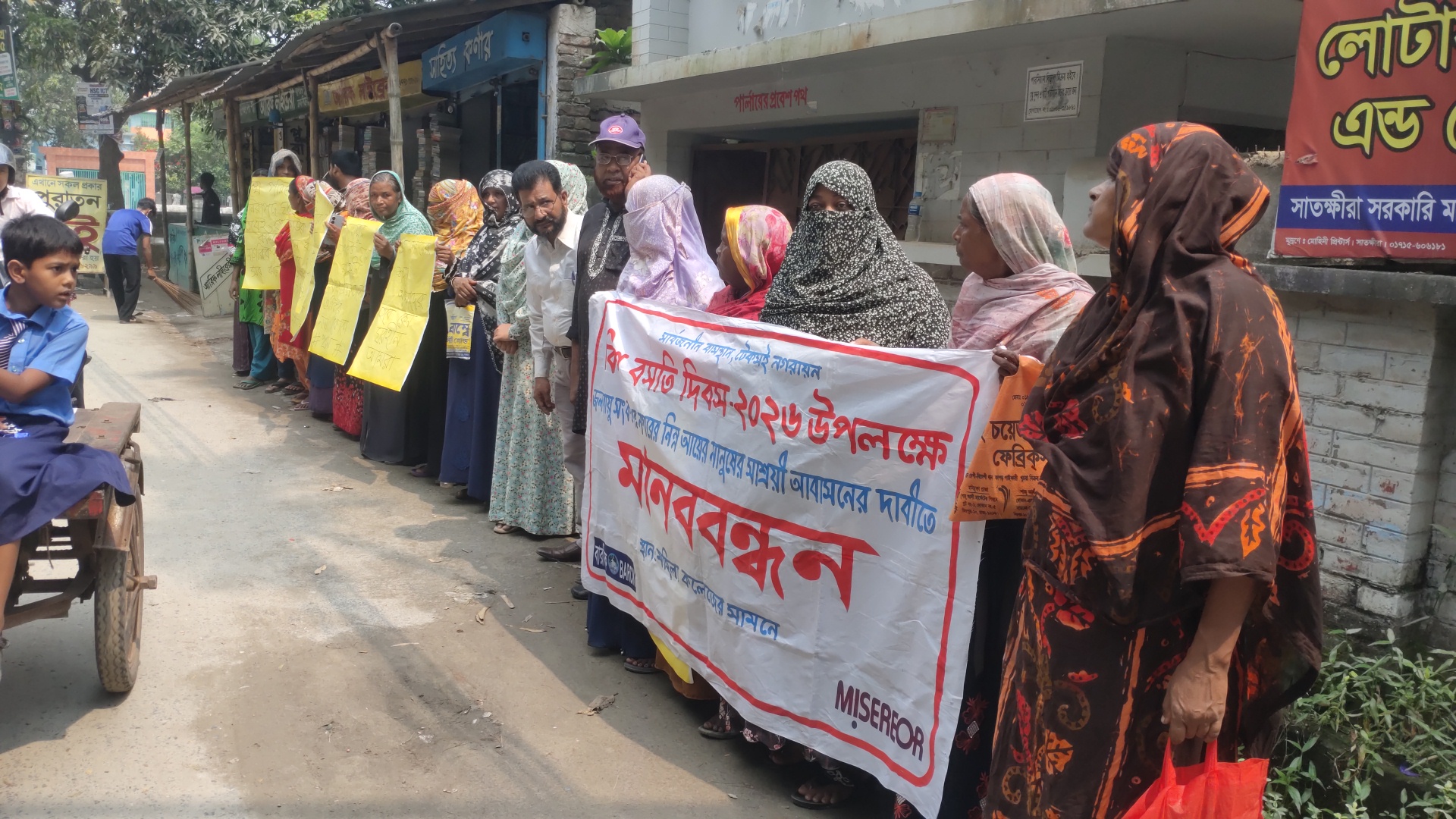
Speaking at the programme, Sahida Khatun of Kajipara said, “Many low-income people had been forced to move to the city after experiencing natural disasters. They now collect discarded bottles, polythene and other waste, helping keep the city clean, but often lack secure places to live.” She went on saying, “We came to the city after suffering from different natural disasters. We collect waste such as bottles, polythene and other discarded materials and help to keep the city clean. Yet we have no secure place to live”.
Jahanara Begum of Itagacha said, “Slum people contribute to the city’s economy through their daily work but continue to live under the threat of eviction.” She said, “We vote here and work in people’s homes. If we do not work and cook, many people cannot eat. Yet we constantly live with the fear that our homes may be demolished. We want secure housing, safe water and sanitation, as well as educational opportunities for our children”.
Landless people’s leader Abdus Samad called for an end to the eviction of low-income communities in the name of development. He stressed that residents should instead be provided with safe and dignified housing.
“Urban planning must integrate local climate realities, heat risks, housing, essential services, livelihoods and environmental safety. At the same time, meaningful participation of low-income communities must be ensured,” he said.
BARCIK Program Officer Gazi Mahida Mizan said urban poor make an important contribution to keeping cities functioning through their labor and services.
“Ensuring safe housing for the people who keep urban services and economic activities running through their daily labor is not only a humanitarian responsibility. It is also essential for building a sustainable, inclusive and livable city,” she said.
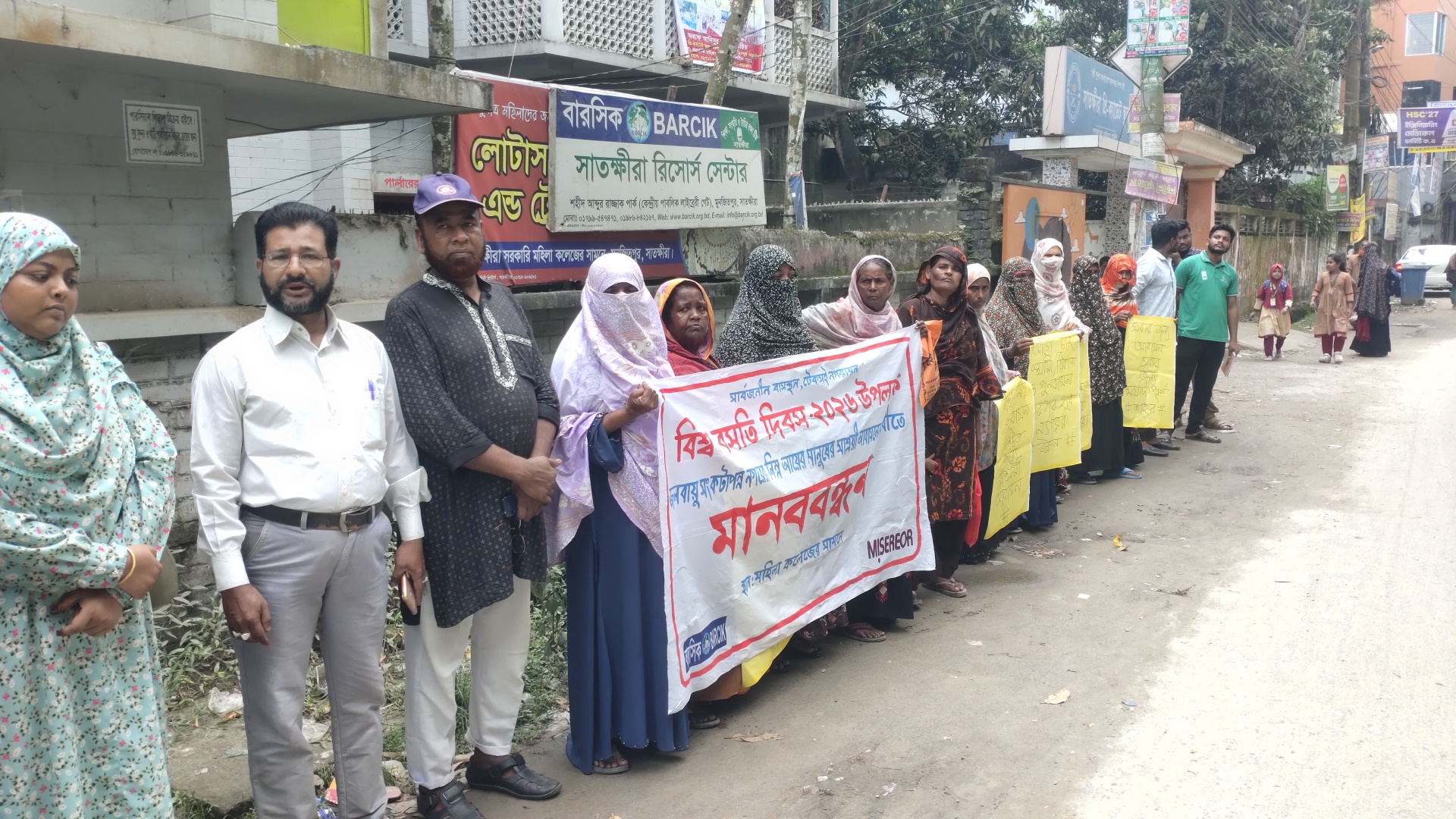
The human chain called for secure and dignified housing for slum residents and guarantees of rehabilitation before eviction. Participants also demanded affordable, safe and climate-resilient housing for low-income communities.
They further called for improved access to safe water, electricity, sanitation, drainage, waste management and affordable healthcare in slum areas. They also demanded easy, non-discriminatory access for low-income people to government social protection programs.
The speakers emphasized that housing should not be viewed separately from climate resilience, livelihoods and basic urban services. For climate-vulnerable cities such as Satkhira, they argued, inclusive urban planning and meaningful participation of low-income communities are essential to building safer and more resilient urban settlements.