
By Md. Atikur Rahman from Rajshahi
Jasmine Khatun grows nearly 20 varieties of seasonal vegetables in her homestead garden, meeting her family’s nutritional needs while earning additional income. Sultana Khatun conserves around 200 varieties of seeds at her home. Meanwhile, young farmer Hriday Hasan has successfully cultivated guavas organically on 55 decimals of land without using chemical fertilizers or pesticides. Their initiatives demonstrate the potential of agroecology, local resources and environmentally responsible farming. Drawing on these practical experiences, BARCIK organized a day-long youth training workshop on “Agroecology, Climate Justice and Food Sovereignty” recently at the Kumra Pukur Agroecology Learning Centre in Paba, Rajshahi. Around 50 young people, farmers and women farmers from Bargachhi and Darshanpara unions and Nowhata Municipality participated. The workshop aimed to strengthen young people’s understanding of agroecology, promote environment friendly farming and enhance their capacity to address climate challenges. Discussions focused on indigenous seed conservation, biodiversity, organic fertilizers, natural pest management, food sovereignty and fair prices for farmers.
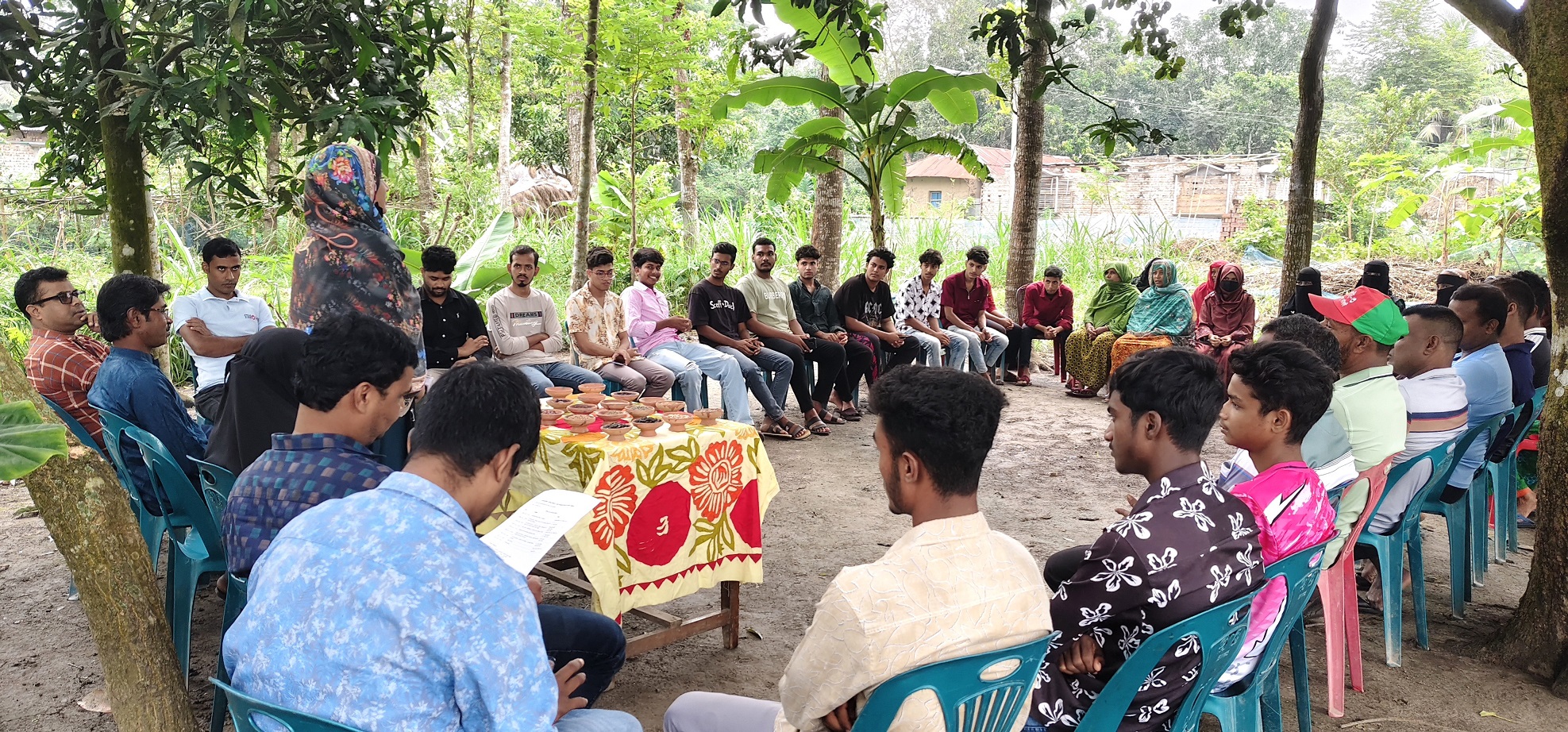
Homestead gardening for nutrition and income
Jasmine Khatun, caretaker of the Kumra Pukur Agroecology Learning Centre, shared her experience of growing nearly 20 varieties of seasonal vegetables and ginger using the sack cultivation method. She produces vegetables without harmful chemicals, meeting her family’s needs and selling the surplus in local markets at good prices. Her initiative has inspired neighbouring families, particularly women, to establish homestead gardens and improve household nutrition.
Conserving 200 varieties of native seeds
Sultana Khatun, caretaker of the Bilnepalpara Agroecology Learning Centre, maintains a household seed bank containing around 200 varieties. She shared her experiences of collecting, selecting and preserving seeds, as well as preparing and applying natural pest-control materials. Her initiative highlights the important role of rural women in conserving agricultural biodiversity, traditional knowledge and local food systems.
Young farmer’s success in chemical-free guava cultivation
Young farmer Hriday Hasan inspired participants with his experience of cultivating guavas organically on 55 decimals of land without chemical fertilizers or pesticides. He uses organic fertilizers and vermicompost to maintain soil fertility and applies biological pest-management methods and sex pheromone traps to control insects. According to Hriday, his guavas are relatively large and sweet, weighing approximately 300–400 grams each. They also receive good demand and comparatively higher prices in local markets. His experience demonstrates that environment friendly farming can offer both ecological and economic benefits.
Sharing experiences and inspiring new initiatives
Inspired by these examples, participating women expressed interest in expanding safe and diverse vegetable cultivation in their homesteads, while several young participants showed enthusiasm for adopting chemical-free crop and fruit production. The discussions highlighted that agroecology is not merely a theoretical concept; it offers practical opportunities for improving livelihoods and protecting the environment.
Climate justice and food sovereignty
Participants also discussed the growing challenges facing agriculture in the Barind region, including drought, irregular rainfall, rising temperatures and water scarcity. They emphasized the importance of climate-resilient crops, soil health, efficient water use and agricultural biodiversity. The discussion highlighted climate justice, particularly the disproportionate impacts of climate change on small-scale farmers and marginalized communities, despite their limited contribution to the crisis. Ensuring their rights, participation and access to fair support is therefore essential. Food sovereignty was another key topic, focusing on communities’ rights to determine their food systems, conserve local seeds, make production decisions and receive fair prices for agricultural products. Strengthening local food systems and direct connections between farmers and consumers was also emphasized.
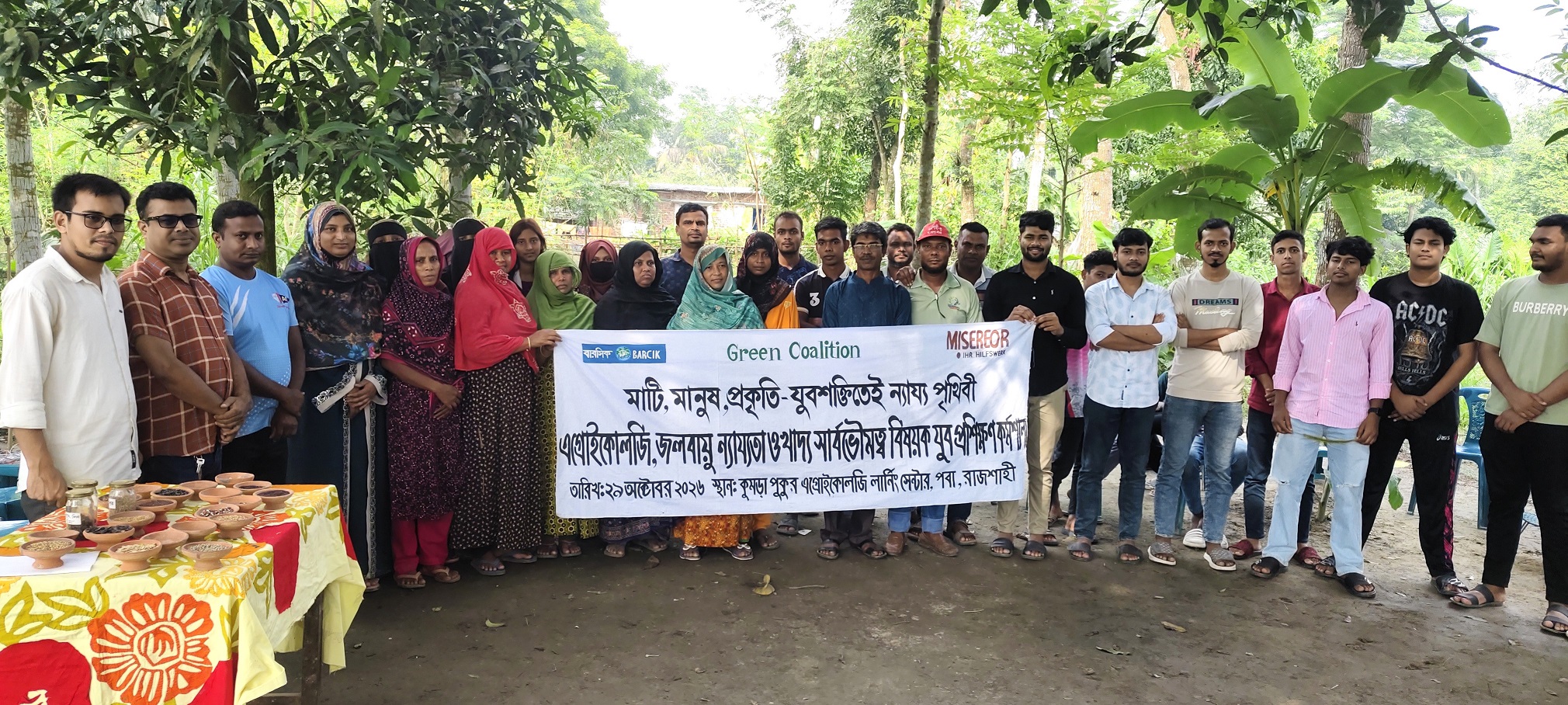
Youth leadership for agroecological transformation
The workshop concluded with participants’ feedback, discussions on future action plans and an exchange of local seeds to encourage conservation and cooperation among farmers. Participants highlighted the need for regular training, experience sharing, stronger community seed banks, technical support and fair markets for agroecological products. The future of agriculture in the Barind region depends not only on increased production but also on protecting soil health, water resources, biodiversity, farmers’ rights and access to safe food. The initiatives of Jasmine, Sultana and Hriday demonstrate how local knowledge and youth leadership can contribute to this transformation. The training sessions were facilitated by Md. Shahidul Islam, Regional Coordinator of BARCIK’s Barind region; Programme Officers Amrit Kumar Sarkar and Touhidul Islam; Associate Programme Officer Sultana Khatun; and Youth Coordinator Md. Atikur Rahman.