
By Md. Nazrul Islam from Manikganj
“Once, our family had plenty of ancestral land. Repeated river erosion has taken almost everything, leaving us with only our home. Despite all the hardships, I am still struggling to survive and care for my wife.” Said by Moslem Uddin, 62.
The Padma is more than a river flowing across Bangladesh. It is a source of livelihood, culture and survival for millions of people. Yet, for communities living along its banks, it is also a constant source of uncertainty and loss.
In Gangadharadi and Notkhola villages of Harirampur upazila in Manikganj, river erosion has repeatedly reshaped people’s lives. Among those struggling against these challenges is Moslem Uddin, a 62-year-old boatman whose life reflects the hardships of riverine communities.
He was born into a farming family that once owned agricultural land and livestock. However, repeated erosion by the Padma gradually swallowed their homestead and farmland. What was once a prosperous household eventually lost most of its assets.
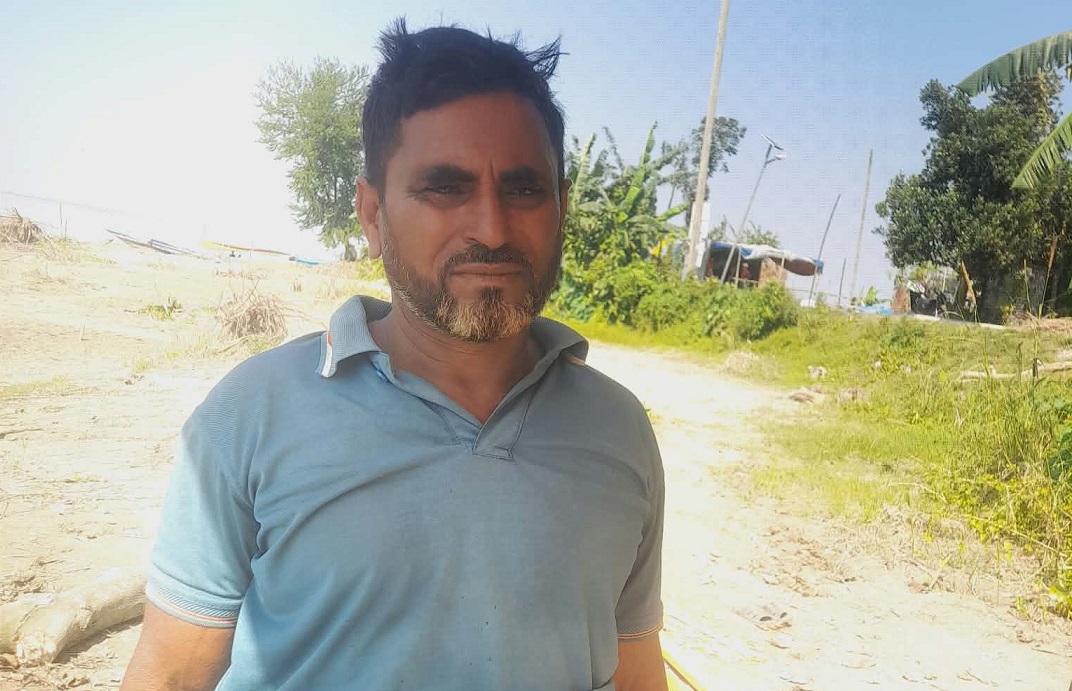
His family faced another devastating setback when his wife suffered a severe stroke after their son and daughter had married. She subsequently became paralyzed and bedridden, leaving Moslem responsible for her care. “After my wife fell ill, our family life changed completely,” he says.
He was forced to abandon farming and take up boat services at the local ferry crossing, commonly known as khep mara, to earn a living. To operate legally, he obtained the necessary license and documents from the Department of Shipping, with assistance from Mukter Hossain, a field worker of BARCIK, a local development organization.
Moslem’s daily life revolves around earning a livelihood and caring for his wife. He manages household chores, prepares meals and takes full responsibility for feeding and looking after her, including her personal hygiene. Although neighbours have suggested that he remarry, he has refused, choosing instead to remain beside his ailing wife.
Despite leaving farming as an occupation, he has not abandoned it entirely. He cultivates vegetables on a small plot beside his home without chemical fertilizers or pesticides, producing food for himself and his wife.
Moslem is also concerned about the changing condition of the Padma and its aquatic resources. Through interactions with BARCIK field workers and environmental activists, he has become increasingly interested in ecological conservation and sustainable agriculture.
He appreciates efforts by BARCIK and the Green Coalition to promote organic farming and reduce dependence on chemical fertilizers and pesticides.
He is particularly critical of the destructive China Duari fishing nets, which threaten fish populations. While welcoming government initiatives to destroy these illegal nets, he believes the factories producing them should also be permanently closed rather than punishing only poor fishers.
He has also observed changes in the river’s natural flow and believes the construction of bridges at inappropriate locations may be contributing to disruptions in water movement and fish breeding.
Despite his difficult circumstances, Moslem has repeatedly failed to secure government social security assistance for his bedridden wife. Several attempts to obtain an allowance through local representatives have brought no results. Frustrated by their indifference, he remarked, “They come to us during elections. Let them come again when they need our votes!” His frustration reflects the difficulties faced by marginalized people in accessing essential public services.
After learning about his situation, BARCIK has pledged to assist him in applying online for a government social security allowance and a one-time medical grant through the Department of Social Services.
Moslem’s story is not merely about a boatman struggling to earn a living. It reflects the wider reality of river erosion, economic insecurity and inadequate social protection in rural Bangladesh.
Despite losing his ancestral land and facing immense personal hardship, he continues to work, care for his wife and speak out for the protection of the river and nature. His resilience and devotion offer a powerful example of dignity, responsibility and humanity.