
By Md. Nazrul Islam from Manikganj
“Like a trap baited with fish, tobacco companies lure us with advance payments and then take everything back, with interest. What a strange system! They buy the harmful crop grown on our own land, process it into bidis, and sell it back to us at a higher price. I have vowed never to grow tobacco again.”
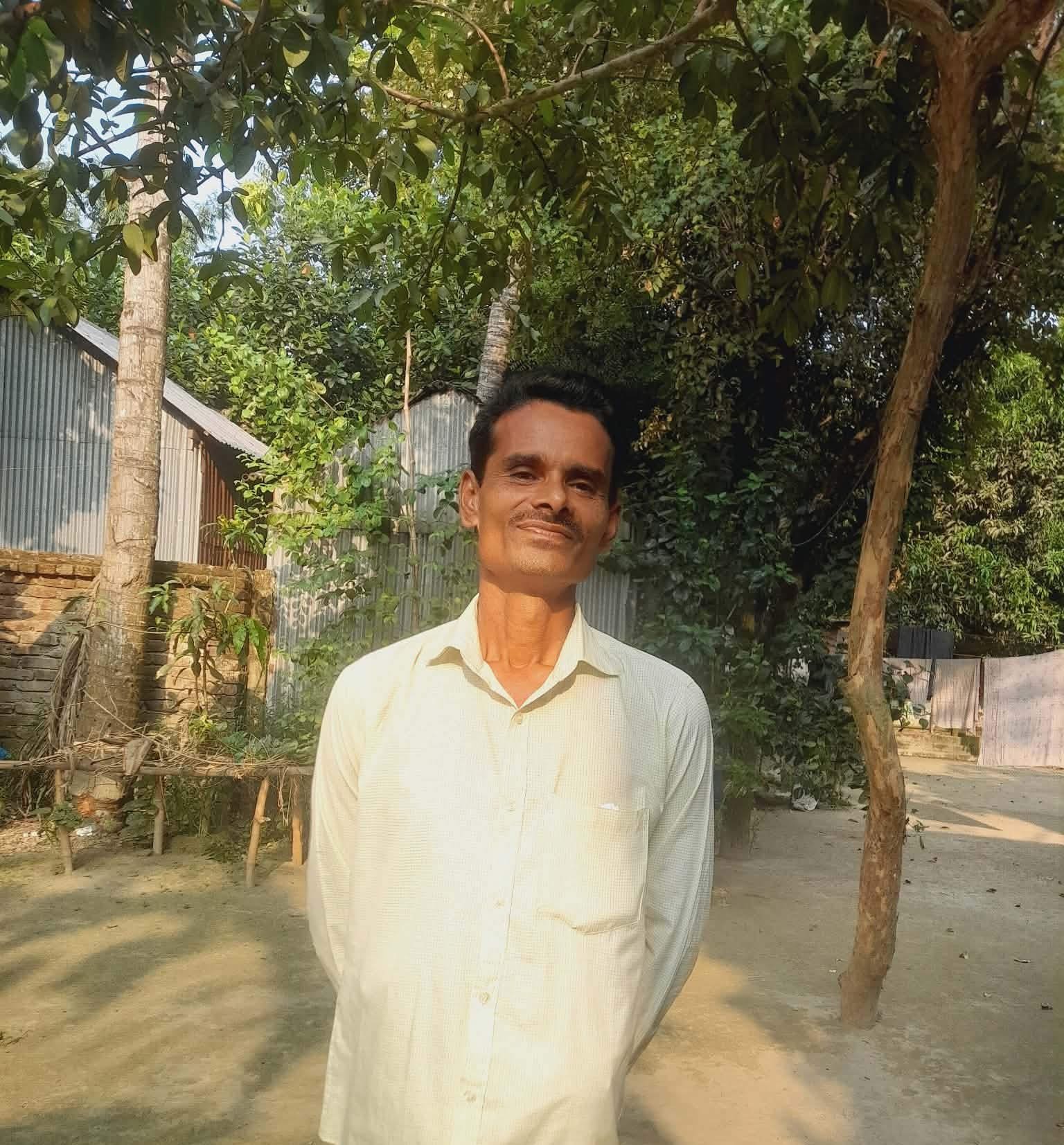
With anger and deep frustration, 55-year-old smallholder farmer Md. Shafiqul Islam shared his bitter experience. Living in Pauli village in Ward No. 7 under Manikganj Municipality, Manikganj Sadar Upazila, Shafiqul is the son of the late Shamsher Ali. He cultivates eight bighas of inherited agricultural land, preserving his family’s farming tradition. However, his recent involvement in tobacco cultivation brought him severe financial losses and health and environmental concerns.
The Lure of tobacco and the cost of deception
According to Shafiqul, representatives of tobacco companies visited Pauli village and persuaded farmers to grow tobacco by promising earnings of Tk 70,000 to Tk 100,000 per bigha, with a net profit of Tk 50,000–70,000 after deducting production costs. Trusting these promises, Shafiqul cultivated tobacco on four bighas, while farmers across the local agricultural tract cultivated around 30 bighas in total.
However, after harvesting, the farmers faced a harsh reality. Although the companies had reportedly promised to purchase tobacco at Tk 80–100 per kilogram, farmers received only Tk 15–20 per kilogram. Company representatives who had encouraged cultivation were no longer readily available to honour their commitments.
Shafiqul had expected to earn at least Tk 200,000 in profit from his four bighas. Instead, he incurred an estimated loss of Tk 150,000 He said, “Tobacco cultivation requires huge investment, damages our health, deteriorates household tin roofing, and pollutes the surrounding environment. Even cattle and insects avoid tobacco leaves, yet tobacco companies continue to exploit farmers”.
His experience illustrates a damaging cycle: attractive promises, high production costs, broken purchasing commitments, financial losses and debt. It also reveals how vulnerable smallholder farmers can become when they depend on company-controlled markets.
One farmer’s resolve ends tobacco cultivation in Pauli
Determined not to repeat his mistake, Shafiqul firmly rejected tobacco cultivation. This year, representatives of tobacco companies attempted to organize village meetings and establish a tobacco growers’ association. Despite being offered additional incentives, he refused to participate. His decision encouraged other farmers to reconsider their involvement. As a result, no tobacco was cultivated on any part of the agricultural tract in Pauli this year.
“After harvesting mustard, we will plant Boro rice. Rice cultivation may not always be profitable, but it ensures food for our families throughout the year. We cannot calculate farming solely in terms of profit and loss; we must produce food to survive,” Shafiqul explained.
His decision reflects an important distinction between commercial profitability and household food security. For smallholder farmers, producing staple food can remain essential even when market returns are uncertain.
From traditional farming to chemical dependency
Reflecting on the transformation of agriculture, Shafiqul recalled a time when farmers relied on household ash, cow dung and earthworm-based manure to maintain soil fertility. They harvested enough rice to feed their families throughout the year, sold surplus milk and used cattle for ploughing and threshing. Today, farming increasingly depends on tractors, irrigation pumps, chemical fertilizers and pesticides, raising production costs and financial pressure on smallholders. For him, moving away from tobacco means finding farming options that support household food security, reduce health and environmental risks, and provide more dependable livelihoods.
Agroecology as a path away from the poison cycle
For years, BARCIK, a non-governmental development research organization working in Manikganj and other regions of Bangladesh, has promoted agroecological practices to reduce dependence on chemical fertilizers and pesticides, lower production costs, and protect public health and the environment. Its work includes raising farmers’ awareness of alternatives to harmful crops and promoting environment friendly agricultural practices. Shafiqul, however, recognizes that transitioning away from chemical-intensive farming requires more than awareness. He said, “Our soil has already been damaged by chemical fertilizers and pesticides. Now, it is difficult to grow crops without them. BARCIK can help raise our awareness, but it cannot do everything alone. If the government prioritizes agroecology and ensures that vermicompost and other organic inputs are readily available in the market, farmers can gradually break free from this cycle of poison.”
His observation highlights the need for coordinated action by farmers, development organizations and government agencies. Affordable organic inputs, practical training, reliable markets and supportive agricultural policies are essential to making agroecology a viable option for smallholders.
The future of farming
Shafiqul is concerned about the future of farming as production costs and physical labour continue to rise. He believes his children will pursue education and salaried employment rather than continue the demanding work of agriculture. He plans to lease out his land to other farmers instead of leaving it uncultivated.
“Those who once worked as agricultural labourers or cattle herders can lease land and continue farming. If one person stops, another will take over. That is how nature works,” he said confidently.
Shafiqul’s experience offers an important lesson for tobacco-growing communities and marginal farmers. Breaking free from exploitative crop arrangements requires informed decisions, viable alternatives and stronger institutional support. With coordinated government and non-government initiatives, farmers can gradually move towards safer, more sustainable and agroecological farming systems that protect their health, environment and food security.