
By Md. Nazrul Islam, from Manikganj
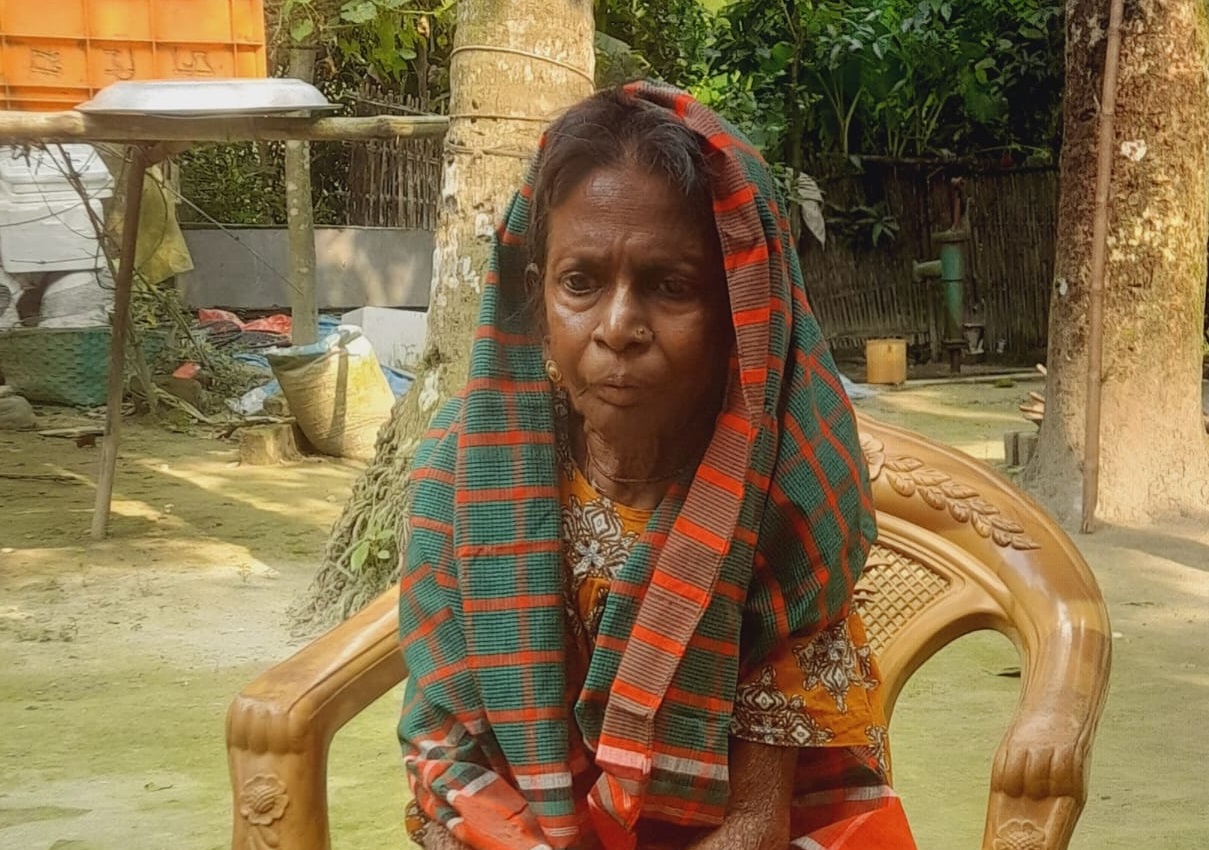
At 72, Chinta Rani Rajbanshi of Kaitura Majhipara village in Manikganj Sadar carries memories of a changing rural Bangladesh. When I visited her home on 1 October, International Day of Older Persons, her stories reflected a lifetime shaped by hardship, family, farming and resilience.
A difficult beginning
Born in Paril village of Singair, Manikganj, Chinta Rani married at 16. Her husband was 29. She had little opportunity for formal education and received only basic lessons at the local temple. She spent her early married life in a large joint family. The deaths of her elder brother and later her husband brought deep personal loss, but she continued to manage her family and household.
From farming to a changing livelihood
After marriage, Chinta Rani and her husband built a small farm and raised fish and rice together. They had six children four daughters and two sons. Her daughters are now settled in their families, while her elder son continues the family’s traditional fishing occupation. But the village has changed. Water bodies that once supported fishing have declined, making it difficult to earn a living from fishing alone. She said, “There is no longer enough water in the rivers, canals and wetlands. Fishing can no longer support a family. My elder son now buys fish from wholesalers and sells them in the market.” Her younger son completed university and now teaches at an MPO-listed government high school. Today, her grandchildren and their company are a major source of joy.
Memories of traditional food and farming
Chinta Rani has suffered from severe rheumatic pain for nearly five years. A fall also seriously injured her hip, leaving her dependent on a walking stick or family members. Despite her physical difficulties, her memory remains sharp. Recalling the past, she spoke fondly of traditional fish and local food practices. She said, “There was a time when our yard was full of native fish. Their smell and taste were unforgettable. Today fish are available in the market, but many are hybrid and raised with feed and medicines. We need to reduce this artificial dependence and return to native fish and traditional practices.”
A simple request
Chinta Rani is cared for by her two daughters-in-law, whom she considers like her own daughters. Yet she has one concern saying “I am old now. Why don’t I receive the government’s old-age allowance?” A review of her voter ID showed that she appeared eligible for the allowance. Her family was advised to take the necessary steps to access the government social protection program. For development workers, reaching older people, listening to their experiences and connecting them with public services is more than a responsibility. People like Chinta Rani are living repositories of rural culture and experience, offering lessons for the generations to come.