
By Poli Rani Paramanik from Rajshahi
A workshop on the Green Coalition Movement was held in Rajshahi to strengthen grassroots efforts for safe food production, environmental protection, agroecology, food sovereignty and climate justice.
Organized by Green Coalition Rajshahi and BARCIK at the Rajshahi Regional Resource Centre recently, the workshop brought together farmers, women farmers, youth volunteers, beekeepers, teachers, journalists, business representatives, environmental activists and other members of the Green Coalition.
The session discussed the Coalition’s objectives, activities, organizational structure, operational mechanisms, achievements and future priorities. Participants also shared experiences of safe food production and identified local challenges and opportunities.
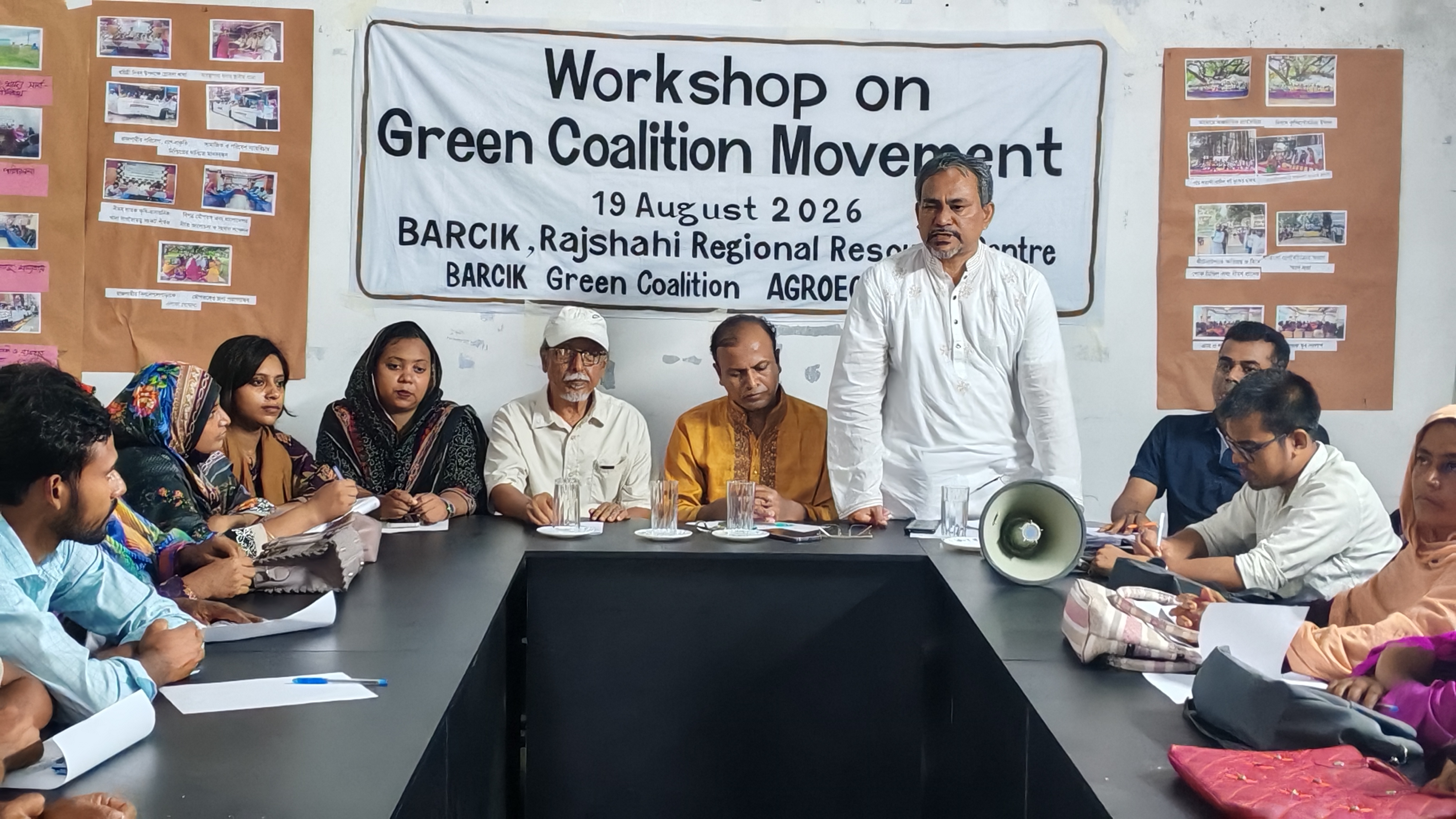
Rahima Begum, President of Poba Upazila Green Coalition, stressed the need to strengthen local initiatives for safe food, environmental protection and farmers’ rights. She called for collective action against environmentally harmful activities and emphasized that tree planting must be accompanied by proper care and protection.
Farmer Ripon Ali highlighted the lack of regular agricultural extension services at the grassroots level. He said farmers often depend on pesticide dealers for advice, contributing to excessive chemical use. Stronger field-level guidance on environmentally friendly farming, he argued, could help reduce unnecessary pesticide use.
Women farmer Monira Begum emphasized women’s contributions to farming, seed conservation and safe food production. She called for greater recognition, training and market opportunities for women producing vermicompost and practicing agroecology.
Farmer Hridoy Ali, who cultivates 55 decimals of lands using safe farming practices, said he needs training, knowledge, recognition and supportive agroecological policies rather than financial assistance. He said that agroecology can help to protect soil, water, biodiversity and human health while ensuring safe food.
Youth representative Nadim Sina called for greater youth leadership in addressing environmental and agricultural crises. Atikur Rahman Atik, President of Barendra Youth Forum, described the Green Coalition as a grassroots platform that can bring together farmers, women, youth, teachers, journalists and environmental activists to build a stronger movement for social and environmental justice.
Jewel Kibria, Associate Professor of Bangla at Rajshahi College and Cultural Affairs Adviser to the Green Coalition, said that ensuring safe food is a state responsibility. He suggested strengthening connections between farmers and consumers and expanding the movement among students and young people.
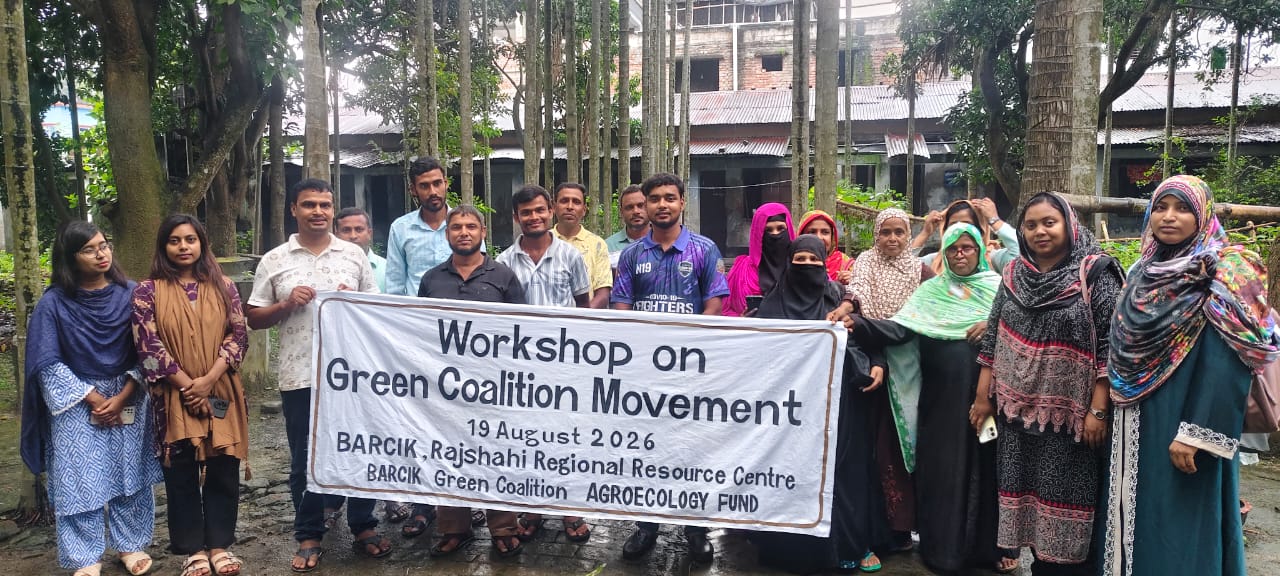
Mahmud Jamal Kaderi, President of Green Coalition Rajshahi City, called for expanding the network to the union level so communities can collectively respond to environmental threats and farmers’ concerns.
Md. Shahidul Islam, anthropologist, environmental law researcher and BARCIK Regional Coordinator, said the Green Coalition is a collective platform rather than an initiative of any single organization. He stressed the importance of grassroots leadership, indigenous knowledge, local seeds and sustainable farming in addressing water scarcity, soil degradation, biodiversity loss and excessive chemical dependence in the Barind region.
Participants recommended expanding the Coalition’s network, increasing public engagement and bringing grassroots experiences and demands into policy discussions to promote farmer-friendly, environmentally sustainable and socially just agricultural and environmental policies.