
By Shahidul Islam from Rajshahi
Farmers, women farmers, researchers, environmental activists and civil society representatives have called for reform of Bangladesh’s national seed policy to protect indigenous seed diversity, farmers’ seed rights and women’s traditional knowledge.
The call came at a community-based policy dialogue on “Monsoon Indigenous Seed Diversity and Seed Sovereignty” organized by BARCIK and the Green Coalition in Sindukai village of Tanore, Rajshahi. A participatory field study covering six communities in Poba and Tanore documented local seed exchanges and community knowledge about existing, rare and disappearing native seeds and uncultivated food and medicinal plants.
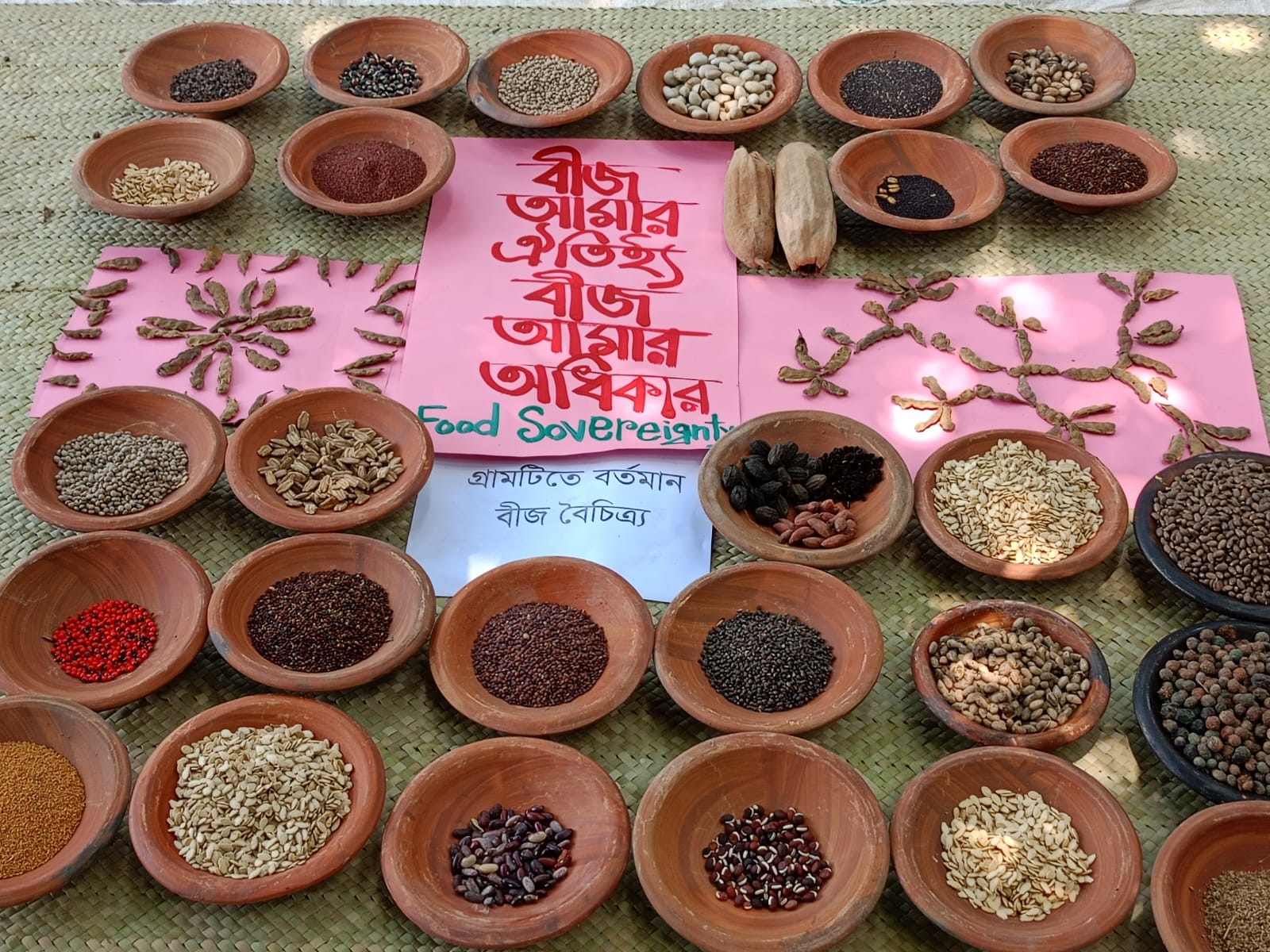
The findings reveal considerable diversity within local crop varieties. In Sindukai alone, farmers identified four local varieties each of bottle gourd, sweet pumpkin and bean, along with three varieties of chilli and two varieties each of ridge gourd, jute greens and taro. Communities also recalled dozens of disappearing or declining food, medicinal and uncultivated plants.
Farmers said that the loss of a seed variety means more than losing a crop. It threatens farmers’ production autonomy, food choices, agricultural biodiversity, local food culture, indigenous knowledge and environmental resilience.
Women emerged as particularly important custodians of local seed systems. Participants mentioned that women have traditionally conserved seeds and passed down knowledge about seed selection, harvesting, drying, storage and seasonal use. At the Haridebpur Agroecology Learning Center, farmer Mosammat Kabuljan said the center currently conserves 160 varieties of living seeds, collected from different villages and exchanged seasonally.
Participants identified commercial and hybrid seeds, market dependency, monocropping, chemical agriculture, herbicide use and negative perceptions of indigenous varieties as major drivers of seed loss.
The dialogue proposed eight policy priorities, including a participatory review of the national seed policy; farmer-led community seed banks; formal recognition of farmer-to-farmer seed exchange; community registers for local varieties; networks of women and men seed custodians; programs to recover lost seeds; biodiversity registers for uncultivated food and medicinal plants; and recognition of seed diversity as an indicator of climate adaptation.
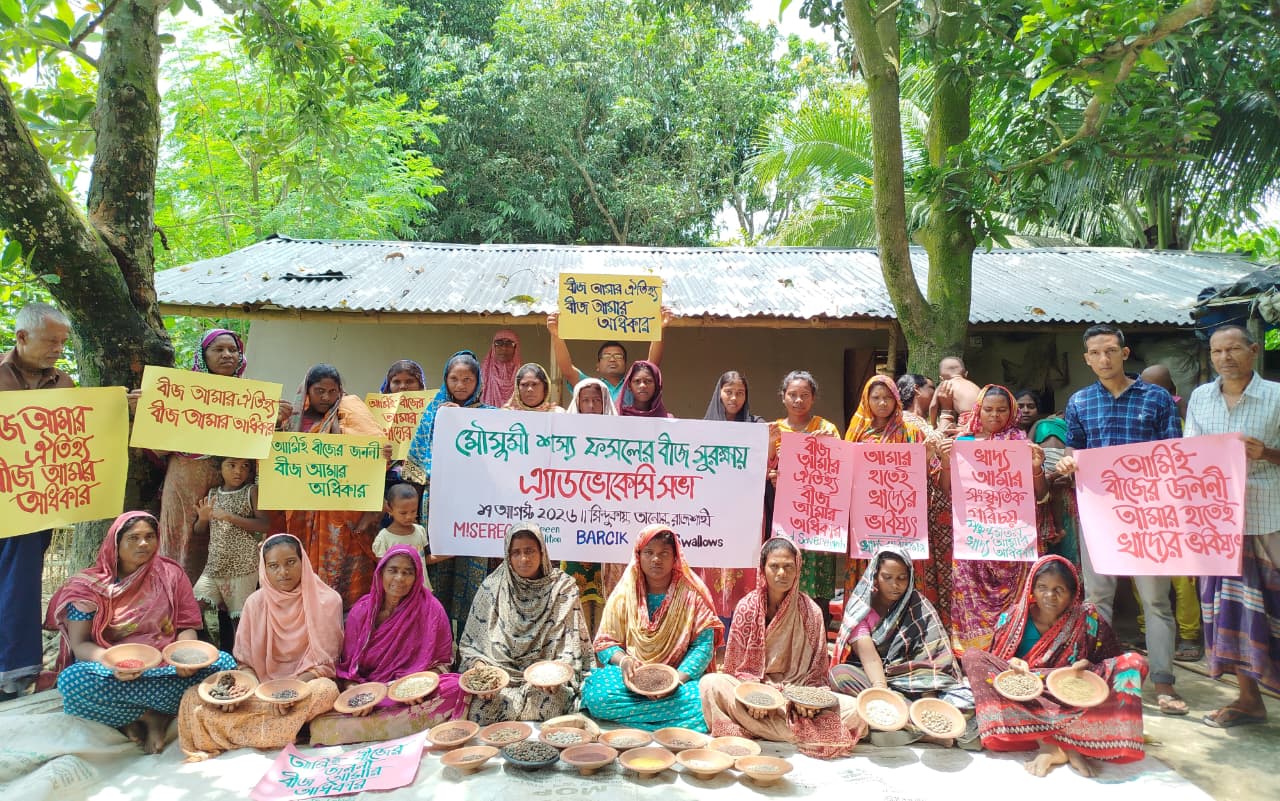
Speakers on the event emphasized that seeds should not be treated merely as agricultural inputs saying “A farmer who saves a seed does not save only a variety; they protect a food system, a knowledge system and the rights of future generations.”
Atikur Rahman, President of the Barind Youth Forum, said, “We already have systems for controlling seeds; now we need a governance system that protects farmers’ seed sovereignty.”
Participants also urged the government to recognize farmers’ contributions to conserving plant genetic resources, in line with Bangladesh’s commitments under the International Treaty on Plant Genetic Resources for Food and Agriculture.