
By Parboti Rani Singh from Netrakona
Nature sustains all forms of life through interconnected relationships among living organisms, soil and the environment. Crops, like other living beings, depend on soil fertility, soil structure and microorganisms for their growth. Human survival also depends on these natural systems. However, when consumption and comfort become priorities over basic needs, people increasingly rely on artificial inputs and move away from nature. Embracing modern civilization should not mean neglecting the soil and natural resources that sustain us. Protecting nature is essential to protecting our own future.
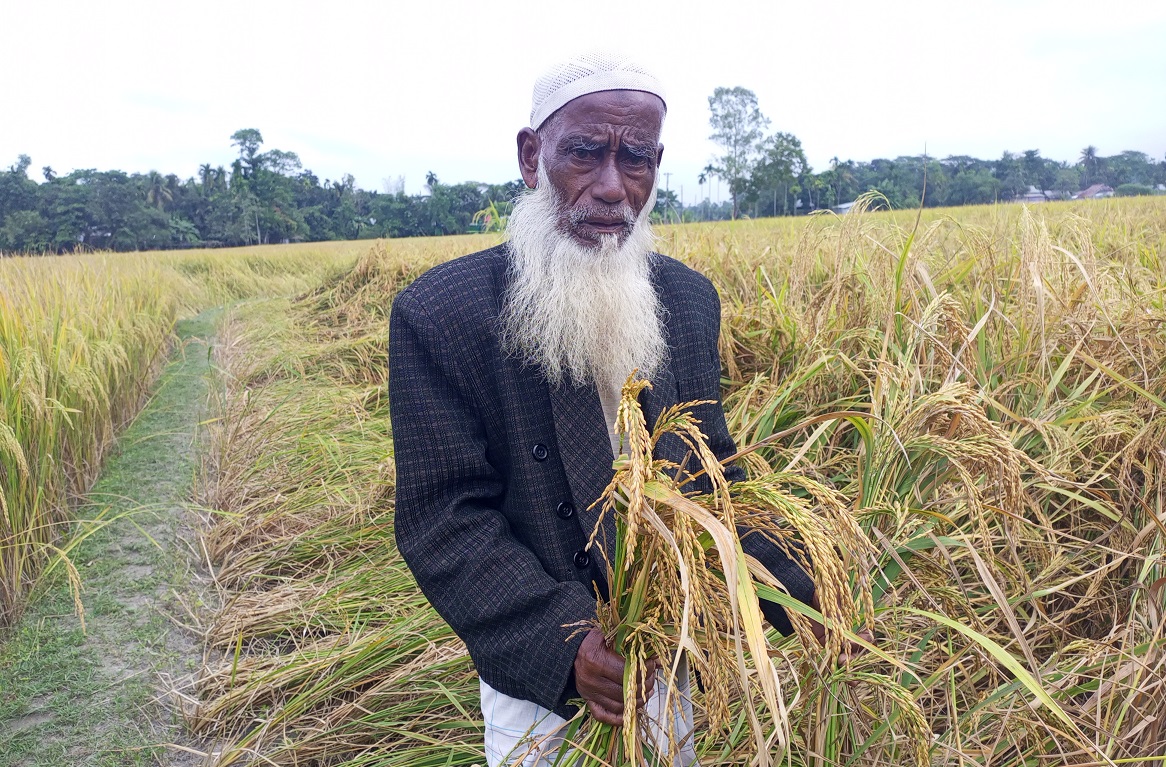
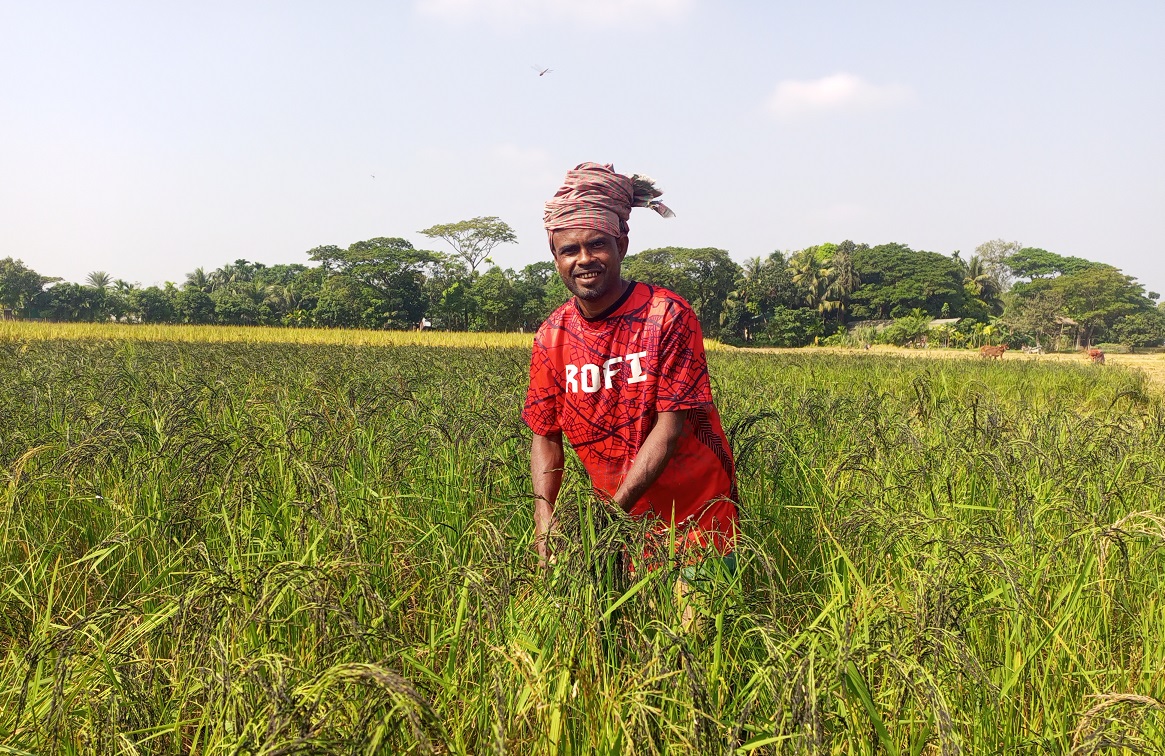
In Atpara Upazila of Netrokona, farmers are reviving local rice varieties to conserve biodiversity, protect soil health, reduce cultivation costs and promote agroecology. Farmers in Durgashram, Krishnapur, Hosenpur, Kanda Para, Ghiduwari, Mangalshiddha and other villages are cultivating varieties such as Birai, Chinishail, Aijong, Piprar Chokh, Paijam and Kaljira. Some farmers have brought significant areas under these traditional varieties. For example, Mukles Mia of Durgashram cultivates Birai on 300 decimals of land, while Rahman Mia grows Chinishail, Aijong and Piprar Chokh on 100 decimals.
The spread of these seeds has been supported by farmer Mohammad Jasim Uddin of Krishnapur, who has cultivated Birai rice for household consumption and seed conservation for nearly five years. He initially collected the seed from Teligati local market. Explaining why he continues to grow and conserve it, he said, “I cultivate Birai because it helps maintain soil fertility, is easy to conserve as seed and costs less to produce. It is also better for the environment and soil, and the rice tastes good. Our ancestors cultivated this variety, so I want to preserve that tradition. This Aman season, I sold Birai seeds to nine farmers in our area.”
Farmer Mukles Mia has cultivated Birai on 300 decimals of land this year. He expects a yield of around four maunds per katha. According to him, its yield is comparable to other rice varieties, while cultivation costs are lower and its market price is higher. He is pleased with the results.
Senior farmer Rahman Mia of Durgashram has been growing Chinishail for about eight years. This year, alongside Chinishail, he cultivated Aijong and Piprar Chokh on 100 decimals of land, mainly for family consumption and seed conservation. He also earns a better price when selling these varieties. His production costs are relatively low, and he harvests around 3.5–4 maunds per katha.
The growing cultivation and exchange of local rice seeds mark a positive step towards protecting soil health, farmers’ seed rights and rice diversity. By conserving traditional varieties and practising agroecology, farmers are helping build a healthier and more resilient agricultural system for future generations.