
By Mukunda Ghosh, from Coastal Region
Archana Rani, 44, from Srifolkati village in Ishwaripur Union, Shyamnagar Upazila of Satkhira, has become an inspiring example of women’s economic empowerment through the use of local resources. Since becoming affiliated with BARCIK in 2023, she has established the South Srifolkati Agroecology Learning Centre and helped to organizing local farmers, both women and men, through the South Srifolkati Farmers’ Organization. Recently, under a project supported by Standard Chartered Bank to promote climate-resilient, low-carbon livelihoods and women’s empowerment in coastal areas, she established a local-breed poultry farm.
With nearly 30 years of experience in rearing indigenous chickens, Archana currently keeps 105 birds. She has turned poultry rearing into a source of income alongside her household responsibilities. Drawing on her practical knowledge, she prepares chicken feed using locally available ingredients instead of relying entirely on commercial products. Her feed includes rice bran, maize powder, wheat bran, soybean meal, eggshells and Bermuda grass. She selects, cleans and dries the ingredients before grinding and mixing them in appropriate proportions. She also considers the nutritional needs of chickens at different growth stages, maintaining hygiene during preparation and storing the feed in a dry place.
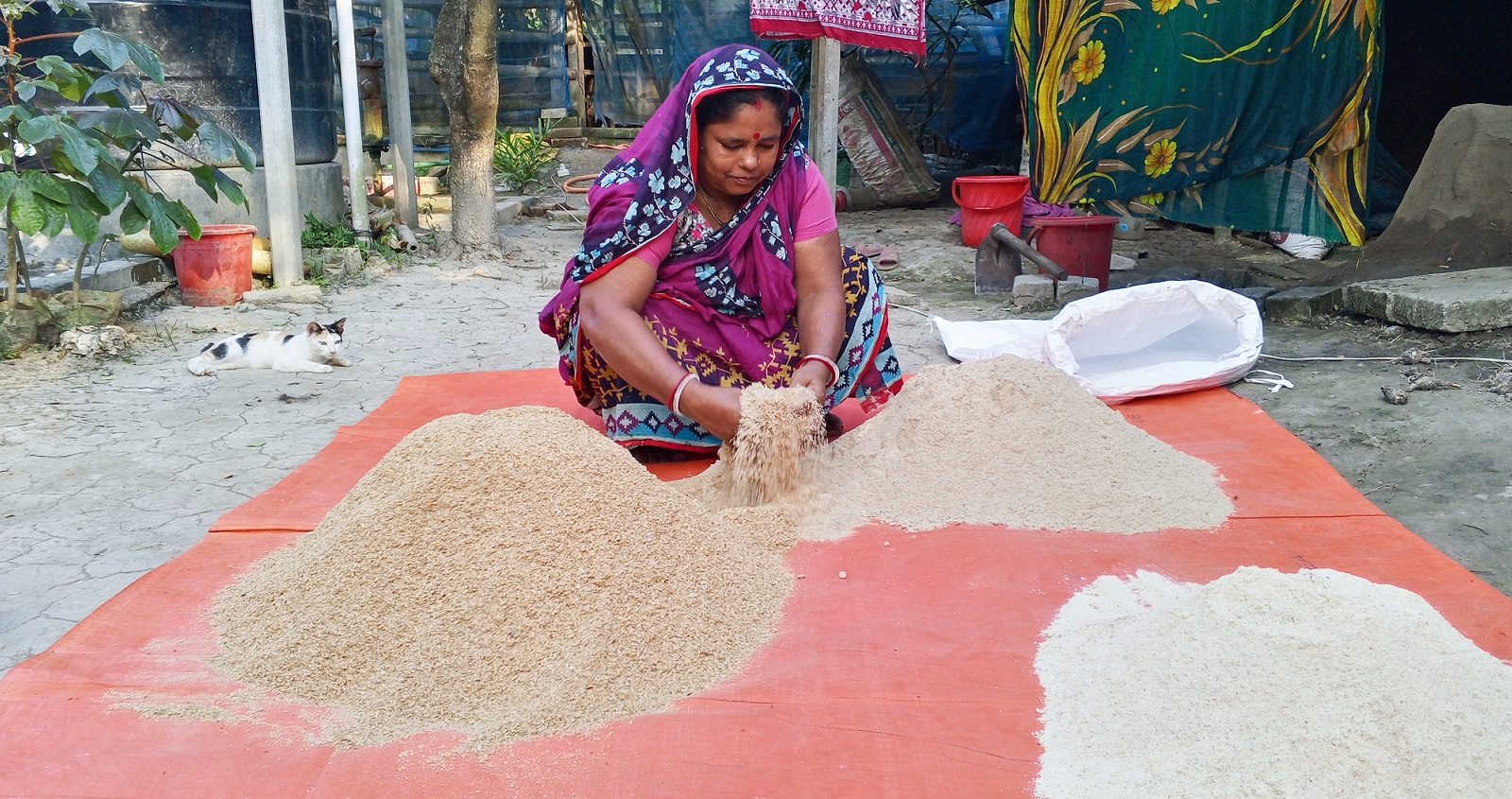
Reducing production costs
According to Archana, preparing one kilogram of feed with local ingredients costs around Tk 45–50, compared with Tk 65–70 for commercial feed. This saves approximately Tk 15–25 per kilogram. The approach reduces production cost, makes better use of local resources and lowers dependence on market-bought feed.
Inspiring other women
Archana shares her experience with neighbouring women and local poultry farmers. Inspired by her initiative, three to four other poultry rearers have started preparing and using feed from locally available ingredients. Her personal effort is gradually encouraging more women to adopt affordable poultry-rearing practices. Her poultry farm also contributes to household income and nutrition by providing local chicken and eggs. Lower feed costs create opportunities for savings, while managing the farm strengthens her role in household financial decisions and economic activities.
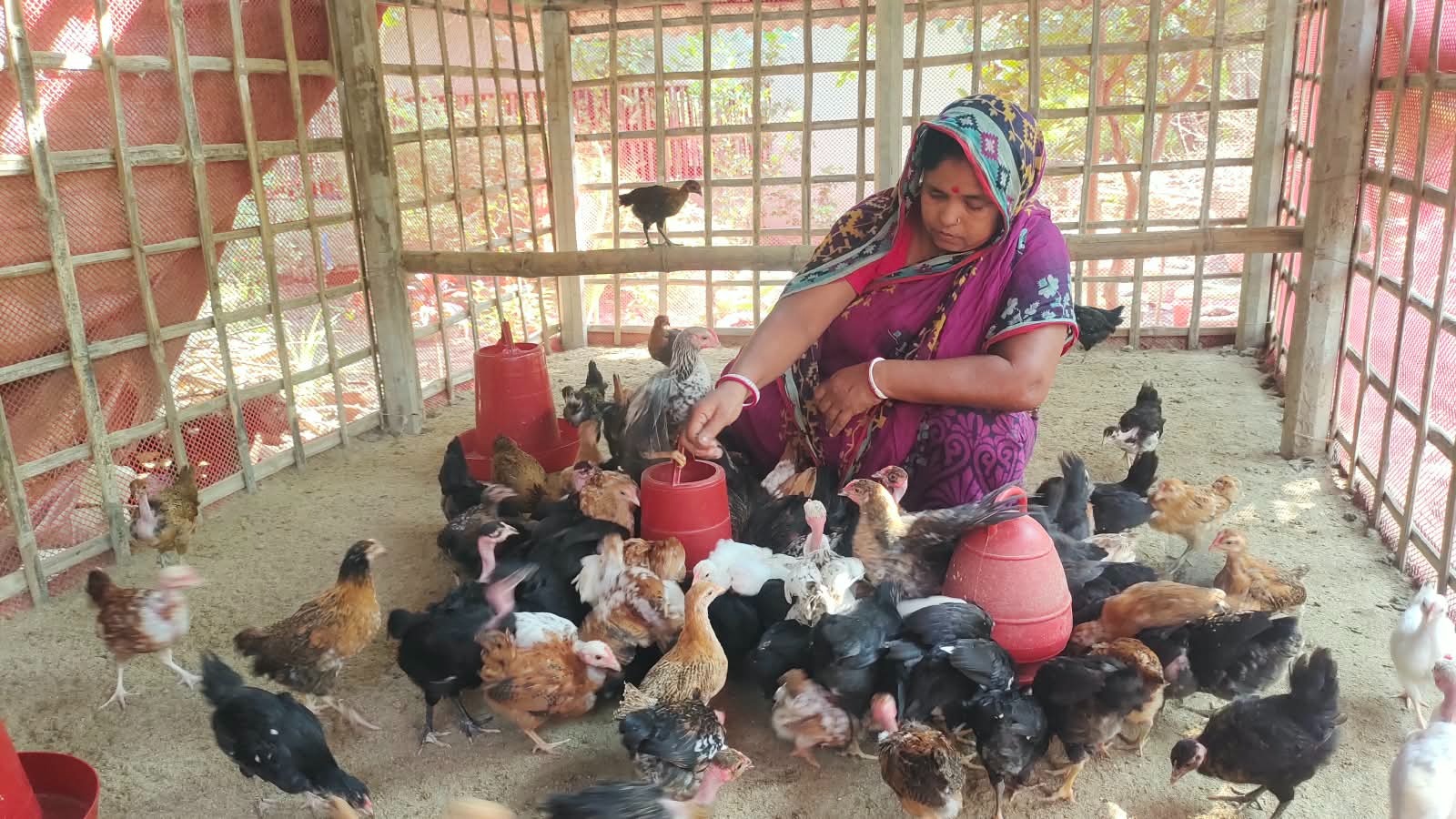
Future plans
Archana hopes to expand her poultry farm, improve her skills in preparing balanced and safe feed, and provide practical training to other women. She wants them to rear chickens, prepare their own feed and earn income to improve their families’ financial conditions. She said, “I want to become self-reliant through my own initiative and build a successful poultry farm. But I also want other women in my area to learn how to prepare chicken feed and rear poultry so they can earn money and improve their families’ livelihoods. I hope to create opportunities for them to do so.” Archana’s 105 indigenous chickens represent the potential of women’s innovation and local resources to strengthen rural economic self-reliance.