
A two-day workshop on gender, diversity and human rights was held at the seminar room of BARCIK’s Regional Resource Centre in Rajshahi recently. The workshop was organized by BARCIK.
On the first day, Syed Ali Biswas, BARCIK Director for Agroecology and Food Security, led discussions on gender and diversity. The closing-day sessions featured Associate Professor Kazi Robiul Alam of the Department of Anthropology at the University of Rajshahi, and Shahidul Islam, anthropologist, environmental law researcher and BARCIK’s regional coordinator for the Barind region.
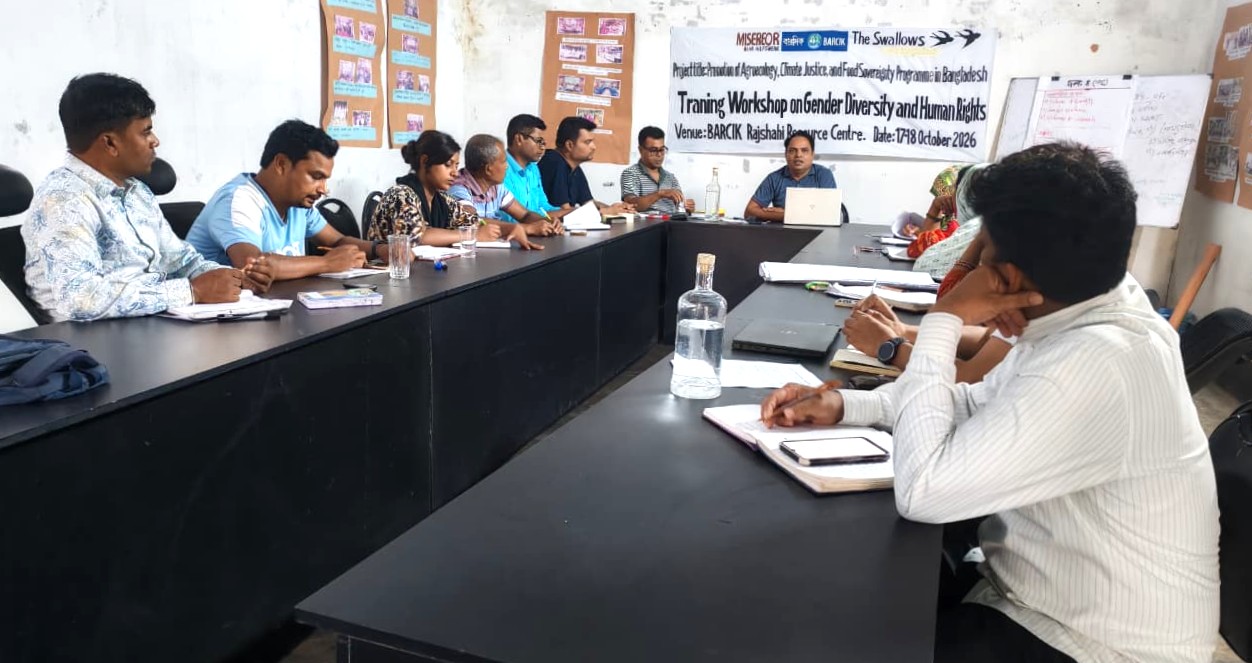
The workshop covered gender roles and discrimination, human rights, social and cultural diversity, gender needs, gender mainstreaming, gender policy, the gender lens and rights-based development planning. Participants identified forms of discrimination in everyday life, families, communities and institutions and discussed practical measures to address them.
Speakers emphasized that building an equitable and inclusive society requires equal dignity, opportunities and meaningful participation for all, regardless of gender, age, disability, ethnic identity, socioeconomic status or cultural background. They stressed that women’s participation must go beyond representation to include their knowledge, experiences and perspectives in planning, resource allocation and decision-making.
Particular attention was given to recognizing women farmers’ contributions and leadership in agriculture, local seed conservation and agroecology. Speakers highlighted the need for equal access to agricultural inputs and training, fair markets and opportunities to participate in decision-making. They also said that women’s traditional knowledge, seed conservation practices and environment friendly farming contribute significantly to sustainable food systems and biodiversity conservation.
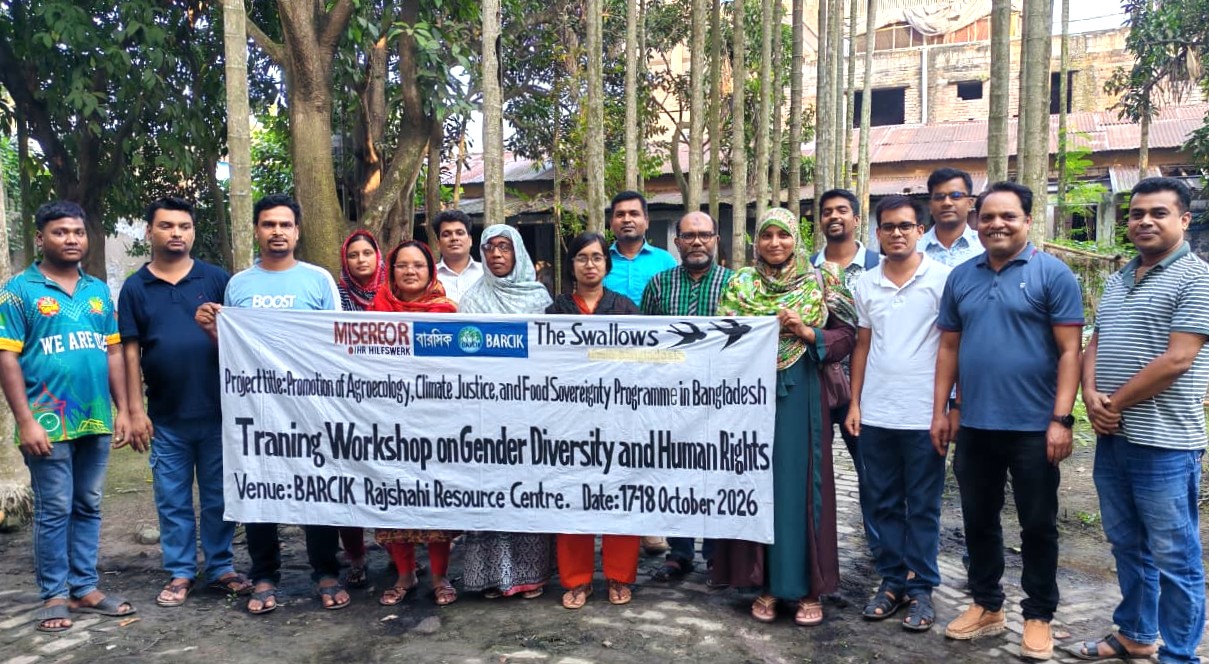
Participants underscored the importance of gender-responsive planning, discrimination-free working environments, human rights awareness, leadership development among women and marginalised communities, and inclusive decision-making. They also recommended regularly reviewing gender representation, leadership and decision-making opportunities during programme implementation and evaluation.
The workshop concluded with a call for collective action to uphold gender equality, respect diversity, prevent discrimination and strengthen accountability. Participants reaffirmed that human rights are inherent to every individual and that recognizing everyone’s rights, capabilities and contributions is essential to building a just, inclusive and sustainable society.