
By Sagarika Mistry from Shyamnagar, Satkhira
For 65-year-old farmer Tajendra Nath Mridha of Khutikata village in Padmapukur Union, Shyamnagar, tree planting has been a lifelong commitment. Inspired by his mother’s advice to do things for people’s welfare, he has planted trees since childhood and considers them essential for human well-being and environmental balance.
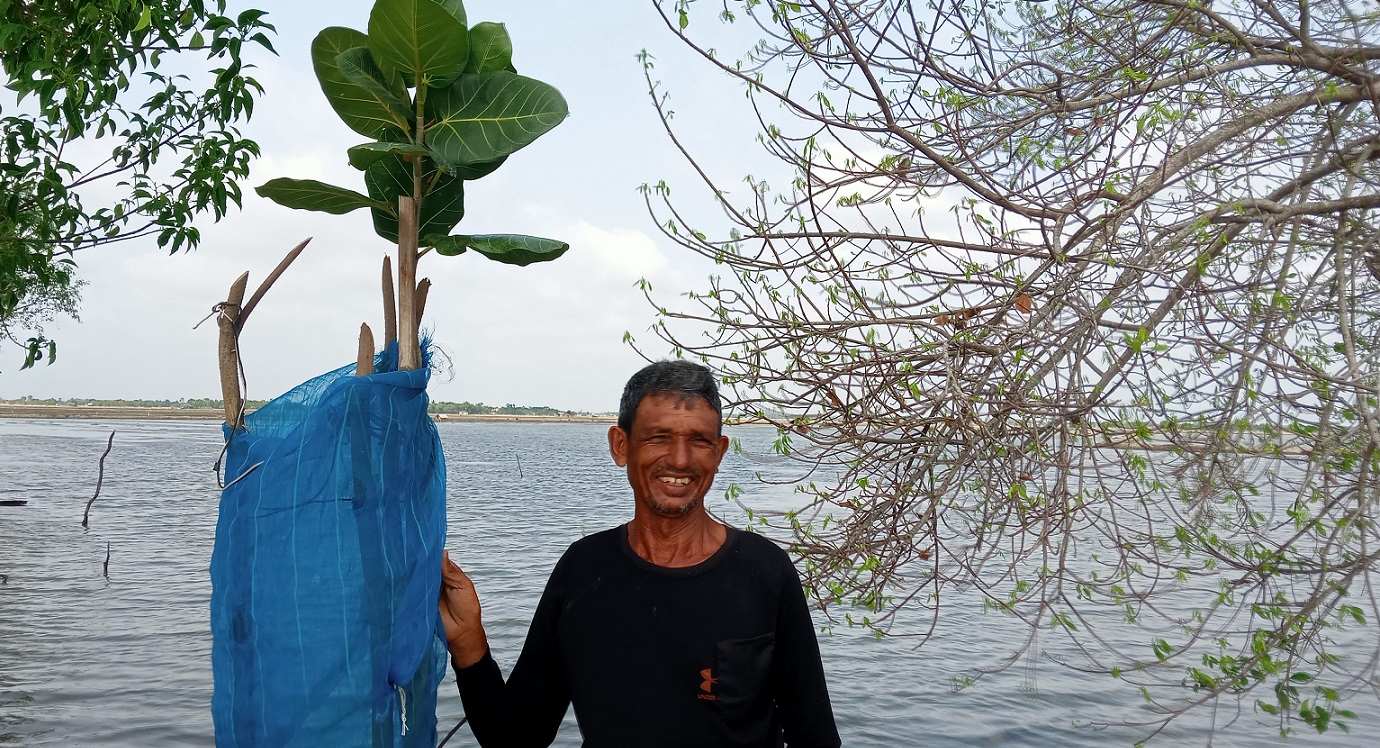
Living in Shyamnagar’s saline environment, Tajendra Nath found it difficult to keep many trees alive. He eventually focused on the banyan tree, which he believes provides shade, food and shelter for birds and supports biodiversity.
 oppo_2
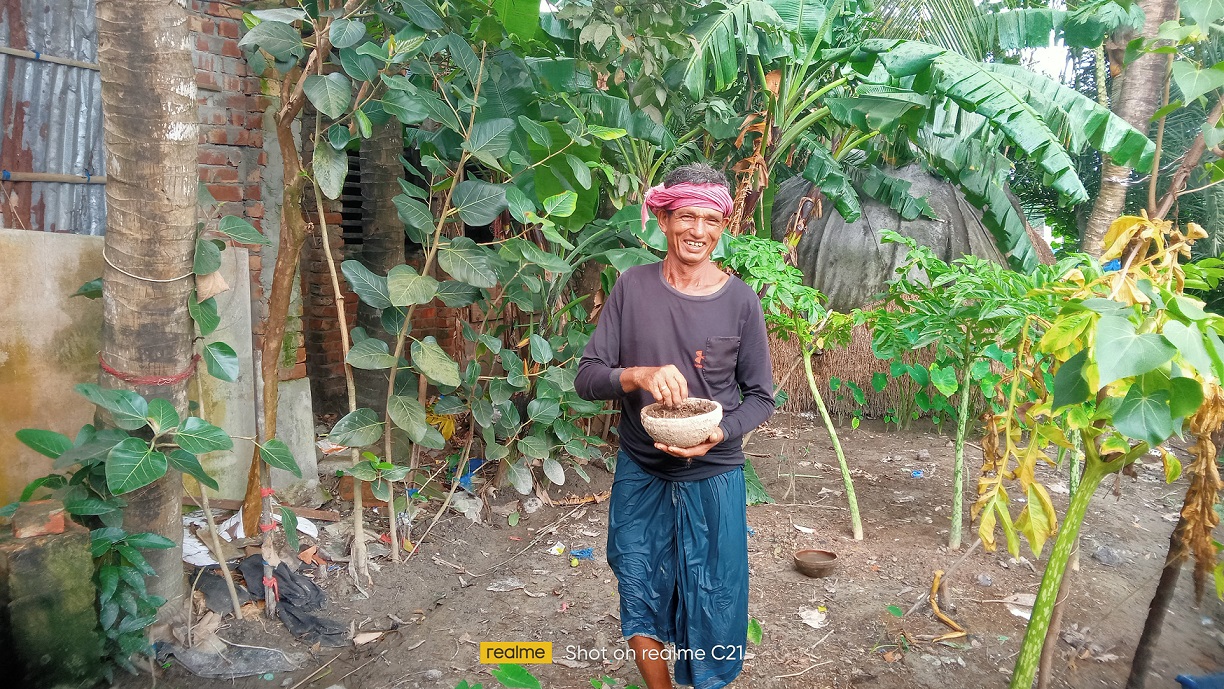
Since 2005, he has collected bird droppings from rooftops and other places and used naturally dispersed banyan seeds to produce seedlings in his yard. What many people regard as waste, he sees as a source of new life.
He has planted more than 1,000 banyan trees in different parts of the country and distributed more than 325 seedlings free of charge. More than 100 seedlings are still growing at his home. He has planted banyan trees at mosques, temples, schools, colleges, madrasas, union parishads, ferry ghats, cremation grounds, markets, roadsides and other public places. He has even carried a banyan seedling to India, where, according to him, one of his planted trees is growing in Bardhaman.
Tajendra Nath became associated with BARCIK in 2025, and his homestead was selected as a Shatobari. Through BARCIK’s training and activities, he expanded his knowledge and diversified production at his house. In 2026, he planted banyan seedlings during BARCIK-supported environmental and community events, including the launch of a local initiative to plant 1 million seeds.
 oppo_2
In recognition of his long-standing environmental work, BARCIK honored him as a “Green Warrior” at a biodiversity fair organized in the coastal region. The recognition encouraged him to continue his work.
Tajendra Nath’s experience demonstrates how local knowledge, commitment and natural processes can contribute to environmental conservation. He plans to continue planting banyan, palmyra, wood apple, date and other trees for as long as he can, leaving a greener and more biodiverse environment for future generations.