
By Mofijur Rahman from, Coastal Region
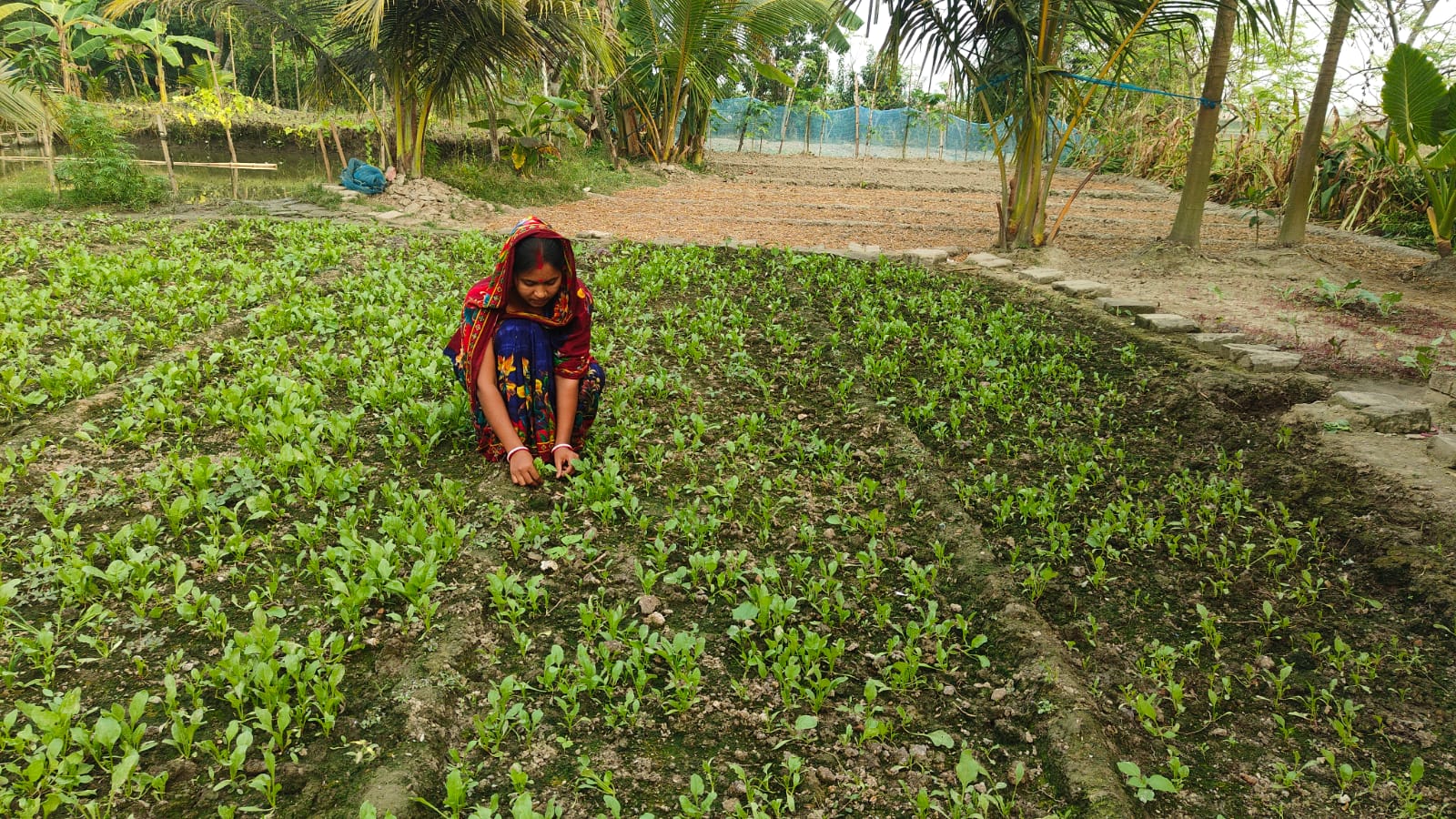
Ekadashi Rani, a woman farmer from Khosalkhali village in Burigoalini Union, Shyamnagar Upazila, Satkhira, believes in living in harmony with nature. For her, agriculture is more than food production; it is essential to her family’s food security, nutrition and economic well-being.
From unused land to a productive homestead
Ekadashi lives in a five-member family with her mother-in-law, husband and children. Until recently, much of their homestead remained unused. Although she grew a few seasonal vegetables, the production was insufficient to meet the family’s year-round needs. She had limited knowledge of organic fertilizer production, indigenous seed conservation and environment-friendly farming, and relied partly on chemical fertilizers and pesticides.
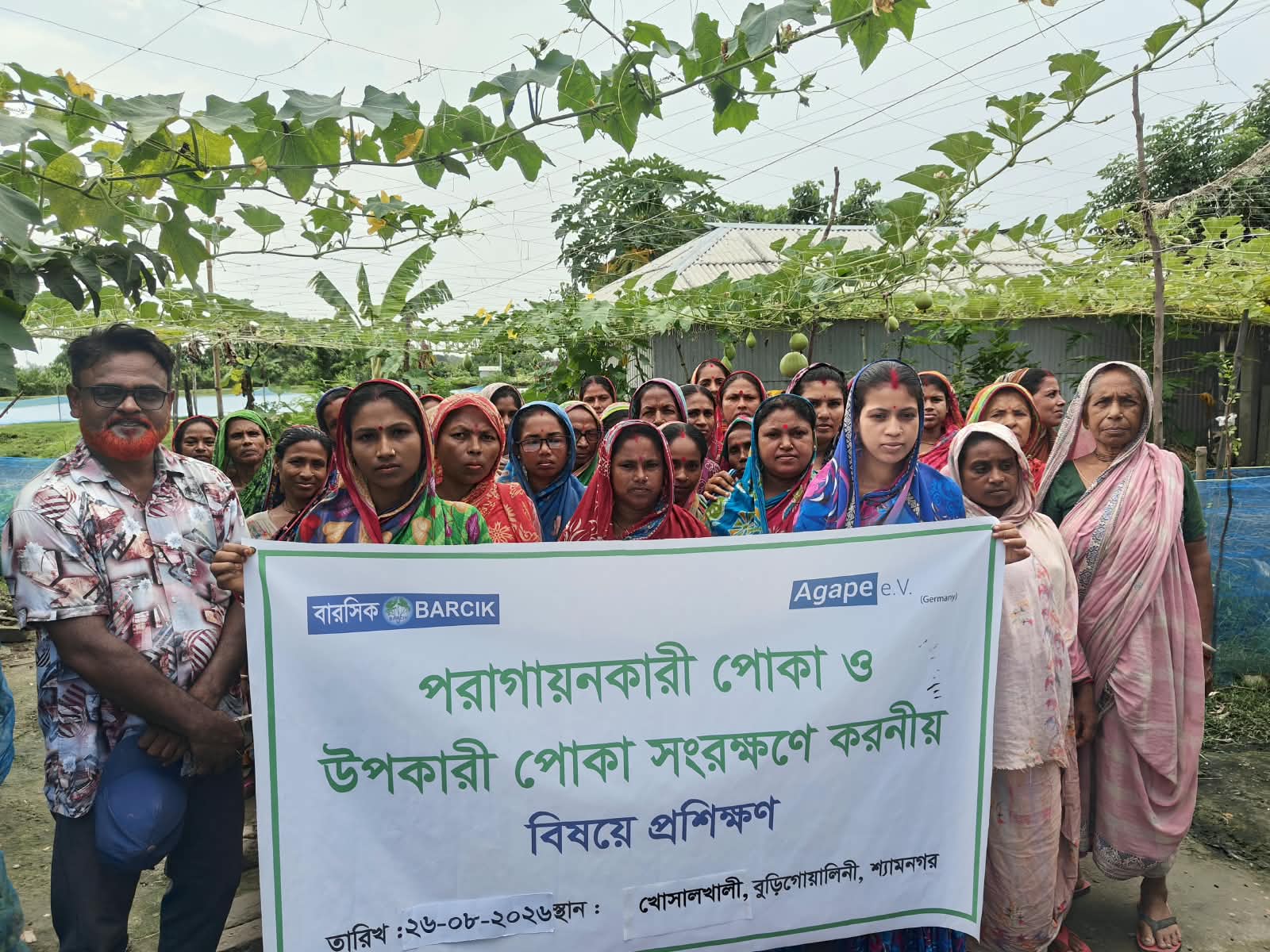
Her journey towards change began in 2026 when she became involved with BARCIK. Through training, discussions and visits to the Srifalkati and Dhumghat Agroecology Learning Centres (ALCs), she gained new insights into making productive use of homestead land throughout the year. With BARCIK’s support, she received training in vermicompost production, natural pest management, local seed conservation, protecting pollinators and beneficial insects, and crop diversification. She also participated in activities promoting the use of household organic waste as fertilizer and mixed cropping. Applying this knowledge, she now grows vegetables using ring, trellis and tower systems, as well as in geo bags and sacks. She cultivates ginger and vegetables in recycled plastic containers and makes productive use of almost every available space around her home.
Conserving indigenous seeds and biodiversity
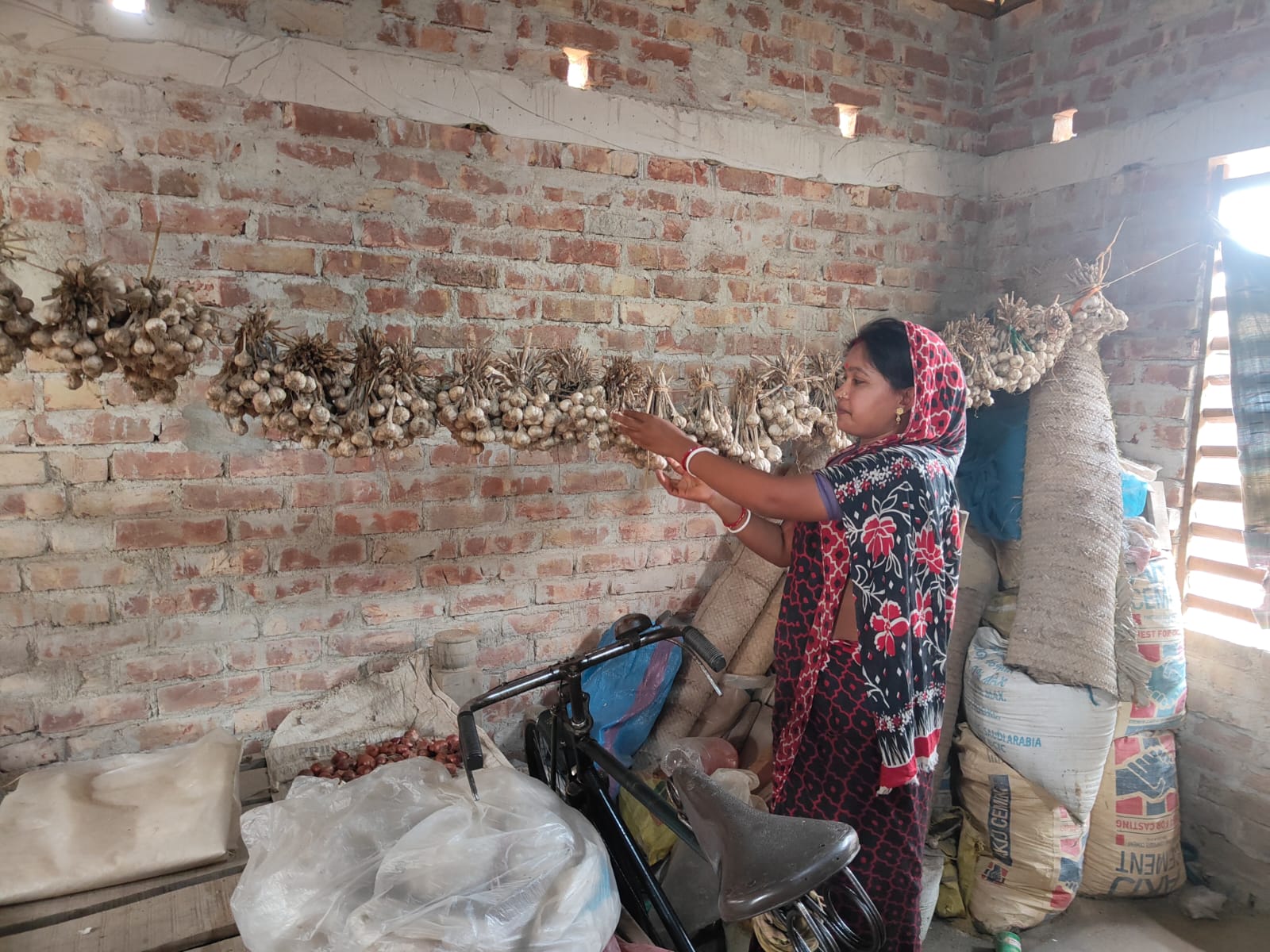
Ekadashi takes particular care to conserve local seeds. She selects healthy fruits and seeds, dries them in the sun and stores them in glass bottles. Some seeds are dried in their pods and hung from the ceiling. Her collection includes 11 types of local seeds, including yardlong beans, taro, elephant foot yam, chilli, ginger, chubri potato, red amaranth, spinach, Malabar spinach and other leafy vegetables. She also shares seeds with neighbouring farmers.
Increased production and economic benefits
Today, her homestead produces 23 types of vegetables and 18 types of fruits. She also rears cattle, goats, ducks and chickens. Her expenditure on chemical fertilizers and pesticides has fallen to around one-quarter of its previous level. Her family harvests an average of five kilograms of vegetables daily, worth approximately BDT 125 at market prices. This amounts to around BDT 3,750 per month or BDT 45,000 annually in household food consumption. She also earns approximately BDT 48,000 a year by selling surplus vegetables. Together, these benefits amount to an estimated BDT 93,000 annually. The diversity of vegetables and fruits has improved her family’s diet and reduced its dependence on markets. Livestock and poultry rearing have further strengthened household food security.
Strengthening women’s role and community learning
Ekadashi’s contribution to farming and household income has increased her role in family decision-making. Neighbours now seek her advice on local seed conservation, vegetable cultivation and natural pest-control methods. She has become recognized in her community as an enthusiastic woman farmer and seed conservationist. Recalling her experience, she says, “Visiting the Srifalkati and Dhumghat Agroecology Learning Centres completely changed my outlook. I realized that no space around the homestead should remain unused. Now I reuse almost everything available at home, produce my own organic fertilizer and grow safe food. This has reduced our expenses and enabled my family to eat healthier food.”
Despite her progress, challenges remain. Soil salinity, water scarcity and extreme weather continue to threaten farming in the coastal region. Better facilities for local seed conservation, expanded organic fertiliser production and improved market opportunities for surplus produce are also needed.