
By Protima Rani, from Coastal Region
Bonoshree Rani Mondal, 45, is a woman farmer from Kalmegha village in Shyamnagar Sadar Union of Shyamnagar Upazila, Satkhira. After completing her education up to Grade Nine, she married Paritosh Mondal. Supporting a family comprising her husband, two children and father-in-law was challenging due to financial constraints. Although she worked alongside her husband in farming and other activities, the rising cost of chemical fertilizers placed additional pressure on the family. Seeking alternatives, she turned to ecological farming and organic fertilizer production. Today, vermicompost has become an important source of income, a means of reducing farming costs and an inspiration for other women.
From financial challenges to new opportunities
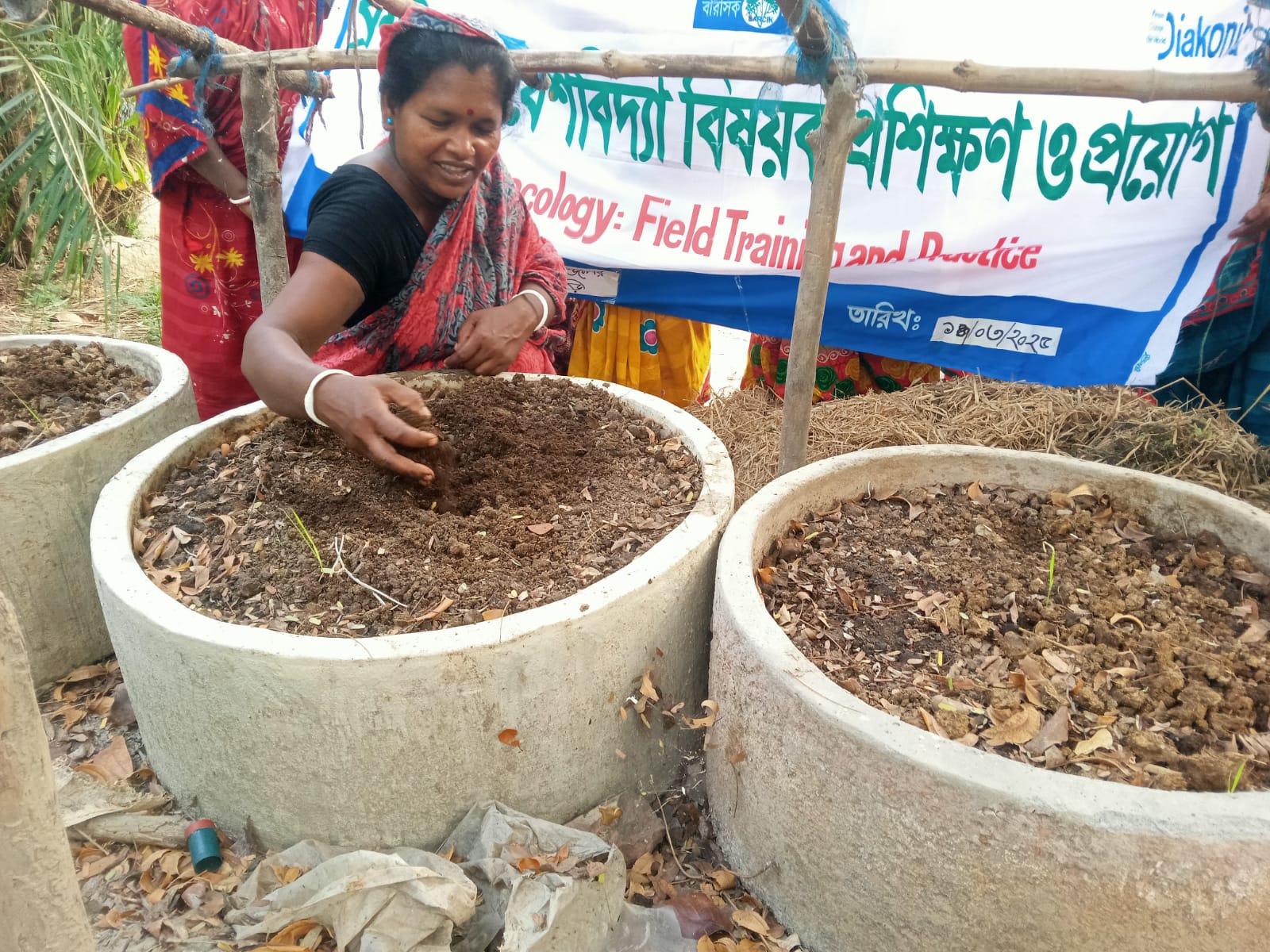
Bonoshree Rani became acquainted with BARCIK in 2010. Interested in producing organic fertilizer, she sought BARCIK’s support to obtain earthworms and materials for constructing a compost pit. With the necessary assistance, she began producing vermicompost. Gradually developing her skills and experience, she has now established a dedicated concrete structure at her homestead for commercial vermicompost production and sales. She uses the fertilizer on her own two bighas of farmland, reducing her dependence on chemical fertilizers. According to her estimates, this saves her approximately Tk 20,000 annually. Additionally, selling vermicompost and earthworms generates a monthly income of around Tk 10,000–12,000. Thus, her initiative has reduced agricultural expenses and created a regular income opportunity from home. As Bonoshree Rani puts it, “Vermicompost has changed my fortune.” Her experience demonstrates how agricultural waste and locally available resources can be transformed into valuable organic fertilizer, reducing farming costs while creating alternative livelihood opportunities.
Promoting Safe Food and Environmentally Friendly Agriculture
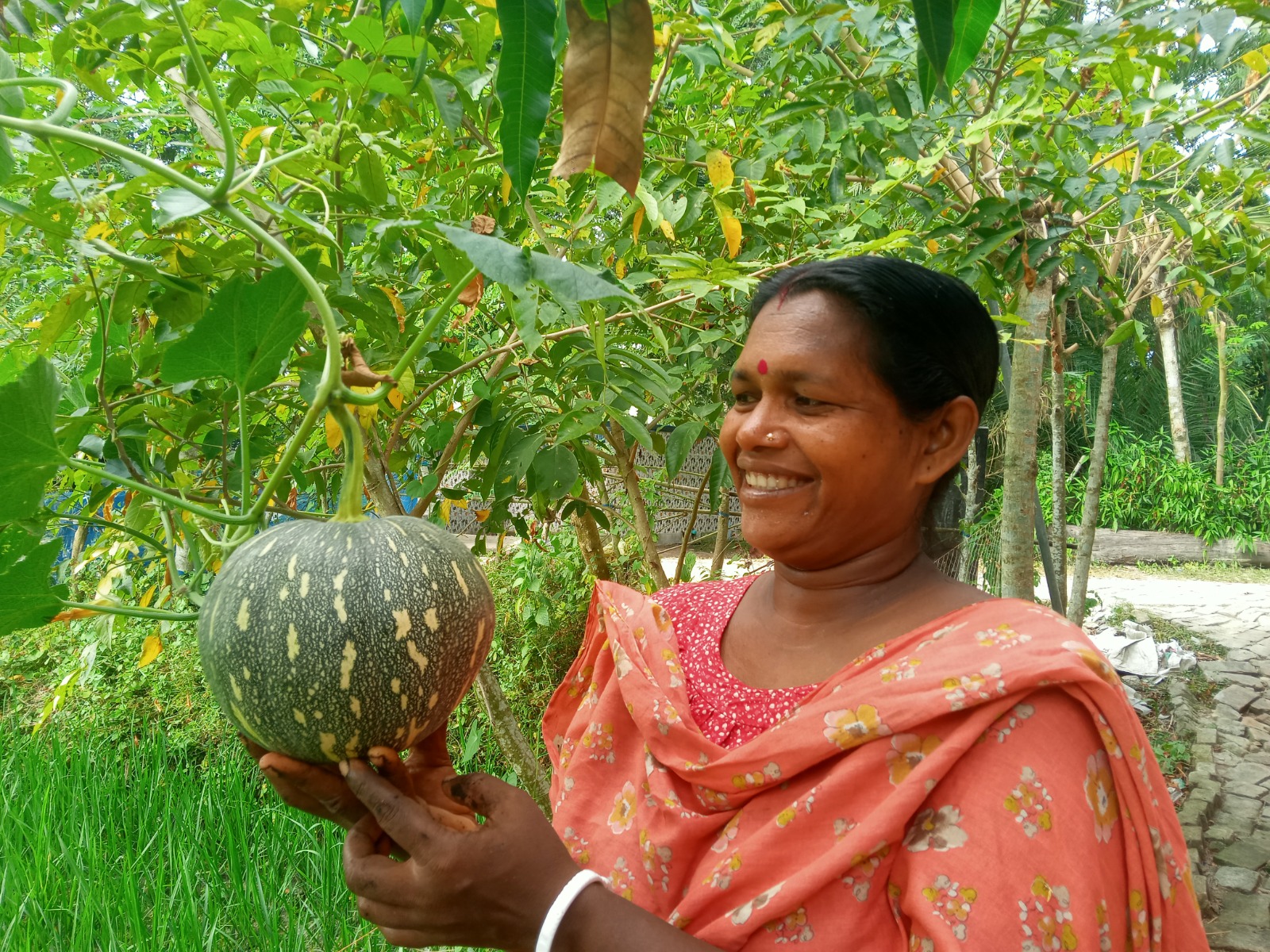
Bonoshree Rani’s agricultural activities extend beyond vermicompost production. Alongside cultivating seasonal crops, she raises cattle, goats, ducks and chickens, creating a complementary relationship between crop farming and livestock rearing. Proper management of livestock waste and other organic materials provides raw materials for vermicompost production. Applying this fertilizer to her farmland helps improve soil organic matter while reducing the need for chemical inputs. Her broader goal is to encourage other farmers to adopt organic fertilizers and environment friendly practices to promote safe food production. The effective use of local resources, reduced production costs and ecological farming are central to her initiative.
Organizing Women Farmers and Developing Leadership
To share her knowledge and experience, Bonoshree Rani has organized 25 disadvantaged women farmers from her village into a group. During regular meetings, she advises them on vermicompost production and application. According to her, nearly one-third of the village’s households now produce and use this organic fertilizer. Her homestead has gradually become an informal learning centre where farmers exchange knowledge and experiences about agriculture and organic fertilizer production. Beyond farming, she works as a tailor and voluntarily teaches sewing skills to other women. Participation in fairs and training programmes, along with networking with government and non-government organizations, has further strengthened her skills and social recognition. Her involvement in farming and tailoring demonstrates how women can develop multiple income-generating skills.
A Vision for a Chemical-Free Village
Bonoshree Rani’s ambition goes beyond improving her family’s financial condition. She dreams of transforming Kalmegha into a chemical- and pesticide-free village and establishing it as a model of safe food production based on vermicompost and ecological farming. Achieving this vision will require continued training, improved compost quality, market access and greater awareness among farmers. Regular documentation of changes in crop production, soil health and farming costs would also help demonstrate the effectiveness of her initiative. Bonoshree Rani Mondal’s journey shows how a woman farmer can use local resources and practical knowledge to reduce agricultural expenses, generate alternative income and empower other women through skills development. Her transition from an individual vermicompost producer to an organiser and mentor of women farmers is an inspiring example of economic self-reliance, ecological agriculture and collective leadership.