
By Shirin Akter, from Harirampur, Manikganj
Bhatshala Beel, located across Manikganj Sadar, Harirampur and Ghior upazilas, has a rich agricultural heritage and supports diverse crops, food and wildlife. During the monsoon, silt carried by the Ichamati River enriches the beel’s farmland. Farmers cultivate several traditional Aman rice varieties, including Hijal Digha, Digha, Borga Digha, Harin Digha, Molla Digha, Depar, Amshail and Bhaualia. In the winter season, they grow coriander, black cumin, fenugreek, onion, garlic, chilli, mustard, sesame, lentils, pulses, vegetables and jute.
The beel also supports diverse aquatic and terrestrial species, including fish, frogs, snakes, snails, mussels, turtles and various birds. This biodiversity plays an important role in maintaining ecological balance, soil health and local livelihoods. Inspired by this rich agricultural environment, Rowshanara Begum, a farmer from Khabashpur village in Bhararia Union, Manikganj Sadar, has become actively involved in conserving local seed diversity. Born into a farming family, she developed an interest in agriculture from childhood by working alongside her father and grandfather. After marrying into another farming family, she further developed her skills in seed sowing, seedling production, transplanting, harvesting, threshing and seed conservation.
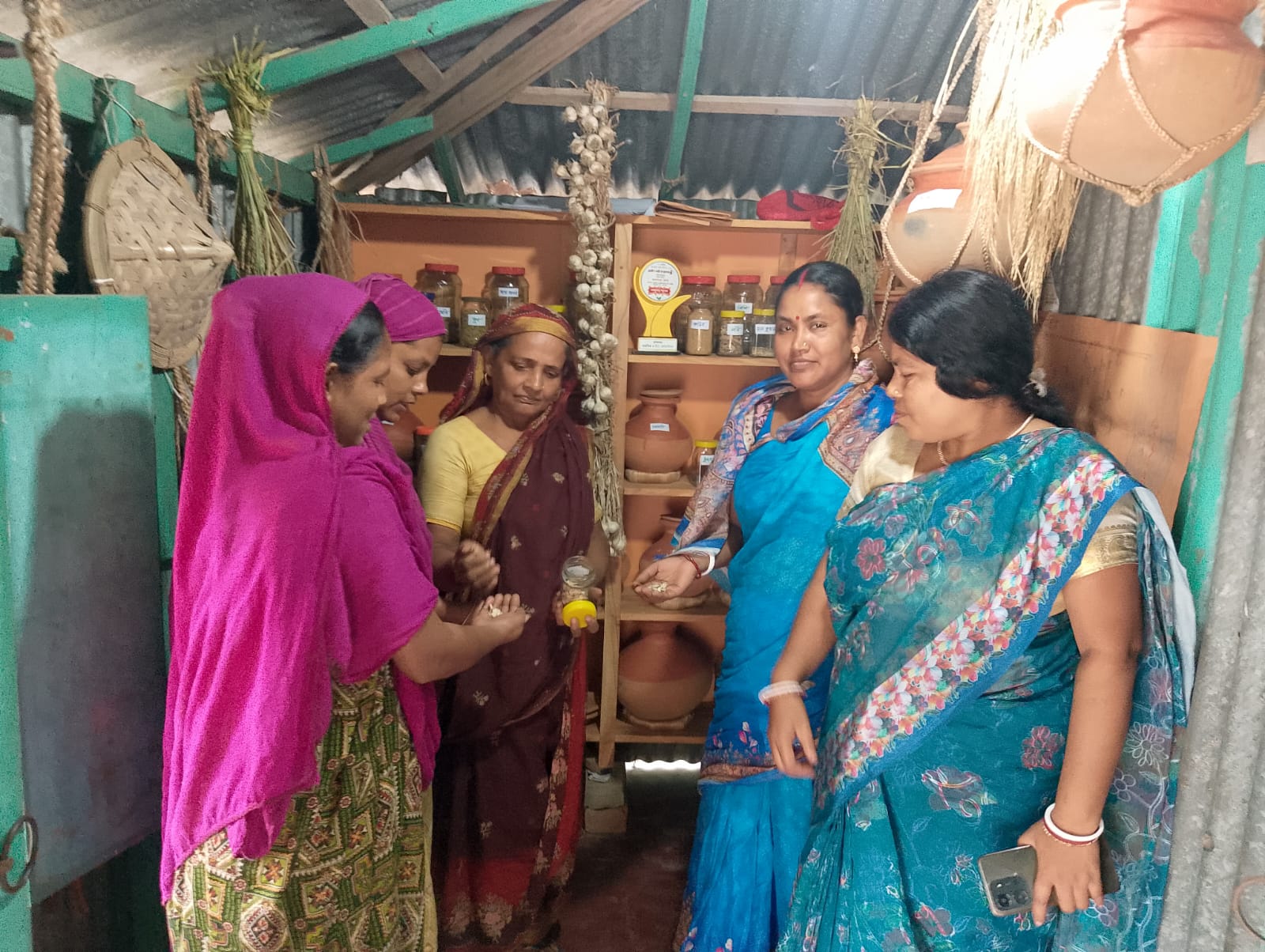
With encouragement from her husband and support from BARCIK, Rowshanara transformed her scattered seed-conservation practices into a community initiative. Following BARCIK’s advice, she joined neighbours, interested farmers and members of the Khabashpur Women’s Development Organization to establish a local seed bank.
The seed bank currently preserves around 50 varieties of seeds, including traditional field crops. Farmers deposit, collect and exchange seeds through this community facility. As a result, their dependence on commercial seed markets has decreased, while interest in conserving indigenous varieties has grown. Alongside seed exchange, they also share knowledge about organic farming.
Rowshanara practices diversified cultivation on her own homestead. During the monsoon, she grows bottle gourd, ash gourd, ridge gourd and Malabar spinach using the DAP method in waterlogged areas. She cultivates taro in the fields and grows eggplant, chilli and beans using mulching techniques in her homestead garden. These crops meet her family’s vegetable needs, while the surplus provides additional income through local markets.
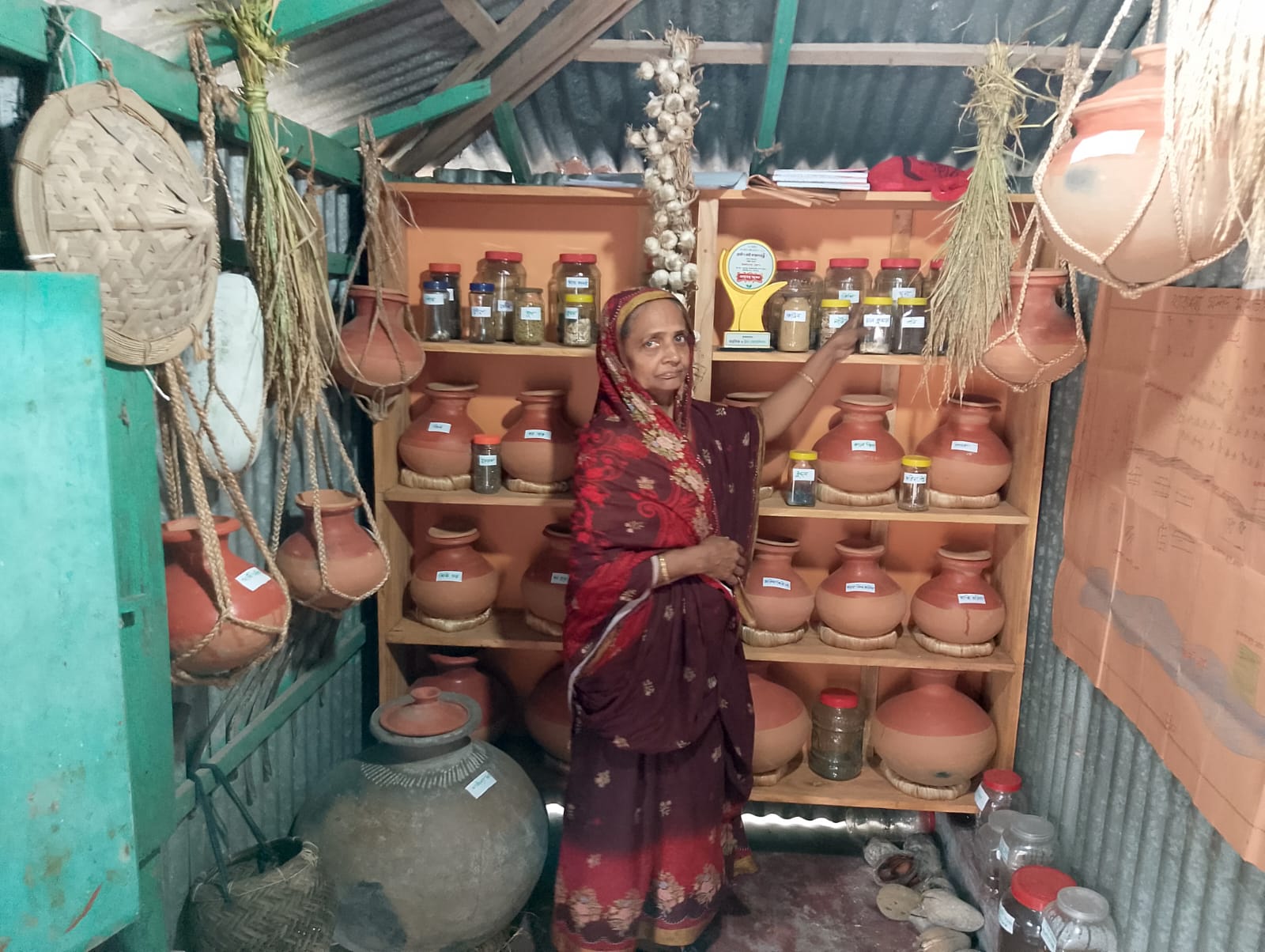
She has also improved her knowledge on agroecology through BARCIK’s practical training on agroecology, preparing organic fertilizer and bio pesticides. Previously unfamiliar with the preparation process, she now collects and uses cow dung as organic manure and makes natural pest repellents from neem leaves, mahogany fruits and marigold leaves. She also shares these practices with other farmers.
Farmers in the area now recognize the Khabashpur Seed Bank as an important source of traditional seeds. Locally adapted varieties are often better suited to local environmental conditions and can help farmers cope with natural disasters and climate-related challenges.
Through collective seed conservation, exchange and organic farming, Rowshanara and her fellow farmers are protecting agrobiodiversity, strengthening local food systems and contributing to a healthier environment.