
By Uttam Kumar from Tanore, Rajshahi
Vermicompost production is gaining popularity among farmers in Mohor Hindupara village of Talanda Union, Tanore Upazila, in the Barind region of Rajshahi, as growing concerns over declining soil fertility encourage a shift towards organic farming.
BARCIK began development activities in the village since 2014. Later, local young people formed a 27-member youth organization called Shopno Ashar Alo Youth Organization in response to community needs. In 2018, BARCIK facilitated an experience-sharing visit for some members to the vermicompost production unit of Hamed Ali, a farmer in Kolmai Union. Inspired by the experience, Uttam Kumar started producing vermicompost with an initial investment of Tk 4,000.
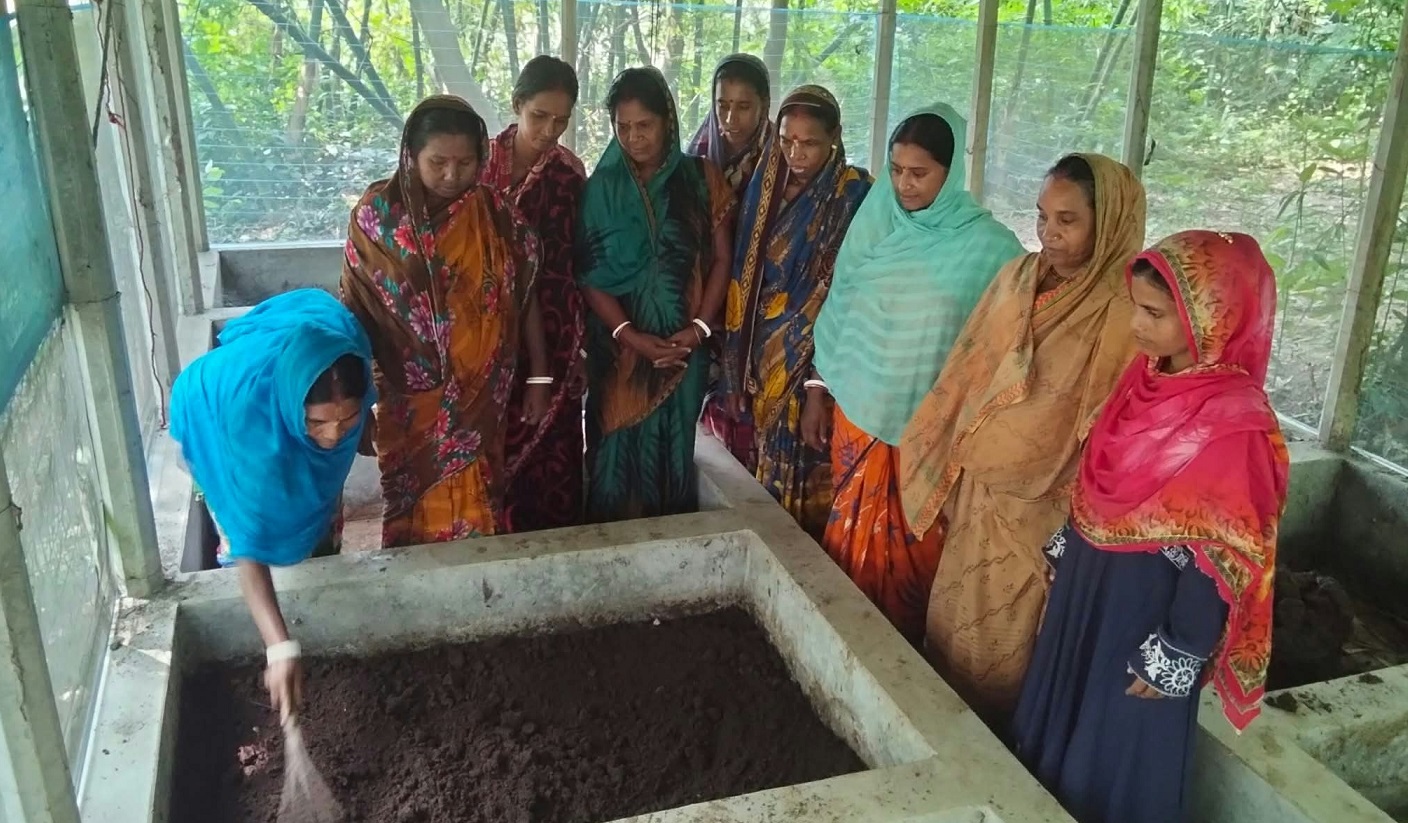
As demand increased, Uttam expanded his farm by collecting earthworms from local producers. In 2024, Assistant Agriculture Officer Md. Nasim Uddin visited the farm and expressed interest in supporting the initiative. The following year, the Tanore Upazila Agriculture Office provided Uttam with a project comprising 12 vermicompost production units. He subsequently purchased another 7 kg of earthworms from local producers to expand production.
His farm now has 30 traditional containers and 12 permanent production units, producing approximately 10–15 maunds of vermicompost each month. Uttam, who also manages a Model Shotobari (a household-based integrated farming model), said excessive chemical fertilizer use has failed to maintain previous levels of potato production in the area. He believes declining soil health is a major reason and sees vermicompost as an effective alternative.
Farmers regularly visit his farm to learn about organic fertilizer production. Md. Mominul Islam, who had never produced or used organic fertilizer before, began making it at home after learning about its benefits and observing how it could reduce cultivation costs.
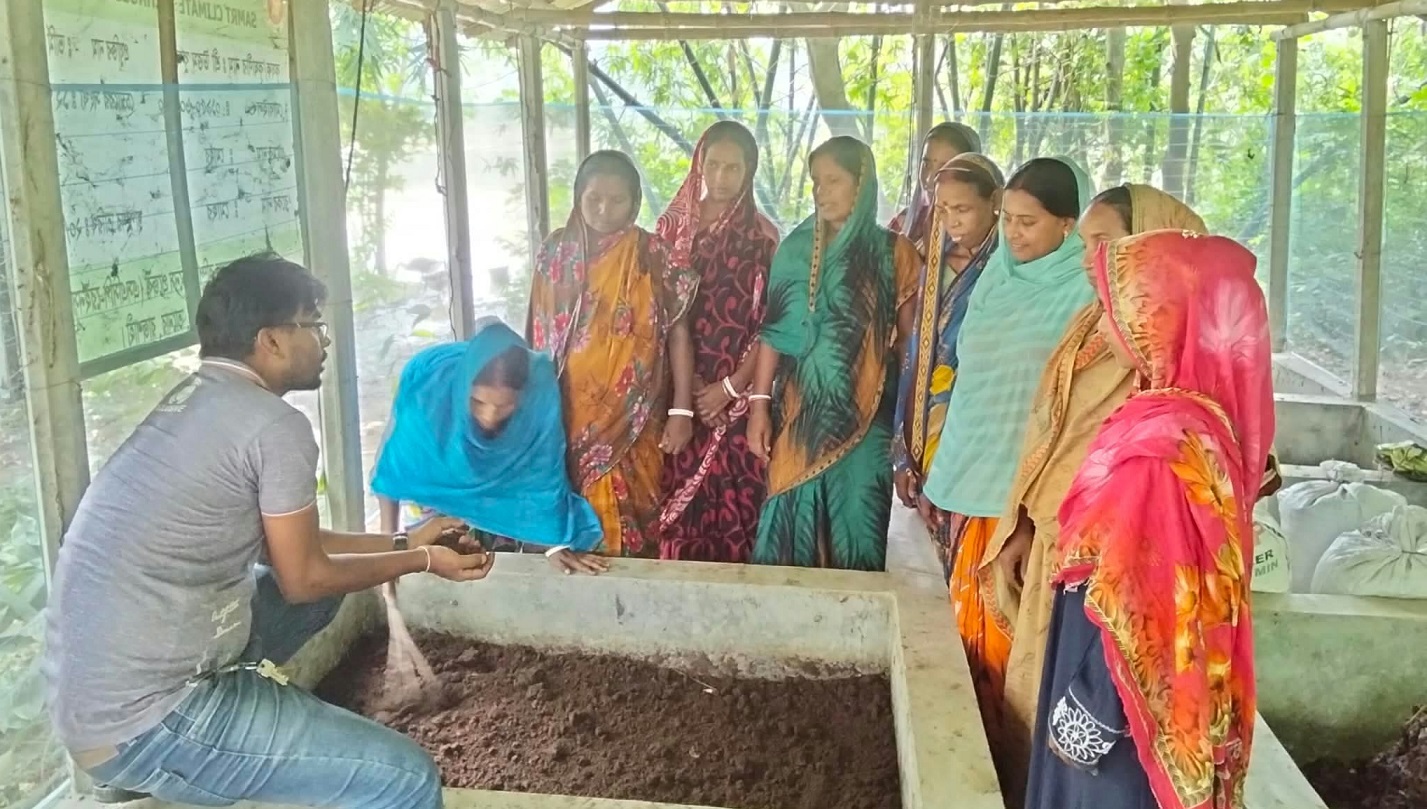
Farmers said that organic fertilizer improves soil health and fertility, supports crop production and may reduce pest attacks. Growing interest in the practice has led to the establishment of four organic fertilizer production farms in Mohor village.
The experience highlights the potential of farmer-led initiatives to reduce dependence on chemical inputs and promote environmentally friendly agriculture. Farmers believe that protecting soil health is essential for sustainable production and a healthier environment.