
By Atikur Rahman Atik from Rajshahi
Environmental and youth organizations have called for stronger protection of migratory birds, wetlands and biodiversity in Rajshahi, demanding the effective implementation of Shimla Park’s designated special biodiversity conservation status.
The demand was raised at a gathering held at Shimla Park recently to mark World Migratory Bird Day 2026. This year’s global theme, “Every Bird Counts; Your Observations Matter,” highlights the importance of public participation and data collection in bird conservation. The event was organized by Barind Youth Forum, Youth Action for Social Change (YAS), BARCIK, Green Coalition and Save Wildlife and Nature.
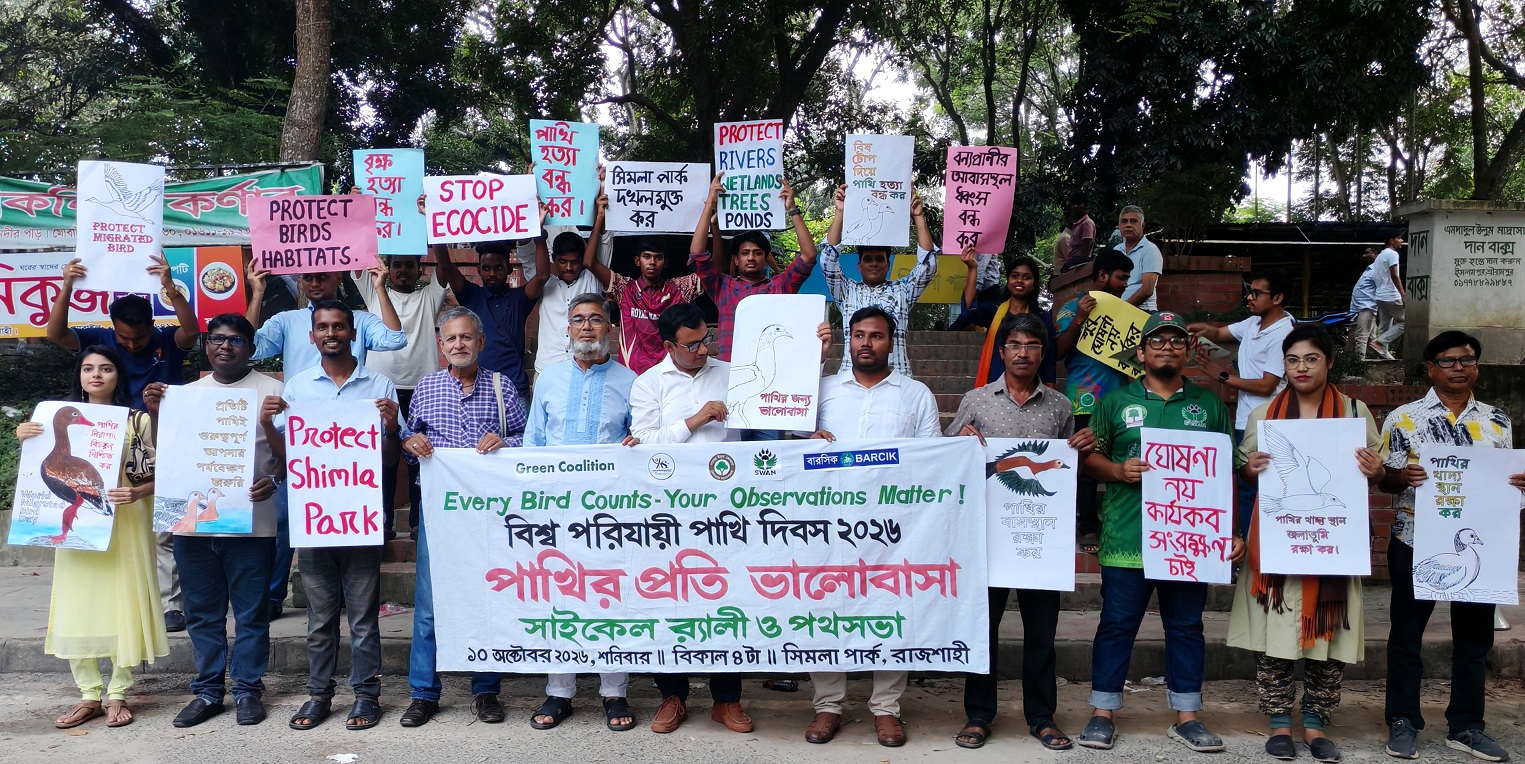
Speakers said that migratory birds help to maintain ecological balance through insect control, pollination and seed dispersal. However, wetland filling, encroachment on ponds and wetlands, river pollution, tree felling, habitat destruction and bird hunting are threatening their survival. They stressed that protecting bird habitats is particularly important in the drought-prone Barind region.
Md. Atikur Rahman, president of Barind Youth Forum, said bird conservation must go hand in hand with protecting ponds, rivers, wetlands, trees and the wider environment. He urged the authorities to enforce Shimla Park’s conservation status and ensure safe habitats for birds and other wildlife.
Mizanur Rahman, chairman of Save the Nature and Life, emphasized the need to protect natural habitats from encroachment and pollution while ensuring local community participation. Imrul Kayes, president of Save Wildlife and Nature, encouraged young people to monitor birds, identify species and collect data to support conservation efforts.
Jewel Kibria, adviser on literature and culture to Green Coalition, called for an end to bird hunting and environmental destruction, urging authorities to make Rajshahi a greener, bird-friendly city.
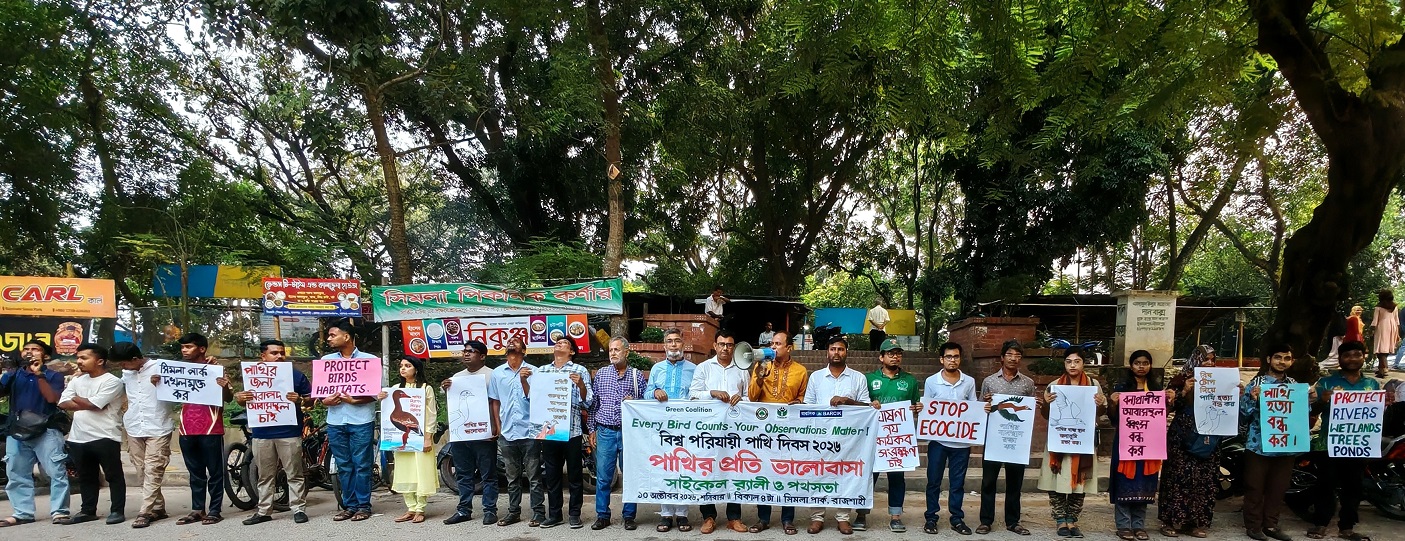
Speakers also criticized the lack of effective enforcement of environmental laws and called for accountability for the destruction of trees, ponds, bird habitats and other natural resources.
Among the participants of the event included: Samrat Raihan, executive director of a social welfare organization; Shid Kumar Oraon, general secretary of the Indigenous Students Council; Indigenous youth leader Upen Rabidas; social and cultural activist Waliur Rahman Babu; and Poly Rani, general secretary of Barind Youth Forum.
The organizers said that protecting bird habitats requires coordinated action by government agencies, local administrations, civil society and young people.