
By Sandra Nandini Bala from Dhaka
More than 40 low-income urban poor participated in a human chain held in Dhaka on World Habitat Day, demanding safe, affordable and permanent housing for poor communities in climate-vulnerable urban areas.
The event was organized by BARCIK under the theme “Adequate Housing for All,”. The demonstration took place in front of the Rayerbazar Martyred Intellectuals Memorial in Mohammadpur. Participants included residents of the Babubazar Balurmath slum in Hazaribagh.
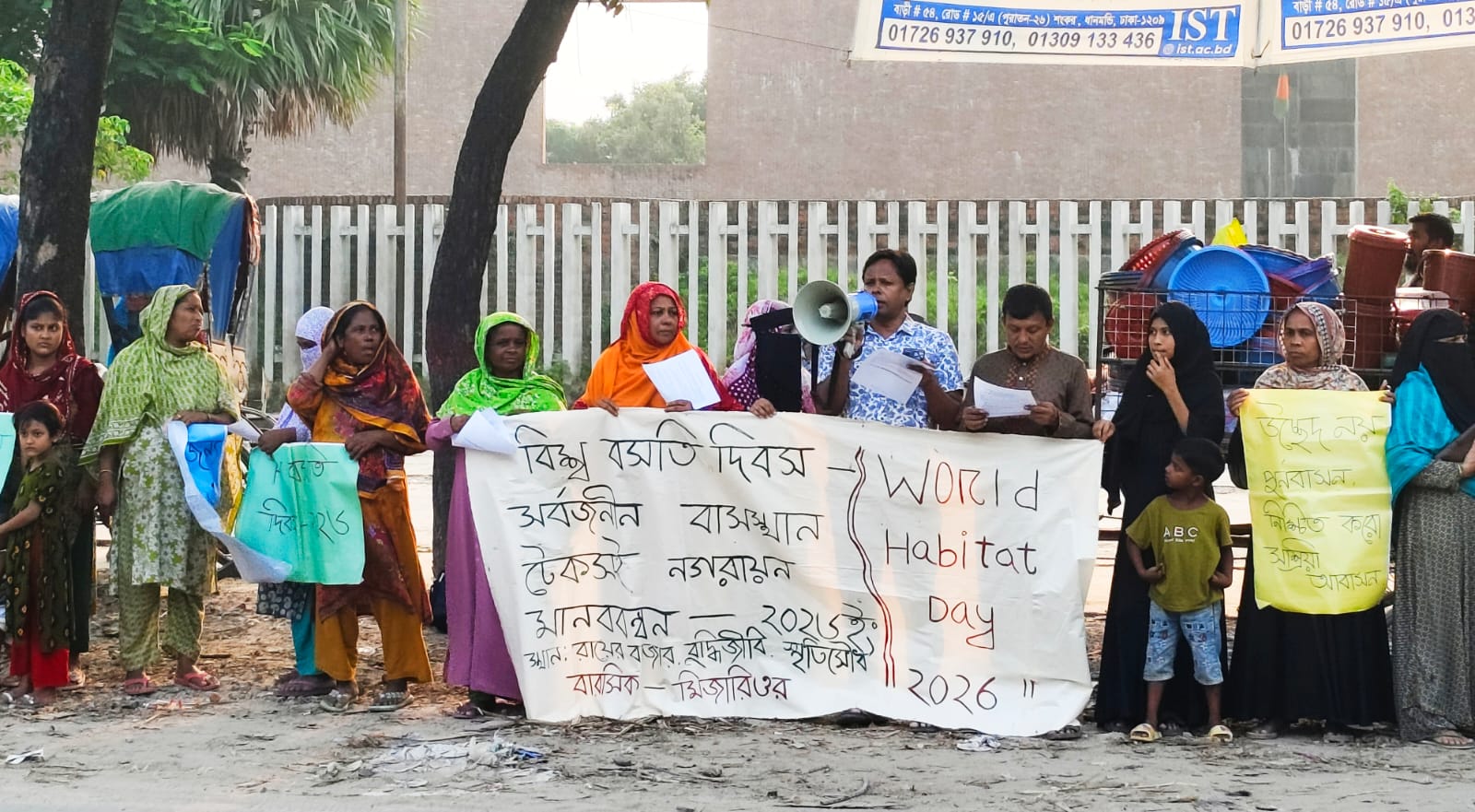
Md. Zahangir Alam, coordinator of BARCIK’s Agro-Biodiversity, Climate Change and Food Security Program said, “Adequate housing goes beyond having a roof and includes access to safe drinking water, sanitation and a healthy living environment.” He went on saying “climate change is pushing more people into cities, where affordable and safe housing remains a major challenge.”
Md. Faruk, vice-president of the Slum Dwellers Rights Protection Committee (BOSC), accused political representatives of neglecting slum communities after elections. He urged homeless people and slum dwellers to unite to claim their rights.
Anjelina Kisku, representing slum residents, called for equal educational opportunities for their children and access to essential services, urging elected representatives to honour their commitments to low-income communities.
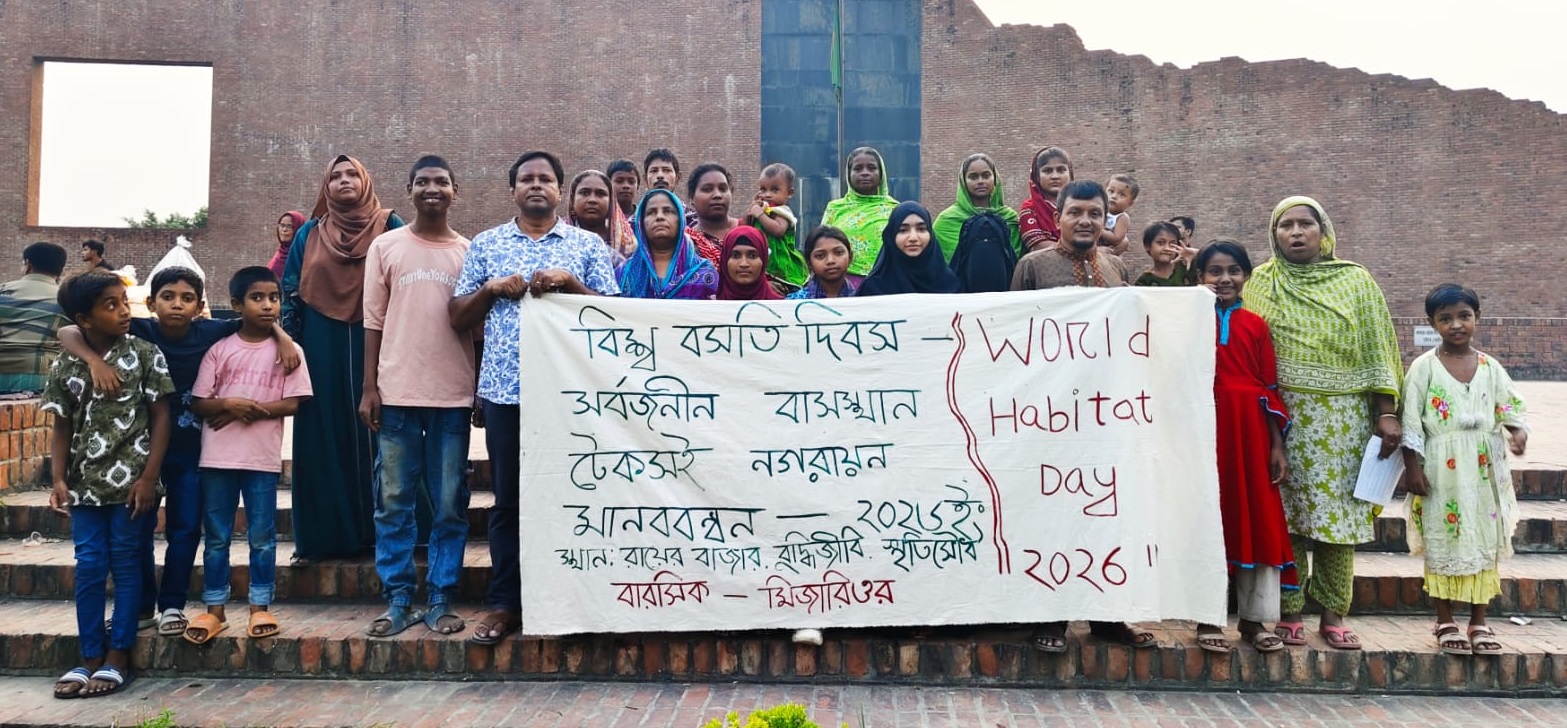
Hosne Ara Begum Rafiza, president of BOSC, said climate change was worsening living conditions in slums. Rejecting eviction as a solution, she demanded permanent housing and affordable, long-term installment-based housing schemes.
The demonstrators urged the government to identify khas (government-owned) land for low-cost housing, introduce affordable construction technologies and ensure legal land rights for slum dwellers. They also called for better access to education and healthcare.
The event concluded with a call for inclusive urban development, emphasizing that sustainable cities cannot be built by leaving vulnerable communities behind.